The Genesis of Modernism in Brazil: A Cultural Awakening
Modernism in Brazil was a broad cultural movement that strongly affected the art scene and Brazilian society in the first half of the 20th century, especially in the fields of literature and the plastic arts. It was inspired by the cultural and artis...
The early decades of the 20th century witnessed a seismic shift in artistic consciousness across Europe, and its reverberations were profoundly felt in Brazil. While often perceived as a distant echo of Parisian avant-garde movements like Cubism, Futurism, and Surrealism, Brazilian Modernism was far from mere imitation. It represented a fervent quest for national identity, a bold attempt to forge an authentically Brazilian aesthetic voice amidst the complexities of rapid modernization and a burgeoning sense of cultural independence. This wasn’t simply about adopting new styles; it was about dismantling established artistic conventions and confronting the very foundations of what constituted “Brazilian-ness.” The intellectual climate was charged with questions of colonialism, indigenous heritage, and the role of art in shaping a nation's self-perception. The 1922 Modern Art Week in São Paulo, though not without its detractors and moments of scandal, served as the catalytic event—a public declaration of this artistic revolution. However, to view it as the sole starting point overlooks the crucial groundwork laid by earlier artists and intellectuals who were already experimenting with new forms and challenging traditional norms.
The city of Recife, often overshadowed in historical narratives, played a surprisingly pivotal role in these early stirrings. Figures like Vicente do Rego Monteiro, through his explorations of geometric abstraction and incorporation of indigenous motifs, foreshadowed many of the themes that would later define Brazilian Modernism. Manuel Bandeira’s poetry, with its colloquial language and focus on everyday life, signaled a departure from the formal constraints of previous generations. This regional dynamism underscores the decentralized nature of the movement; it wasn't confined to a single artistic center but rather emerged as a confluence of diverse voices across the country.
Alceu de Paula Penna's Early Life & Artistic Formation
Born in 1903, Alceu de Paula Penna arrived on the Brazilian art scene at a particularly fertile moment. His formative years were steeped in this atmosphere of intellectual ferment and artistic experimentation. Unlike some of his contemporaries who spent extended periods studying abroad, Penna’s artistic education was largely rooted in Brazil itself, specifically within the vibrant cultural circles of Minas Gerais. This grounding proved crucial to his development, fostering a deep connection to Brazilian folklore, language, and social realities. He wasn't merely absorbing European influences; he was actively engaging with the unique textures of his own cultural landscape.
Penna’s early work demonstrated a remarkable versatility, encompassing painting, drawing, and poetry. However, it was in the realm of concrete poetry that he truly distinguished himself. This nascent form, characterized by its emphasis on visual arrangement and typographical effect over traditional narrative structure, resonated deeply with Penna's desire to break free from conventional artistic boundaries. He wasn’t interested in simply *representing* reality; he sought to create a new kind of poetic experience—one that engaged the senses and challenged the very definition of what poetry could be.
Concrete Poetry & Visual Language: Penna’s Innovative Approach
 Wikipedia: Concrete poetry
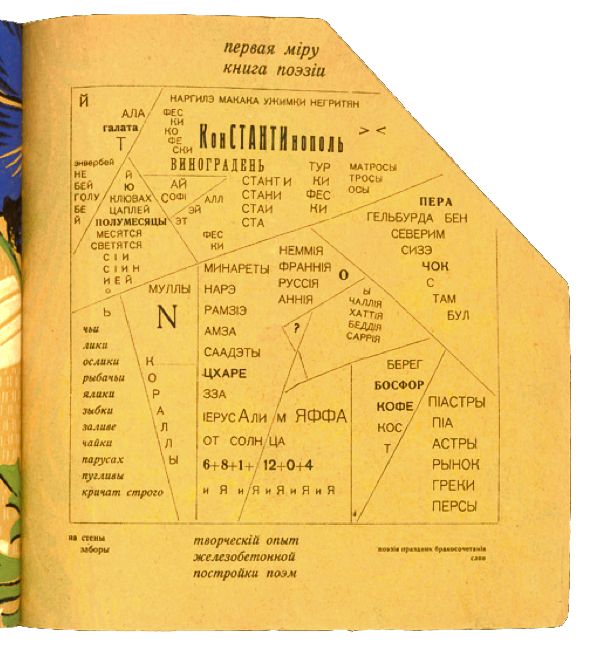
Concrete poetry is an arrangement of linguistic elements in which the typographical effect is more important in conveying meaning than verbal significance. It is sometimes referred to as visual poetry, a term that has now developed a distinct meaning...
Penna's concrete poems weren’t merely aesthetically pleasing arrangements of words; they were carefully constructed visual statements. He manipulated typography, spatial relationships, and color to create dynamic compositions that often defied easy interpretation. His work frequently incorporated elements of collage, drawing inspiration from the playful yet critical engagement with popular culture exemplified by artists like Oyvind Fahlstrom. The use of found imagery and fragmented text wasn’t arbitrary; it reflected a deliberate attempt to disrupt traditional modes of communication and expose the underlying structures of language itself.
The power of Penna's work lies in its ambiguity. His poems rarely offer straightforward narratives or explicit meanings. Instead, they invite viewers to actively participate in the creative process, constructing their own interpretations based on the interplay of visual and linguistic elements. This emphasis on viewer agency was a hallmark of his artistic philosophy—a rejection of didacticism in favor of open-ended exploration. He saw language not as a tool for conveying fixed ideas but as a malleable medium capable of infinite possibilities.
Anthropofagia and the Search for Brazilian Identity in Penna’s Work
Abstraction is the process of generalizing rules and concepts from specific examples, literal (real or concrete) signifiers, first principles, or other methods. The result of the process, an abstraction, is a concept that acts as a common noun for al...
Central to understanding Penna's artistic project is the concept of *Antropofagia* (Cannibalism), articulated by Oswald de Andrade in his 1928 “Manifesto Antropófago.” This provocative idea called for a radical re-evaluation of Brazil’s relationship with European culture—not through imitation or rejection, but through a process of “cannibalizing” foreign influences and transforming them into something uniquely Brazilian. It was a call to absorb the best aspects of other cultures while simultaneously rejecting their dominance and asserting Brazil's own cultural autonomy.
Penna embraced this philosophy wholeheartedly. His concrete poems can be seen as acts of artistic cannibalism—fragments of European forms and ideas ingested, digested, and re-emerged in a distinctly Brazilian guise. He wasn’t simply borrowing from other cultures; he was actively subverting them, dismantling their structures and repurposing their elements to create something entirely new. This process involved a deep engagement with indigenous mythology, folklore, and the rhythms of Brazilian speech—a conscious effort to ground his work in the specificities of the Brazilian experience.
Penna’s Legacy: Influence on Subsequent Generations of Artists
Alceu de Paula Penna's influence extended far beyond his own lifetime. His pioneering work in concrete poetry paved the way for a new generation of artists who embraced experimentation and challenged traditional artistic boundaries. His emphasis on visual language, ambiguity, and viewer agency continues to resonate with contemporary artists working across a wide range of media. The impact of *Antropofagia* can be seen in subsequent movements that sought to decolonize art and assert the cultural identities of marginalized communities.
While Penna’s work was initially met with resistance from more conservative elements within the Brazilian art establishment, it gradually gained recognition as a pivotal contribution to Latin American Modernism. Today, his poems are celebrated for their originality, intellectual depth, and enduring relevance. He remains a powerful symbol of artistic innovation—a testament to the transformative power of embracing cultural difference and challenging established norms.
Collecting Alceu de Paula Penna: A Guide for Enthusiasts
Acquiring works by Alceu de Paula Penna represents an investment in a significant piece of Brazilian art history. While his paintings are relatively rare, his concrete poems—often published in limited editions or as part of avant-garde magazines—are more accessible to collectors. Authenticity is paramount; careful research and consultation with reputable dealers are essential.
When considering a purchase, pay attention to the condition of the work, its provenance (history of ownership), and its significance within Penna’s broader artistic trajectory. OriginalUniqueArt.com offers a curated selection of high-quality reproductions that allow enthusiasts to experience the beauty and intellectual depth of his work. Whether you are a seasoned collector or just beginning your journey into Brazilian Modernism, exploring the art of Alceu de Paula Penna is sure to be a rewarding experience. Our expert team can provide guidance on framing options, sizing, and placement to ensure that your chosen artwork seamlessly integrates into your home or office space.