The Birth of a Republic: Economic Prosperity and Artistic Independence Golden Age Reflections: Dutch Baroque Painting & Cultural Innovation The Rise of a Republic: Historical Context & Artistic Flourishing Wikipedia: Dutch Golden Age The Dutch Golden...
The seventeenth century in the Netherlands was a period of profound transformation, where the very air seemed heavy with the scent of salt spray and the quiet hum of a nation finding its soul. Following decades of struggle for liberation from Spanish rule, the Dutch Republic emerged as a sovereign power, fueled by an unprecedented mercantile success that made it the most prosperous nation in Europe. This economic independence brought about a fundamental change in what people chose to hang upon their walls. Unlike the grand, often intimidating displays of power found in the royal palaces of France or the religious monuments of Italy, Dutch art moved toward something far more personal and intimate.
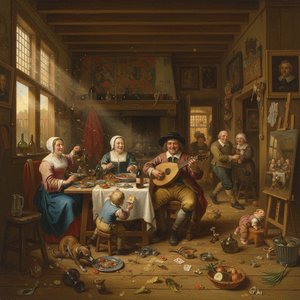
As Calvinism took root, the demand for large-scale religious iconography in churches declined sharply. The new market was driven by merchants and tradespeople who desired art that reflected their own lives, values, and achievements. This shift birthed a revolution of the everyday, where the focus moved away from the divine and toward the tangible world of trade, science, and domesticity. Artists began to find profound beauty in the mundane, turning their attention to landscapes, still lifes, and the burgeoning genre of scene painting.
This historical movement finds a modern echo in our own desire for meaningful decoration. Just as the Dutch middle class sought art that grounded them in their own reality, contemporary collectors often look to art to bring a sense of historical continuity into a modern home. We do not seek grand allegories; we seek pieces that reflect the quiet dignity of our own lived experiences.
Tactile Realism: The Mastery of Texture and Materiality
Nicolaes Keyser: The Golden Weaver of Delft Nicolaes Keyser, a name often whispered in the halls of Dutch art history, remains an enigmatic figure despite his undeniable brilliance. Active primarily during the mid-17th century, he stands as one of De...
To stand before a Dutch Golden Age painting is to encounter a world of remarkable physical presence. The artists of this era possessed an almost scientific devotion to detail, a technical rigor inherited from the Early Netherlandish tradition. They did not merely represent objects; they rendered them with a tactile accuracy that allows the viewer to sense the rough grain of a wooden table, the cool sheen of polished pewter mugs, or the heavy folds of a linen cloth. This meticulous observation transformed simple domestic interiors into profound meditations on existence.
Consider the work of Nicolaes Keyser, a painter whose background as a goldsmith and dealer in Bluestone profoundly informed his artistic sensibility. His canvases often shimmer with a distinctive golden hue, a result of his deep appreciation for craftsmanship and material. In similar veins, artists like Jan Steen utilized a dynamic brushstroke to capture the energy of a room, yet they never lost sight of the textures that define it—the way light catches the rim of a glass or the weight of a ceramic bowl.
This dedication to materiality remains a cornerstone of true fine art. When we commission a handmade oil reproduction, we are seeking that same physical depth. A high-quality oil painting on cotton canvas offers visible brushstrokes and a deeper tonal range than a mere print, providing a tactile connection to the subject that a flat image simply cannot replicate. It is the difference between seeing a memory and feeling its presence in the room.
Social Stagecraft: Tavern Scenes as Moral Narratives
Experience 'Tavern Garden' by Jan Steen (1660). A vibrant Dutch Golden Age scene of revelry & social life. Hand-painted reproduction, 68x58cm. Bring this lively tavern to your home.
The tavern scene occupies a unique space in the hierarchy of genre painting. While often categorized under the "merry company" theme—depicting figures drinking and socializing—these works were rarely just celebrations of excess. Instead, they functioned much like the plays of the Rederijkers, or Rhetoricians, a guild of amateur actors and playwrights in Leiden. Much like Jan Steen’s work, which often mirrors theatrical structures, these paintings utilized social interaction to explore themes of camaraderie, indulgence, and moral responsibility.
A tavern scene might appear chaotic at first glance, filled with the boisterous conversation and playful deception of patrons. Yet, beneath this surface merriment lies a carefully constructed narrative. A simple glass of wine could represent abundance or the transience of life; a slumped figure could serve as a warning against folly. Even in later works like William Hogarth’s Tavern Scene from his A Rake's Progress series, the depiction of a rowdy party at the Rose Tavern serves as a biting social commentary on the decline of a man through vice.
We see this same use of narrative in the way we curate our modern spaces. We choose art that tells a story, often using pieces to anchor a room with a specific mood or moral weight. Whether it is a portrait that captures a family milestone or a landscape that evokes a sense of peace, we use art to stage the atmosphere of our lives, much like the Dutch masters staged the social dramas of their era.
Chiaroscuro: The Psychological Power of Light and Shadow
LE DUO CHANTEUSE ET JOUEUR DE LUTH THEORBE – A Window into Dutch Golden Age Intimacy Gerard ter Borch’s “Le Duo: chanteuse et joueur de luth théorbé,” painted around 1669-1670, stands as a quintessential example of Dutch genre painting—a movement tha...
If there is a single heartbeat within Dutch Golden Age painting, it is the rhythmic pulse of light and shadow. This technique, known as chiaroscuro, became the definitive language of the era's masters. It was far more than an aesthetic choice; it was a psychological tool used to sculpt form and evoke deep emotion. Light does not simply illuminate these scenes; it reveals the very essence of the human spirit, pulling figures out of an obsidian void to highlight a moment of quiet contemplation or intense struggle.
In the works of Rembrandt van Rijn, we see this mastery at its most profound. He manipulated shadow to breathe life into the mundane, using light to direct the eye and create a sense of dramatic tension. This same interplay is found in the more serene compositions of Gerard ter Borch, such as Le Duo: chanteuse et joueur de luth théorbé, where soft light emanating from an unseen window heightens the intimacy of the musical performance. The darkness provides the necessary silence for the light to speak.
This mastery of contrast continues to inspire those who seek to create depth in their own environments. In contemporary interior design, the use of light and shadow—through both art and architecture—is essential for creating a sense of drama and focus. A well-placed painting that utilizes chiaroscuro can transform a flat wall into a window of profound psychological depth, inviting the viewer to linger in the shadows and find meaning in the light.
Curating Continuity: Bringing the Golden Age into Modern Interiors
Introduction Imagine stepping into a world bathed in soft northern light, where everyday life is elevated to extraordinary beauty and quiet contemplation reigns supreme. This is the realm of the Dutch Golden Age – a period of unprecedented artistic f...
The enduring appeal of the Dutch masters lies in their ability to find the extraordinary within the ordinary. They did not require kings or saints to create greatness; they required only a well-lit room, a group of people, and an observant eye. This philosophy of finding beauty in the everyday is what allows these centuries-old works to resonate so deeply within the contemporary home. They offer a sense of stability and historical weight in an era often characterized by rapid change and fleeting trends.
Integrating such profound art into a modern space requires a thoughtful approach. Whether through large-scale multi-panel arrangements that span a staircase or a single, intimate portrait placed in a quiet corner, these works provide a foundation of classical elegance. The goal is not to create a museum, but to foster a sense of continuity—to bridge the gap between the mercantile prosperity of the seventeenth century and the personal aspirations of the present.
At OriginalUniqueArt.com, we believe that art should be an accessible discovery for everyone. We specialize in helping you bring this sense of history into your home through professional digital mockups and bespoke hand-painted reproductions. Whether you wish to transform a personal photograph into a Rembrandt-style masterpiece or find a piece that matches a specific color palette, our mission is to help you build a collection that is as meaningful as it is beautiful. Through the careful preservation of technique and the respect for tradition, we ensure that the light of the Golden Age continues to shine in your modern world.
Explore the life & art of Jan Steen, a leading Dutch Golden Age painter renowned for his humorous genre scenes & insightful social commentary. Discover his techniques, legacy, and collecting tips.

 The Art of the Everyday: Realism in 17th-Century Dutch Genre Painting
 Nicolaes Keyser
 Tavern Garden
 LE DUO CHANTEUSE ET JOUEUR DE LUTH THEORBE
 Dutch Masters: 10 Golden Age Paintings That Still Inspire |