Primordial Impressions: The Dawn of the Carved Form
Before the first cities rose, humanity sought to leave a mark upon the world through the most enduring medium available: stone. These early impulses were not merely decorative; they were attempts to capture the essence of life itself. Consider the Venus of Willendorf, a tiny limestone figure dating back roughly 25,000 years. Though small enough to be held in the palm of a hand, its presence is immense. It represents one of the oldest known artworks, a quiet whisper from the Paleolithic era that speaks to the fundamental human desire to represent the physical form.
This impulse to carve life into stone finds a distant, heavy echo in the Great Sphinx of Giza. Carved directly from a limestone plateau around 2500 BCE, the Sphinx is a massive hybrid of lion-like power and pharaonic authority. Where the Venus is intimate and portable, the Sphinx is monumental and rooted, yet both share a singular purpose: to use the permanence of stone to freeze a specific identity or concept in time. We see this same drive in the Terracotta Army, which lay hidden until 1974 when farmers stumbled upon its silent, earthen ranks. Whether a small figurine or a vast army, the act of carving is an attempt to defy the transience of human existence.
Anchors of the Earth: The Engineering of Megalithic Circles
As societies grew more complex, the scale of stone manipulation shifted from the individual object to the communal landscape. The megaliths of the Neolithic period represent a profound leap in collaborative engineering. At Stonehenge, the builders did not merely move stones; they orchestrated them. They quarried spotted dolerite bluestones, weighing up to four tons, from the Preseli Hills and moved them across vast distances. These sarsen megaliths, some weighing thirty tons, were shaped with flint hammerstones and joined with sophisticated mortise-and-tenon joints, creating a structure that anchors the landscape to the heavens.
This ancient precision finds a spiritual successor in the architectural precision of the Duomo di Siena. While the Duomo is a cathedral of marble and light rather than a circle of megaliths, it shares that same sense of monumental permanence. The construction of the Duomo, which began in 1215, was an act of declaring a city's stature and devotion. Just as the builders of Stonehenge used stone to mark the passage of time and the movement of the sun, the architects of Siena used stone to create a sanctuary that transcends the individual life, turning a physical space into a vessel for collective identity and faith.
Sovereignty in Limestone: The Monumental Presence of the Sphinx
 The Stoning of St Stephen
The Stoning of St Stephen, Pietro da Cortona
The Great Sphinx of Giza embodies the intersection of animal power and human rule. Carved from a limestone plateau around 2500 BCE, this hybrid creature blends the physical power of a lion with the authority of a pharaoh. It is a permanent fixture of the landscape, a presence that commands the horizon through its sheer scale and material permanence.
This command of attention is echoed in the dramatic intensity of the Italian Baroque. In Pietro da Cortona’s 1660 work, The Stoning of St Stephen, the authority is conveyed through light and movement rather than mass. While the medium is oil on canvas, the dynamic composition and dramatic lighting create a visual weight that mirrors the Sphinx's monumental presence. The way light falls across the figures in Cortona's composition creates a sense of gravity that feels as substantial as the stone of the Giza plateau.
Both works use scale and arrangement to assert a truth—one through the permanence of carved rock, the other through the tension of a painted narrative.
The Marble Ideal: Classical Grace and the Hellenistic Spirit
 The Winged Goddess Of Victory
Discover the winged goddess of victory, Nike! A renowned artist celebrated for her depictions of triumph & mythology, including iconic works like the Athens Olympic rowing suit.
In the classical tradition, stone was no longer just a tool for power, but a medium for the pursuit of perfection. The Hellenistic period produced works that sought to capture the fluidity of movement and the softness of skin within the rigid constraints of marble. The Venus de Milo, housed in the Louvre, is a prime example of this mastery. Believed to depict Aphrodite, the sculpture uses the white marble to suggest a grace that seems almost weightless, despite the stone's inherent density. Similarly, the Winged Victory of Samothrace uses the material to mimic the fluttering of fabric in a sea breeze, a feat of technical brilliance that continues to influence how we perceive the human form.
This pursuit of the ideal is reflected in the later Renaissance, where artists like Fra Angelico sought to translate spiritual perfection into visual form. In his The Stoning of St Stephen, the fresco technique allows for a detailed, symbolic depiction of sacred narratives. While the medium of fresco is different from the carving of marble, the intention is the same: to use the physical properties of the medium to reach toward an ideal, whether that ideal is the physical perfection of a goddess or the spiritual purity of a saint.
Sacred Geometry: The Architecture of Devotion
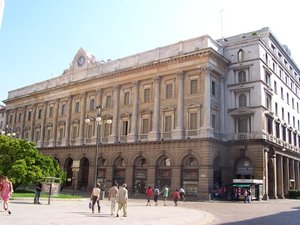 Veneranda Fabbrica del Duomo di Milano
Discover the Veneranda Fabbrica del Duomo di Milano: guardian of Milan's iconic cathedral! Explore centuries of artistry, architectural plans & historical treasures within this unique institution dedicated to preserving a masterpiece.
Architecture is the art of stone scaled to the proportions of the divine. In sites like Newgrange in Ireland, the stone is used to manipulate light. Through a specialized roofbox, the winter solstice sun is directed to illuminate the central chamber, turning a passage grave into a celestial clock. This integration of stone, earth, and light creates a space where the physical and the metaphysical meet. It is a sophisticated use of geometry intended to align human ritual with the rhythms of the cosmos.
This intersection of light and stone is felt deeply within the walls of the Duomo di Siena. The cathedral is a synthesis of Romanesque solidity and soaring innovation, where the architecture is designed to guide the eye and the spirit upward. The archives of the Veneranda Fabbrica del Duomo di Milano remind us that such structures are not just built; they are meticulously planned through centuries of architectural evolution. The stone here is not just a barrier against the elements, but a canvas for light to dance upon, much like the sun entering the chamber at Newgrange, turning a structural necessity into a moment of profound spiritual encounter.
Modern Echoes: Reimagining Form and Color in the Age of Expressionism
 Mountains (also known as Stony Path / Landscape)
Mountains (also known as Stony Path / Landscape), Franz Marc
In the modern era, the relationship with stone and form has shifted from the literal to the psychological. The heavy, permanent nature of stone is often reimagined through the lens of emotion and abstraction. In Franz Marc’s 1911 work Mountains (also known as Stony Path / Landscape), the landscape is not a literal depiction but an expressionist exploration of color and form. The red hues and abstracted shapes of the mountains suggest a landscape that is felt rather than just seen, moving away from the physical weight of the rock toward the emotional weight of the experience.
This psychological depth is further explored in the portraiture of Amedeo Clemente Modigliani. In his Stone Head, the subject is rendered with an elongated neck and intense, melancholy eyes against a stark red background. The title itself suggests a hardening of the human form, a transformation of the soft, living subject into something as static and profound as a sculpture. Even in the digital age, we continue to find new ways to interact with these historical echoes. At OriginalUniqueArt.com, we invite you to explore these themes through our curated collections, where the spirit of the masters lives on in every hand-painted stroke and custom commission.