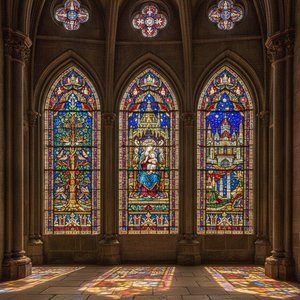
The Primordial Spark: Ancient Origins of Glassmaking Light Transformed: The Technical and Historical Evolution of Stained Glass Artistry The Ancient Spark: Tracing the Origins of Glassmaking The story of glass does not begin with a window, but with a...
The story of glass does not begin with a window, but rather with a heat-induced accident. While legends often attribute the discovery to Phoenician sailors who saw sand melt into translucent masses near campfires, the reality likely resides in the workshops of ancient Egyptian or Mesopotamian potters. The earliest evidence of human mastery over this material appears in beads from 2750 to 2625 BC, where molten glass was wound around clay cores to create opaque, precious ornaments. These small, precious objects established a fundamental understanding of how heat could transform raw earth into something ethereal.
As centuries passed, the utility of glass expanded from small trinkets to structural elements. By the first century AD, Roman artisans had begun glazing windows, utilizing techniques like blowing glass into tubes and flattening them into sheets. These early panes were irregular and lacked the clarity we associate with modern glass, yet they established a precedent for using transparency as an architectural tool. This ancient impulse to manipulate light through varied hues was revealed in the discovery of colored fragments in the Palmyra desert, proving that even in antiquity, the desire to control light was deeply rooted in human creativity.
Shadows of the Romanesque: Structural Weight and Early Geometric Designs
Medieval stained glass is the colored and painted glass of medieval Europe from the 10th century to the 16th century. For much of this period stained glass windows were the major pictorial art form, particularly in northern France, Germany and Englan...
Moving into the early medieval period, the architectural language of Europe was defined by a sense of somber permanence. The Romanesque style relied on thick limestone walls and rounded arches to create interiors of profound shadow. In these spaces, windows were necessarily small and narrow to maintain the structural integrity of the heavy masonry. This era produced a glass that was often thick, murky, and opaque, utilizing basic colors like red, blue, and green to form simple geometric designs rather than detailed pictures.
During this period, stained glass became a major pictorial art form in northern France, Germany, and England. The windows of Saint-Denis in France and Saint-Sernin in Toulouse contain surviving examples of this era, where the focus was on bold lines and simple images. These works were not intended to allow those within a building to see the world outside; rather, their purpose was to control light, acting as illuminated wall decorations that could convey biblical stories to a largely illiterate population. The heavy, earth-bound silence of the Romanesque era provided the necessary contrast for the luminous revolution that was soon to follow.
The Gothic Revolution: Engineering Light and Narrative Depth
The Dawn of a New Era: From Romanesque Shadows to Gothic Light Shadows & Splendor: A Journey Through the Soul of Gothic Art and Architectural Grandeur The Divine Ascent: From Romanesque Shadows to Gothic Light The Shadow of Faith: Exploring Gothic Ar...
A radical transformation began to stir in the twelfth century, particularly in the Île-de-France. This was not merely a change in masonry but a fundamental shift in human consciousness and theological vision. As scholastic philosophy flourished, architects moved away from squat, defensive silhouettes toward a luminous theology where light itself was viewed as a divine presence. The introduction of the pointed arch and flying buttresses allowed architects to defy gravity, thinning the walls to accommodate vast expansende of glass that would have been impossible in earlier designs.
This era saw an increased use of glass painting techniques, which allowed for greater detail and narrative depth. At Evreux Cathedral in France, Gothic stained glass portrays Christ and the Virgin Mary in a more three-dimensional form, showcasing how artists used refined methods of shading and highlighting to enhance imagery. The scale became monumental; massive rose windows served as celestial maps for the faithful. In places like Chartres Cathedral, the windows became a "Bible for the illiterate," translating complex theological concepts into vibrant, accessible imagery that bathed the nave in an otherworldly glow.
The Alchemy of Color: Metallic Oxides and the Science of Vitreous Pigments
Stained glass refers to coloured glass as a material or art and architectural works created from it. Although it is traditionally made in flat panels and used as windows, the creations of modern stained glass artists also include three-dimensional st...
The brilliance of these windows relies on a delicate chemical balance. Glass is colored by adding metallic salts or oxide powders during manufacture. For instance, cobalt produces deep blue glass, while copper oxides can create green or bluish-green hues. Gold is used to produce wine red and violet glass, though modern glassmakers often use copper to achieve a brighter, more vermilion shade of red. This process, known as pot metal glass, involves coloring the glass while it is still in the clay pot within the furnace.
Beyond simple colored glass, artists utilized flashed glass, which fuses a thin layer of colored glass to a thicker layer of colorless glass to achieve specific effects. Techniques such as vitreous enamel involve painting colors onto glass and fusing them in a kiln at temperatures between 750 and 850 °C. This allows for intricate details that the raw colored glass alone cannot provide. The result is an alchemy where the artisan manipulates sand, potash, and metals to create a translucent medium that changes with every passing hour of the day.
The Art of Assembly: Lead Cames, Copper Foil, and Structural Integrity
Came glasswork is the process of joining cut pieces of art glass through the use of came strips or foil into picturesque designs in a framework of soldered metal. Final products include a wide range of glasswork, including stained glass and lead ligh...
A window must fit snugly into its space, resist wind and rain, and support its own weight. This structural requirement dictates the method of assembly. Traditionally, small pieces of glass are arranged in patterns and held together by strips of lead called cames or calms. Lead is soft and flexible, making it easy to bend around intricate shapes, though it can age into a dark blue-gray patina and may be prone to sagging over time if not properly reinforced.
For smaller, more intricate pieces, an alternative known as copper foil is used. This method involves wrapping the edges of each glass piece with adhesive copper tape and soldering them together. A patent for this technique was issued to Sanford Bray in 1886, allowing for much more complex, three-dimensional forms like cylinders or globe-shaped shades. In larger architectural works, zinc came is often used for border cames because it is strong and rigid, providing the necessary support for heavy glass panels.
A Revival of Craft: The Arts and Crafts Movement and Victorian Elegance
A Window of Faith: Exploring Charles Eamer Kempe’s Stained Glass Depiction of Saint Margaret The Victorian era witnessed a fervent embrace of craftsmanship and spiritual contemplation, and few artistic expressions embodied these ideals more powerfull...
The late 19th century witnessed a fervent embrace of craftsmanship and spiritual contemplation through the Arts and Crafts movement. Artists like Charles Eamer Kempe rejected mass production in favor of meticulous, traditional processes. His 1893 depiction of Saint Margaret of Antioch in All Saints’ Church, London, exemplifies this approach. Each pane is painstakingly cut from colored glass—primarily indigo with accents of gold—and fused with lead cames to create a structurally sound and spiritually immersive experience.
This era also saw the rise of designers like Frederick Wilson, who blended Gothic Revival influences with Art Nouveau sensibilities. The movement prioritized the honest use of materials and celebrated the interplay between light and color. This period of revival ensured that the ancient skills of cutting, leading, and painting were not lost to industrialization but were instead refined into a sophisticated medium for both ecclesiastical and domestic decoration.
Modern Visions: From Tiffany’s Opalescence to Contemporary Sculpture
The Enigmatic World of Louis Comfort Tiffany Louis Comfort Tiffany, a name synonymous with artistry in stained glass, was far more than just a craftsman; he was a visionary who redefined American art during the Gilded Age and beyond. Born in 1848 int...
As the twentieth century progressed, the language of glass shifted toward the decorative and the experimental. Louis Comfort Tiffany redefined American art by moving away from traditional painted glass in favor of naturally colored, opalescent sheets. He pioneered Favrile glass, a technique where molten glass is swirled with metallic oxides like silver or copper to create an iridescent sheen that changes with the viewing angle. His work brought a new, organic luminosity to the medium, heavily influenced by natural forms.
Today, the definition of stained glass has expanded further. While it remains a cornerstone of cathedral architecture, modern artists use the medium for three-dimensional structures and sculptures. The craft continues to evolve through collectives like the Unión De Artistas Vidrieros De Irún in Spain, which focuses on preserving regional traditions while innovating within established parameters. Whether through the fluid lines of Art Nouveau or contemporary abstract forms, the fundamental dialogue between physical matter and the ethereal heavens remains unchanged.
If you find yourself moved by the history and texture of these luminous works, you may wish to bring a piece of this light into your own home. At OriginalUniqueArt.com, we celebrate the profound impact of art on our surroundings. Whether you are looking for a high-quality Giclée print of a historical window or wish to commission a custom oil reproduction that captures the depth and brushwork of a classic era, our team is here to guide your discovery.
Embark on a visual journey through the luminous world of stained glass art. Discover the exquisite craftsmanship, historical significance, and captivating beauty of masterworks from Art Nouveau to the Gothic era, curated for the discerning fine art enthusiast.
Explore the rich history & enduring techniques of oil painting with OriginalUniqueArt. Discover masterpieces, learn about art collecting, and find authentic handmade reproductions crafted by skilled artists.

 The Alchemy of Light: A Historical Exploration of Stained Glass Artistry
 Medieval stained glass
 Gothic Grandeur: Exploring the Spiritual Majesty and Architectural Innovation of Medieval Masterpieces
 Stained glass
 Came glasswork
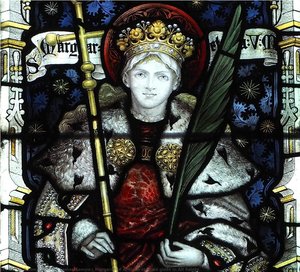 Margaret of Antioch stained glass in All Saints
 Studio Of Louis Comfort Tiffany