--- title: Russian Fairy Tales - Wikipedia url: https://en.wikipedia.org/wiki/Russian_Fairy_Tales hostname: wikipedia.org sitename: Wikimedia Foundation, Inc. date: 2006-09-13 --- *Russian Fairy Tales* | This article needs .[more citations](https://e...
Long before the first brush touched canvas in the great academies of Saint Petersburg, the stories of the Russian landscape were whispered around village stoves and through the dense, watchful forests. These oral traditions, a collection of tales, legends, and proverbs, formed a shared emotional vocabulary for a people navigating vast territories and harsh winters. Folklore is not merely a collection of old fables; it is a living blueprint of identity, where the boundary between the everyday and the magical remains thin. In these stories, a hero's survival often depends less on brute strength than on the quiet virtues of patience and cleverness.
The roots of this narrative world are deeply entwined with ancient Slavic paganism, a belief system that saw the divine in the rustle of leaves and the flow of rivers. Before the widespread adoption of Christianity, the landscape was inhabited by unseen forces—the Domovoi guarding the hearth, or the unpredictable Leshy lurking in the thickets. As time passed, these pagan elements merged with Orthodox Christian symbolism, creating a unique spiritual syncretism known as dvoeverie, or double faith. This layering of belief allowed for a storytelling tradition that is simultaneously mystical and deeply moral, providing a foundation upon which later artists would build their visual worlds.
The Precision of Legend: Ivan Bilibin and the Art Nouveau Line
The World of Art Context: Bilibin’s Early Influences & Artistic Formation ivan yakovlevich bilibin Ivan Bilibin (1876-1942): Explore enchanting Russian folklore & fairy tales through this master illustrator's art. Key figure of the World of Art & Bal...
When we look closer at the turn of the twentieth century, we encounter the meticulous hand of Ivan Yakovlevich Bilibin. Born in 1876, Bilibin moved away from the rigid legal studies he initially pursued to capture the very essence of narodnost—the folk spirit. His style, heavily influenced by his time at Anton Ažbe’s school in Munich and the elegant aesthetics of Art Nouveau, brought a new clarity to the ancient tales. Bilibin did not simply illustrate stories; he reconstructed them through a lens of sophisticated design, utilizing flattened perspectives and bold, rhythmic lines reminiscent of Japanese prints.
His work, such as the Program of the Russian symphony concerts, demonstrates an incredible attention to detail, where every decorative motif feels intentional. Between 1902 and 1904, Bilibin conducted ethnographic expeditions through the Vologda and Arkhangelsk regions, documenting wooden architecture and folk patterns that would later populate his illustrations for Alexander Afanasyev’s collections. In his depictions of characters like Baba Yaga or the quest for the Firebird, one sees a synthesis of medieval manuscript illumination and modern graphic precision. His ability to blend the decorative with the narrative allowed the ancient myths to breathe within a contemporary, much more structured visual language.
Epic Grandeur: Viktor Vasnetsov’s Revival of National Identity
The Vyatka Roots: Vasnetsov’s Early Life and Formation Wikipedia: Viktor Vasnetsov Viktor Mikhaylovich Vasnetsov (Russian: Ви́ктор Миха́йлович Васнецо́в; 15 May [O.S. 3 May] 1848 – 23 July 1926) was a Russian painter and draughtsman who specialised i...
Moving from the delicate line of Bilibin to the broader, more heroic canvases of Viktor Vasnetsov, we find a different approach to the same mythic wellspring. Born in the village of Lopyal, Vasnetsov was a child of the rural traditions he would later immortalize. While his training at the Imperial Academy of St. Petersburg provided him with technical mastery, his heart remained tethered to the byliny—the epic poems of old Rus. His work represents a pivotal shift from academic realism toward a revival of national identity, seeking to give visual form to the strength and resilience of the Russian people.
Vasnetsov’s paintings, such as those depicting the Bogatyrs, are characterized by a sense of monumental scale and spiritual weight. He did not merely observe folklore; he inhabited it. His canvases often feature a dramatic interplay of light and shadow that suggests the presence of the divine or the looming threat of the supernatural. By portraying epic heroes as symbols of national endurance, Vasnetsov bridged the gap between historical painting and Symbolism, creating an art that felt both ancient and urgently relevant to a nation searching for its own reflection in a changing world.
Form and Shadow: The Symbolic Sculptures of Konenkov and Vasilyev
Discover Konstantin Vasilyev's haunting Symbolist paintings of Russian epics & folklore. Explore 'Prince Igor' & more iconic works by this 20th-century Russian artist.
The exploration of myth extends into the tactile, heavy presence of sculpture. Sergey Timofeevitch Konenkov brought a visceral, organic energy to the medium. His work, rooted in the legends of his childhood in Karakovichi, uses wood and bronze to evoke the textures of the forest itself. Influenced by the expressive breakthroughs of Auguste Rodin in Paris, Konenkov mastered the ability to use light and shadow to suggest psychological depth, turning cold material into vessels of cultural memory.
In a similar vein, the work of Konstantin Alexeyevich Vasilyev offers a more enigmatic, Symbolist intensity. His paintings and drawings, often focused on themes of fate and heroism, possess an unsettling emotional depth. In works inspired by Prince Igor, one perceives a tension that mirrors the gravity of the epic tales themselves. Both artists moved away from the sterile precision of academic realism to embrace a more expressive, textured approach, ensuring that the physical form of the art reflected the raw, often dark, power of the legends they sought to portray.
A Living Archive: Navigating the Russian Museum of Ethnography
A Journey Through the Imperial Grandeur of Saint Petersburg Nestled within the breathtaking Mikhailovsky Palace, the Russian Museum of Ethnography stands as a profound testament to the enduring spirit and multifaceted identity of a nation. As one wan...
To truly understand the material reality behind these myths, one must look to institutions like the Russian Museum of Ethnography in Saint Petersburg. Within its neoclassical halls, the abstract legends find their physical counterparts. The museum holds a vast collection of over half a million objects, ranging from delicate ancient textiles to the weathered tools of rural life. Here, the ethnographic research conducted by artists like Bilibin is given context; one can see the actual patterns and architectural influences that informed the great illustrations of the era.
Walking through these galleries allows for a confrontation with the sheer diversity of the peoples who shaped the Russian landscape. The museum acts as an intersection where the primordial meets the avant-garde, showing how the rhythmic ornaments of ethnic groups influenced modern masters like Kandinsky. It is a place where the spiritual and the material are inseparable, providing the necessary historical grounding to appreciate the artistic reinterpretations found in the works of Vasnetsov or Konenkov.
Bringing the Folklore Home: Integrating Mythic Aesthetics into Modern Interiors
For the modern collector, the allure of these mythic themes lies in their ability to add layers of meaning and texture to a living space. The aesthetic of Russian folklore—characterized by intricate patterns, symbolic colors, and a sense of narrative depth—offers a way to move beyond mere decoration toward purposeful curation. Integrating a piece that echoes the Art Nouveau elegance of Bilibin or the heroic scale of Vasnetsov can transform a room into a space of reflection and storytelling.
Whether through a large-format mural that recreates the grandeur of a historical palace or a carefully chosen reproduction that brings the soft light of a Spring watercolor into a contemporary study, these works invite conversation. The key is to embrace the mood and the history. By selecting pieces that resonate with personal values—be it the resilience found in the Bogatyrs or the transformative beauty of the Firebird—one can build an interior that feels both deeply personal and connected to a much larger, enduring human story. At OriginalUniqueArt.com, we believe every home deserves its own piece of history, allowing you to discover and display art that speaks to the soul.
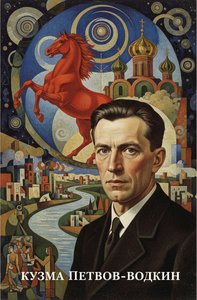
Explore the captivating world of Kuzma Petrov-Vodkin, a pivotal figure in Russian avant-garde and spiritual symbolism. Discover his iconic works, unique style & lasting influence on 20th-century art.
Elevate your home with the soulful beauty of 19th-century Russian art. Discover exquisite hand-painted oil reproductions of Russian Realism and lyrical landscapes, curated to bring timeless elegance and historical depth to your modern interior design.
Embark on a visual journey through Russian art history. From the grandeur of Imperial porcelain to the soulful realism of the Peredvizhniki, discover how these timeless masterpieces can inspire your modern home with our museum-quality, hand-painted reproductions.
Explore the life & art of Igor Grabar, a pivotal figure in Russian Modernism. Discover his Impressionist landscapes, crucial role in art history, and legacy at the Tretyakov Gallery. A deep dive into a master painter & scholar.
Explore the captivating world of Mikhail Nesterov, a pioneer of Russian Symbolism. Discover his spiritual themes, iconic paintings like 'The Hermit,' and lasting influence on Russian art history. Learn more at OriginalUniqueArt.

 Ivan Bilibin: A Synthesis of Folklore, Modernism & National Identity in Russian Illustration
 Victor Vasnetsov: Myth, Nationalism & the Revival of Russian Fairy Tale Painting
 Konstantin Alexeyevich Vasilyev
 Russian Museum of Ethnography