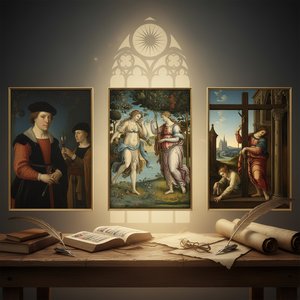
A Portrait of Quietude: Giovanni Bellini’s ‘Portrait of a Young Man’ Giovanni Bellini's “Portrait of a Young Man,” painted in 1500, is more than simply a likeness; it’s a carefully constructed meditation on youth, contemplation, and the nascent human...
The transition from the medieval mindset to the High Renaissance was not merely a change in aesthetic preference, but a fundamental shift in how we perceive our place within the universe. This era, anchored by the intellectual movement of humanism, moved away from purely devotional, symbolic imagery toward an exploration of the individual and the natural world. Derived from Roman humanitas and classical Greek philosophy, this worldview placed man as the measure of all things. It was a period that sought to reconcile the divine with the tangible, emphasizing human experience, dignity, and the capacity for intellectual growth.
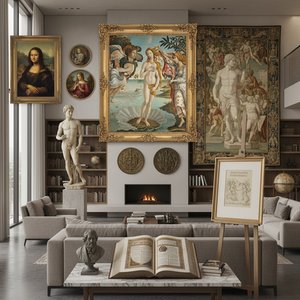
In the works of masters like Leonardo da Vinci, we see this shift manifest through a meticulous attention to psychological depth. His Mona Lisa does not simply present a face; it offers a window into a complex emotional state, achieved through an unprecedented realism in human expression. This focus on the individual allowed art to move beyond the static icons of the past, introducing a sense of agency and presence that remains the foundation of Western portraiture.
The echoes of this era are found in the very way we approach modern identity. Just as the Renaissance artists used anatomical study and scientific observation to ground their subjects in reality, contemporary collectors often seek works that reflect personal truth and character. The pursuit of a realistic depiction of physical and psychological features remains a standard for any work intended to command a room with quiet authority.
The Alchemy of Shadow: Using Chiaroscuro to Define Modern Luxury Baroque Portraits: Mastering Chiaroscuro and Dramatic Lighting for High-Impact Modern Interiors The Power of Chiaroscuro: Why Dramatic Lighting Defines Modern Luxury In the realm of hig...
To understand the technical gravity of the Renaissance is to understand chiaroscuro—the deliberate use of strong contrasts between light and dark. This was a structural necessity, used by artists to achieve volume and three-dimensional modeling on a flat surface. By manipulating light, painters pulled figures from the void, giving them weight and a palpable presence.
This technique finds its most rigorous application in the works of the High Renaissance, where the interplay of shadow defines the contours of the human form. Consider how light interacts with a subject; it acts as an architectural tool to sculpt the face and limbs. Through these gradations, painters created a sense of physical reality that occupies space within the frame.
In modern interior curation, this principle remains functional. The strategic use of light and shadow can define zones within a large, open-plan space without the need for physical partitions. Much like the way chiaroscuro directs the eye toward a central figure, a well-placed light source in a contemporary setting highlights specific textures or architectural details. This creates an atmosphere of depth that prevents a room from feeling sterile.
A Vision of Eternal Cities: Umbra Lucis: Aeterna Civitas Behold Umbra Lucis: Aeterna Civitas , a breathtaking cityscape rendered in the spirit of Leonardo da Vinci’s masterful chiaroscuro and meticulous detail. This artwork isn't merely a depiction o...
If chiaroscuro provides the structure, then sfumato provides the soul. Developed to its highest potential by Leonardo da Vinci, this technique involves the incredibly fine blending of colors and tones to soften contours, effectively removing the harsh outlines that characterized earlier works. The term itself suggests a smoky or hazy quality, an effect that allows for a seamless transition between light and shadow, creating an atmosphere that feels thick with air and mystery.
This method is particularly evident in the way Leonardo approached landscape and skin. By blurring the edges of a subject, he achieved an atmospheric perspective that suggested infinite distance and a profound connection to the environment. There is no sharp break between the man and the world around him; instead, they exist in a shared, luminous space. This softness lends a sense of movement and life to even the most still compositions.
We see this same pursuit of soft transitions in the works of Giovanni Bellini, whose Portrait of a single Young Man utilizes subtle gradations to suggest form through delicate tonal shifts rather than sharp lines. For the modern decorator, incorporating elements of this softness—through muted palettes or blurred textures—can introduce a sense of calm and continuity into an environment, allowing different design elements to coexist in a harmonious, integrated manner.
Architectural Order: Symmetry and Classical Revival
--- title: Renaissance architecture - Wikipedia author: Authority control databases National Japan Czech Republic Spain url: https://en.wikipedia.org/wiki/Renaissance_architecture hostname: wikipedia.org sitename: Wikimedia Foundation, Inc. date: 200...
The Renaissance was as much a revolution in stone as it was in pigment. The era saw a conscious revival of ancient Roman architectural principles, emphasizing symmetry, proportion, and geometry. Architects like Donato Bramante, through works such as the Tempietto, sought to reconcile Christian ideals with the mathematical precision of classical antiquity. This was an architecture of order, characterized by the use of columns, domes, and pediments that reflected a belief in a balanced and rational universe.
This architectural language provided the stage upon which the era's paintings were set. The use of linear perspective in painting—a mathematical system for representing depth—mirrored the structural logic of Renaissance buildings. When an artist like Raphael composed The School of Athens, he was not just painting figures; he was constructing a space that obeyed the same laws of proportion and stability as a Roman basilica.
Today, this respect for classical structure continues to influence high-end design. The integration of balanced elements—such as the rhythmic placement of columns or the use of symmetrical layouts in furniture arrangement—echoes this Renaissance pursuit of harmony. For those furnishing corporate or hospitality spaces, adhering to these principles of proportion ensures a sense of permanence and prestige that transcends fleeting trends.
Tenebrism: The Dramatic Evolution of Shadow in Modern Spaces
The Power of the Void: Why Darker Palettes Command Modern Interiors Shadow & Soul: 10 Iconic Masterpieces Defined by Black Tones Introduction To step into a gallery of shadows is to encounter the profoundest depths of the human experience. While we o...
As the Renaissance progressed into the Baroque, the controlled shadows of chiaroscuro evolved into the extreme, theatrical darkness known as tenebrism. Here, shadow is no longer just a tool for modeling; it becomes a dominant force. In works like Gerard van Honthorst’s Christ Before the High Priest, the intense, localized light source—often a single candle—creates a stark, dramatic encounter between light and total obscurity. This technique focuses the viewer's attention with an almost cinematic intensity.
Tenebrism strips away the unnecessary, leaving only the essential conflict of the subject. The darkness is not empty; it is a heavy, textured presence that pushes the illuminated figures forward into the viewer's consciousness. It creates a sense of tension and gravity, making the moment depicted feel both urgent and profound. This use of high-contrast lighting is what gives Baroque art its visceral, emotional impact.
For the discerning collector of contemporary interiors, this level of drama offers a way to anchor a room. In minimalist or highly lit modern environments, introducing an artwork defined by deep, velvety blacks can provide a much-needed sensory respite. A piece that breathes with such intense shadow acts as a visual anchor, transforming an airy penthouse or a professional lobby into a curated sanctuary of reflection and depth.
At OriginalUniqueArt.com, we specialize in bringing this level of historical gravity to your projects. Whether you require a large-format mural for a hotel or a custom-commissioned portrait that utilizes the sfumato of Bellini, our artists provide museum-quality oil reproductions on 100% cotton canvas. We offer a professional, reliable service for procurement managers and designers, including digital mockups, customizable sizing, and global shipping with full VAT support to ensure your collection is as seamless as it is sophisticated.
Explore the groundbreaking artistic innovations of 15th-century European painting! Discover how Humanism & masters like Masaccio redefined art with perspective, realism & classical influence. Learn more at OriginalUniqueArt.
Explore 10 Renaissance Humanism masterpieces by Leonardo da Vinci, Michelangelo & Raphael. Discover the stories behind these iconic paintings & sculptures and bring timeless art into your home with museum-quality reproductions from OriginalUniqueArt.com. Explore the full collection online!

 Portrait of a Young Man
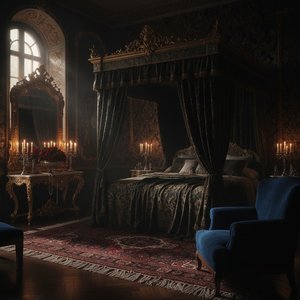 Baroque Drama: Mastering Chiaroscuro and High-Impact Intensity for Luxury Interiors
 Umbra Lucis: Aeterna Civitas
 Shadow & Soul: Mastering Dark Atmosphere and Chiaroscuro for High-Impact Interior Art