--- title: High Renaissance - Wikipedia url: https://en.wikipedia.org/wiki/High_Renaissance hostname: wikipedia.org sitename: Wikimedia Foundation, Inc. date: 2003-11-05 license: CC BY-SA 4.0 --- | Learn more This article needs .[more citations](http...
The transition from the late Middle Ages into the dawn of the 1490s marked more than a mere chronological shift; it was a profound awakening of the human spirit. This period, known to historians as the High Renaissance, represented a brief but breathtaking pinnacle of artistic production in the Italian states. It was an era where the rigid, symbolic hierarchies of the past began to dissolve, replaced by a renewed fascination with the classical traditions of antiquity and the burgeoning philosophy of humanism. As the influence of great patrons like Lorenzo de’ Medici flourished, artists were no longer viewed as mere craftsmen but as elevated intellectuals, capable of exploring the very essence of the human condition through geometry, anatomy, and light.
This era was characterized by a pursuit of perfection that sought to harmonize the divine with the earthly. The expansion of patronage networks allowed for monumental projects that transformed the landscapes of Florence, Rome, and Milan. It was a time when the boundaries between science and art were non-existent; a painter was often also an engineer, a mathematician, or an anatomist. This intellectual synergy created a world where every brushstroke served a larger purpose, aiming to capture not just the likeness of a subject, and even the movement of the soul, but the very order of the universe itself.
The Holy Trinity of Art: Leonardo, Michelangelo, and Raphael
--- title: Renaissance - Art, Culture, Italy | Britannica author: Britannica Editors url: https://www.britannica.com/event/Renaissance/The-High-Renaissance hostname: britannica.com description: Renaissance - Art, Culture, Italy: The importance of Leo...
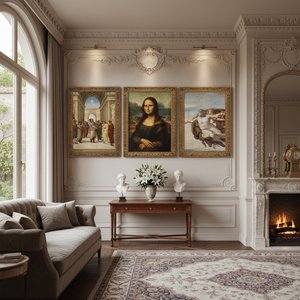
At the heart of this golden age stood three towering figures whose names remain synonymous with greatness: Leonardo da Vinci, Michelangelo Buonarroti, and Raphael Sanzio. To understand the High Renaissance is to witness the interplay of these three distinct geniuses. Leonardo, the quintessential Renaissance man, brought a scientific rigor to his canvases. His works, such as the enigmatic Mona Lisa and the monumental The Last Supper, are studies in psychological depth and anatomical precision. He possessed an unparalleled ability to observe the natural world, translating the subtle complexities of botany, fluid dynamics, and human musculature into art that feels vibrantly alive.
In stark contrast stood Michelangelo, a creator whose work emanated a raw, muscular energy. While he viewed himself primarily as a sculptor, his contributions to painting—most notably the breathtaking frescoes of the Sistine Chapel—redefined the expressive potential of the human body. His David and the Pietà demonstrate a technical mastery that could bend marble into soft flesh, conveying profound spiritual weight through tension and form. Completing this trinity was Raphael, the master of grace and harmony. If Leonardo provided mystery and Michelangelo provided power, Raphael provided clarity. His works, such as The School of Athens, epitomize the Classical spirit, presenting a world of balanced compositions, idealized beauty, and serene intellectualism that became the standard for excellence for centuries to come.
Master Mastery of Light and Shadow: Chiaroscuro and the Sfumato Revolution
In art, chiaroscuro (English: kee-AR-ə-SKOOR-oh, -SKURE-, Italian: [ˌkjaroˈskuːro]; lit. 'light-dark') is the use of strong contrasts between light and dark, usually bold contrasts affecting a whole composition. It is also a technical term used by a...
The true magic of the Renaissance lies in the technical revolutions that allowed artists to transcend flat, two-dimensional surfaces. Perhaps no technique is more iconic than sfumato, a method perfected by Leonardo da Vinci. By blending colors and tones so subtly that they appear as a soft, hazy veil, he eliminated the harsh outlines of his predecessors, creating skin tones that seem to glow with an organic warmth. This "smoky" effect allowed for a seamless transition between light and shadow, lending an ethereal quality to his subjects that invites the viewer into their private, psychological realms.
Parallel to this was the development of chiaroscuro, the dramatic use of strong contrasts between light and dark to achieve a sense of three-dimensional volume. While later associated with the theatricality of the Baroque, its origins lie in the Renaissance quest for realism. By manipulating light to sculpt figures within a composition, artists could direct the viewer's eye and imbue their subjects with a tangible presence. This interplay of illumination and obscurity does more than create depth; it creates drama. We see this evolution continue into the works of later masters like Rembrandt, whose use of light in pieces such as A Jew with the High Cap demonstrates how these Renaissance foundations paved the way for the profound emotional intensity of the centuries that followed.
Venetian Splendor: Titian and the Luminous Legacy of Color
Introduction Imagine stepping into the heart of Venice at its most electric—a world of swirling shadows, flickering candlelight, and a sense of movement so intense it feels as though the canvas might breathe. This is the realm of Jacopo Tintoretto , ...
While the Florentine tradition often emphasized disegno, or the primacy of line and structure, a different kind of magic was unfolding in Venice. The Venetian school, led by the incomparable Titian, embraced colore—the use of color and light to define form and emotion. Titian, the most influential painter of Venice, revolutionized the medium of oil on canvas. His palette was rich and vibrant, utilizing expensive pigments like ultramarine, derived from precious lapis lazuli, to create works that felt both regal and deeply human.
The Venetian masters understood that color could breathe life into a scene. In the hands of Titian, texture became tactile; one can almost feel the weight of velvet or the crispness of lace in his portraits. This approach focused on the juxtaposition of hues to build composition rather than relying solely on rigid outlines. This luminous legacy would later inspire the energetic brushwork of artists like Rubens and Tintoretto, whose works, such as The Origin of the Milky Way, utilized swirling shadows and sudden highlights to create a sense of cinematic movement. The Venetian tradition proved that light and color are not merely decorative elements but are fundamental narrative tools capable of conveying the very pulse of life.
Timeless Elegance: Bringing Renaissance Grandeur into Modern Interiors
A Sanctuary of Light and Vision Nestled within the vibrant pulse of Midtown Atlanta, the High Museum of Art stands as a luminous beacon of creativity, a place where the echoes of history meet the bold strokes of contemporary innovation. To step into ...
The enduring allure of the Renaissance lies in its ability to transcend time, offering a sense of stability, beauty, and profound meaning to any space it inhabits. For the modern enthusiast, integrating these classical aesthetics into a contemporary home is an exercise in soulful decorating. Whether it is a large-scale reproduction of a Michelangelo fresco creating a dramatic focal point in a dining room, or a delicate, light-drenched portrait reminiscent of the Venetian style gracing a quiet study, Renaissance art brings a layer of historical depth that modern minimalism often lacks.
At OriginalUniqueArt.com, we believe that art should be an accessible discovery rather than an intimidating pursuit. We specialize in bringing these legendary textures and emotions into your living space through our bespoke, hand-painted oil reproductions. Our artists, trained in the highest academic traditions, recreate the visible brushstrokes and deep tonal ranges of the masters on 100% cotton canvas. Whether you wish to "remix" history by transforming a personal photograph into a Rembrandt-style masterpiece or seek a multi-panel set to adorn a grand staircase, our mission is to help you build a collection that reflects your unique story. Discover how the timeless brilliance of the Renaissance can transform your home into a sanctuary of curated beauty.
Journey through the High Renaissance! Explore 10 iconic masterpieces by Leonardo da Vinci, Michelangelo & Raphael. Discover art history, techniques & find museum-quality reproductions to elevate your home decor on .
Explore the Renaissance! Discover key artists like Leonardo & Michelangelo, the rise of Humanism, and groundbreaking techniques such as chiaroscuro. A comprehensive guide for art enthusiasts.
Immerse yourself in the dramatic world of Jacopo Tintoretto. Explore 25 iconic Renaissance masterpieces defined by light, shadow, and emotion. Find inspiration for museum-quality art reproductions and curated decor. Discover all masterpieces on OriginalUniqueArt.com.
Explore the unparalleled genius of the High Renaissance Big Three. Dive into a comparative masterclass on Leonardo’s mystery, Michelangelo’s power, and Raphael’s harmony to discover how these icons redefined human potential and Western art forever.

 Chiaroscuro
 Master of Drama: The 25 Greatest Artworks by Jacopo Tintoretto
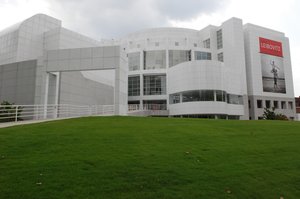 High Museum of Art