The Great Reset: Escaping Rococo Excess for Neoclassical Order
 Neoclassical Art: The Ultimate Guide to Timeless Power, Precision, and the Classical Ideal
The Great Reset: Moving from Rococo Excess to Neoclassical Order Neoclassicism Unveiled: The Timeless Elegance of Order, Reason, and Classical Antiquity The Enlightenment Catalyst: From Rococo Excess to Rational Restraint The Revival of Antiquity: Ex...
To understand the seismic shift that birthed Neoclassicism, one must first envision the sensory overload of the mid-18th century. Before the era of rational restraint, European art was dominated by the exuberant, often overwhelming excesses of the Rococo period. It was a world of swirling ornamentation, whimsical frivolitas, and a certain decorative chaos that prioritized the ephemeral over the eternal. As the Enlightenment began to cast its intellectual light across the continent, a profound desire emerged for something more stable, more grounded, and more intellectually rigorous. This movement was far more than a mere aesthetic preference; it was a deliberate, disciplined pursuit of truth through the lens of order and clarity.
This transition represented a cultural reset, a move away from the unscripted energy of the previous age toward a sanctuary of profound logic and historical reverence. Artists sought to anchor the human spirit in the timeless principles of the past, rejecting emotional excess in favor of a renewed appreciation for classical ideals. It was an era that demanded a return to the fundamental truths of form, seeking to find beauty not in the accidental or the raw, but in the carefully structured and the mathematically harmonious. In this way, Neoclassicism functioned as a necessary reaction, providing a sense of stability and moral fortitude during a period of immense intellectual transformation.
Architectural Authority: Symmetry, Geometry, and the Power of Form
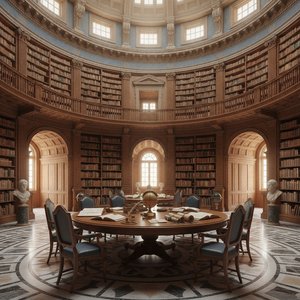 The Timeless Elegance of Academic Classicism: A Journey Through Order, Precision, and the Pursuit of Perfection
The Foundations of Order: Defining the Principles of Academic Classicism Mastering Perfection: A Definitive Guide to the Elegance and Precision of Academic Classicism The Foundations of Order: Defining the Principles of Academic Classicism To underst...
The architecture of the Neoclassical era serves as a physical manifestation of this newfound desire for structure. Moving away from the organic, often unpredictable flourishes of earlier styles, Neoclassicism championed the use of symmetry, geometry, and clear proportions. This was an aesthetic of authority, where every column, pediment, and archway served to communicate strength and permanence. The movement drew its immense power from a deep respect for the Great Tradition, utilizing the structured language of line and form to create spaces that felt both monumental and balanced.
In modern design, this architectural legacy continues to inspire those seeking to infuse their environments with a sense of prestige and stability. The use of geometric precision does not merely decorate a space; it defines its character, providing a rhythmic cadence that guides the eye and settles the mind. By adhering to established canons of proportion, Neoclassical-inspired design achieves a quiet power that transcends the ephemeral nature of daily life. It is an architecture of intention, where the weight of history is balanced by a clean, sophisticated clarity that remains as impactful in a contemporary penthouse as it was in an 18th-century palazzo.
The Renaissance of Antiquity: Reclaiming Greco-Roman Virtue in Modern Spaces
 Gavin Hamilton
The Sculpted Canvas: The Life and Legacy of Gavin Hamilton In the grand tapestry of the eighteenth century, few figures managed to weave together the threads of artistic creation and archaeological discovery as seamlessly as Gavin Hamilton . Born in ...
At its very core, Neoclassicism was a renaissance of antiquity, a profound admiration for the sculptural achievements and philosophical depth of Greece and Rome. This was not merely a nostalgic glance backward, but an active reclamation of classical virtues—harmony, clarity, restraint, and universality. The rediscovery of the ruins at Pompeii and Herculaneont provided a tangible connection to a lost world of grace, offering artists a living blueprint for an elevated existence. Figures like Gavin Hamilton acted as bridges between these worlds, weaving together the threads of artistic creation and archaeological discovery to breathe life back into the silent marble of the past.
For the modern collector, this fascination with antiquity offers a way to infuse contemporary interiors with a sense of timelessness. Incorporating classical motifs—whether through the depiction of idealized busts, such as those rendered by Vincenzo Camuccini, or the graceful drapery found in the works of Johann Gottfried Schadow—allows for a curated conversation between eras. This dialogue between the ancient and the modern creates a unique tension, where the majesty of Roman and Greek traditions meets the vibrant pulse of contemporary vision. It is an invitation to inhabit a space that honors the enduring legacy of human civilization while remaining firmly rooted in the present.
Mastering the Ideal: Precision, Anatomical Accuracy, and the Pursuit of Perfection
 Classical Bust of a Bearded Male Seen in Profile
Classical Bust of a Bearded Male Seen in Profile by Vincenzo Camuccini Vincenzo Camuccini’s “Classical Bust of a Bearded Male Seen in Profile” is more than just a meticulously rendered pencil sketch; it's a window into the artistic sensibilities of N...
The pursuit of perfection was the driving force behind the technical mastery of the Neoclassical movement. This was an art form that demanded more than mere talent; it required a rigorous intellectual framework and a disciplined command over technique. The movement emphasized anatomical precision and the meticulous rendering of form, as seen in the works of artists like Anton Raphael Mengs, whose compositions achieved a harmonious synthesis of classical mythology and refined elegance. There was a profound belief that true beauty resided in the mastery of composition, ensuring that every brushstroke and every element within the frame served a greater narrative or moral purpose.
This dedication to precision is evident in the way Neoclassical artists utilized light and shadow to define form with absolute clarity. The use of hatching and cross-hatching techniques to build tonal values allowed for an incredible illusion of depth and texture, as seen in the detailed portraiture of the era. This level of craftsmanship creates a sense of permanence; the works do not merely depict a subject, they capture its eternal essence. In an age often characterized by rapid change and digital fleetingness, the precision of Academic Classicism offers a sanctuary of profound logic, where the pursuit of the ideal remains an unwavering standard of excellence.
Timeless Integration: Blending Classical Grandeur with Contemporary Interiors
 Mougins Museum of Classic Art
A Timeless Dialogue: The Soul of Mougins Nestled within the sun-drenched, medieval heart of Provence, the Mougins Museum of Classic Art serves as a profound sanctuary where the echoes of antiquity meet the vibrant pulse of modernity. To step into thi...
The true brilliance of Neoclassical style lies in its ability to integrate seamlessly into modern aesthetics without losing its historical soul. It is a style that does not demand dominance, but rather provides a foundation of elegance upon which contemporary design can flourish. When we look at the way classical motifs can breathe life into modern spaces—much like the curated encounters found in the Mougins Museum of Classic Art—we see that true beauty is a continuous thread woven through the fabric of time. The juxtaposition of ancient forms with modern textures creates a sophisticated landscape that is both intellectually stimulating and visually harmonious.
For the discerning decorator or collector, the challenge and the opportunity lie in this very blend. Whether it is through the use of large-format murals that recreate historical grandeur or the placement of a single, meticulously rendered reproduction, Neoclassicism provides the tools to create spaces of profound character. By embracing the principles of order, symmetry, and classical grace, one can transform a contemporary room into a sanctuary of refined elegance, proving that the bold return to order is not just a movement of the past, but a vital, living component of modern luxury design.