The Foundations of Order: Defining the Principles of Academic Classicism
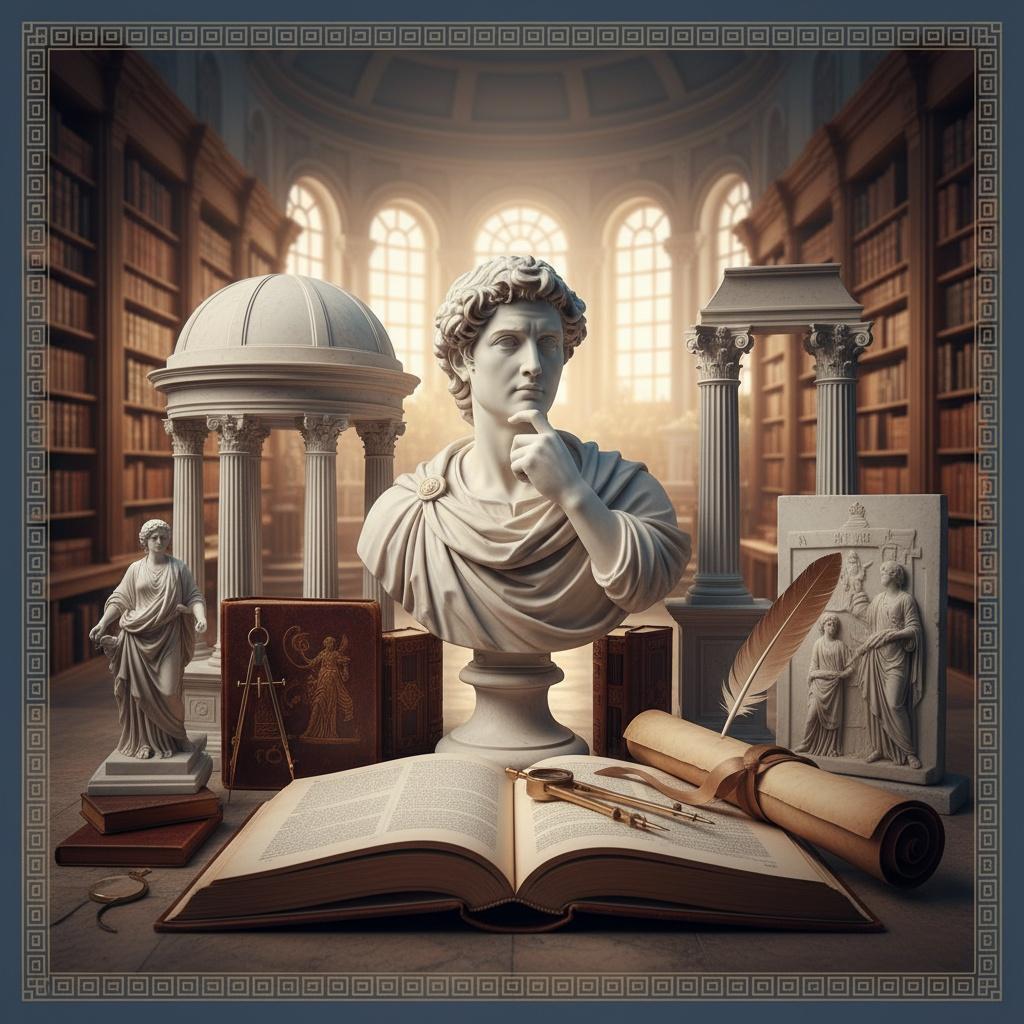
To understand the profound allure of Academic Classicism, one must first look beyond the surface of the canvas and into the rigorous intellectual framework that governs it. This movement was never merely about aesthetic preference; it was a disciplined pursuit of truth through the lens of order, clarity, and historical reverence. At its core, Academic Classicism emerged as a reaction against the perceived chaos of more emotive styles, seeking instead to anchor art in the timeless principles of antiquity. It is an art form rooted in the belief that beauty is not found in the accidental or the raw, but in the carefully structured and the mathematically harmonious.
The movement draws its strength from a deep respect for the Great Tradition, emphasizing a hierarchy of genres where history painting stands at the pinnacle. This discipline requires an artist to master the nuances of composition, ensuring that every element serves a greater narrative or moral purpose. There is a profound sense of stability in these works; they do indeed provide a sanctuary of logic in an ever-changing world. By adhering to established canons of proportion and subject matter, the Academic artist seeks to transcend the ephemeral nature of daily life, capturing instead the eternal essence of human experience through a lens of refined restraint.
Ultimately, this foundation of order serves as the bedrock for all subsequent classical mastery. It is a commitment to the idea that art should educate the soul and elevate the mind, using the structured language of line and form to communicate universal truths that resonate across centuries.
The Pursuit of Ideal Beauty: Technique, Proportion, and Anatomical Precision
In the realm of Academic Classicism, beauty is a deliberate construction rather than a spontaneous occurrence. The artist does not simply observe nature; they perfect it. This process, known as the pursuit of ideal beauty, involves a meticulous study of anatomy and proportion to strip away the imperfections of reality, leaving behind a polished, idealized version of the subject. To achieve this, the practitioner must possess an almost scientific understanding of the human form, from the subtle tension of a muscle beneath the skin to the precise geometry of the skeletal structure.
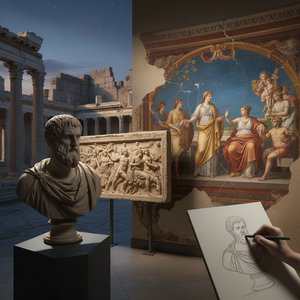
This technical rigor is most evident in the mastery of anatomical precision. An artist trained in the academic tradition understands that every limb and feature must exist in perfect equilibrium with the whole. This is not merely about accuracy, but about achieving a sense of grace known as decorum. Through the careful application of light and shadow—the technique of chiaroscuro—the artist breathes life into these idealized forms, creating a three-dimensional presence that feels both tangible and divine. The brushwork, often smooth and nearly invisible, serves to hide the hand of the creator, allowing the viewer to lose themselves in the seamless reality of the composition.
The result is an art that celebrates the triumph of human intellect over raw matter. By refining nature through rigorous technique, the Academic artist creates a window into a world where perfection is attainable, offering the viewer a glimpse of a higher, more harmonious existence.
Masters of the Academy: Examining the Legacy of Neoclassical Visionaries
The history of Academic Classicism is written in the brushstrokes of visionaries who transformed the academies of Europe into crucibles of excellence. These masters did not work in isolation; they were part of a lineage that passed down secrets of composition and color from one generation to the next. When we look at the works of figures such as Giuseppe Lucatelli, we see the profound influence of earlier masters like Mengs and Conca, illustrating how grace and harmony were cultivated through a continuous dialogue with the past. Their work embodies an architectural approach to painting, where every figure is placed with the precision of a sculptor.
Further north, the "Father of Danish Painting," Christoffer Wilhelm Eckersberg, demonstrated how these classical principles could be adapted to capture the luminous landscapes and realistic portraits of the Golden Age. His ability to marry Neoclassical structure with an observant, naturalistic eye expanded the boundaries of the movement. Similarly, the works of Carlo Raimondi remind us of the era's obsession with elegant interiors and the meticulous detail that characterized the mid-19th century. These artists were not merely painters; they were scholars of light and form, dedicated to preserving the dignity of their subjects through a sophisticated visual vocabulary.
The legacy of these masters remains a cornerstone of art history. Their commitment to excellence established a standard of craftsmanship that continues to inspire collectors and artists alike, proving that true mastery is an enduring inheritance that transcends the era of its creation.
Light, Line, and Lore: The Technical Elements of Classical Composition
The technical architecture of a classical masterpiece relies on a delicate interplay between line, light, and narrative lore. In Academic painting, line acts as the primary structural element; it defines the boundaries of form and guides the viewer's eye through the intended path of the composition. A well-executed line provides clarity and prevents the visual confusion that can arise from overly complex or fragmented imagery. This linear precision is often paired with a controlled use of light, which is used not just to illuminate, but to sculpt. Light in this context is a tool of drama and focus, highlighting the most significant narrative elements while allowing less critical details to recede into soft, atmospheric shadows.
Beyond the physical elements lies the lore—the mythological, historical, or allegorical stories that provide the painting with its intellectual depth. A classical composition is rarely just a portrait or a landscape; it is a vessel for storytelling. The artist uses symbols and carefully arranged figures to evoke specific emotions or to recount epic tales of heroism and virtue. This layering of meaning ensures that the artwork remains engaging on multiple levels: first as a visual marvel, and subsequently as a profound narrative experience.
When these elements—line, light, and lore—are harmonized, the painting achieves a state of compositional unity. The viewer is not merely looking at a picture, but is being led through a carefully choreographed experience where every shadow and every stroke contributes to a singular, powerful message.
Timeless Elegance in Modern Spaces: Integrating Academic Art into Contemporary Interiors
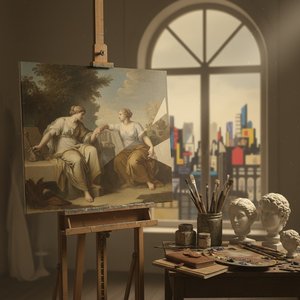
In an age of rapid technological change and transient trends, the integration of Academic Classicism into modern interiors offers a sense of permanence and sophistication. Bringing a piece of this tradition into a contemporary home is not about recreating a museum; rather, it is about creating a dialogue between the old and the new. The structured elegance of a Neoclassical portrait or a landscape can serve as a grounding force in a minimalist room, providing a focal point that commands attention through its depth and complexity.
Modern design often emphasizes clean lines and neutral palettes, which provides the perfect canvas for the rich textures and dramatic lighting found in classical reproductions. Whether it is a large-scale mural that transforms a ceiling into a frescoed masterpiece or a meticulously detailed oil painting that adds a layer of historical weight to a study, the key lies in balance. The tactile quality of a handmade oil reproduction—with its visible, three-dimensional brushstrokes—adds a "living" element to a space, preventing modern minimalism from feeling sterile.
Ultimately, embracing Academic Classicism in the modern era is an act of curation. It allows the collector to surround themselves with works that celebrate human achievement and enduring beauty, ensuring that their personal environment reflects a profound appreciation for the timeless elegance of the masters.
For those seeking to bring this level of historical grandeur into their own collections, OriginalUniqueArt.com offers an unparalleled gateway to the Old Masters. From exquisite Giclée prints to bespoke, hand-painted oil reproductions that capture every nuance of the original, we specialize in making the sublime accessible. Whether you wish to transform a personal memory through our custom portrait services or explore our vast library of classical masterpieces, our commitment to academic excellence ensures that every piece is a testament to the enduring power of art.