
The Revolution on Canvas: The Rise of Mexican Muralism and the 'Big Three'
 Mexican muralism
Mexican muralism refers to the art project initially funded by the Mexican government in the immediate wake of the Mexican Revolution (1910–1920) to depict visions of Mexico's past, present, and future, transforming the walls of many public buildings...
To understand the heartbeat of Mexican art, one must look to the walls of its public institutions, where the dust of the Mexican Revolution had barely settled before a new kind of battle began. This was not a conflict waged with bullets, but with brushes and pigments, as a burgeoning nation sought to redefine its very soul. In the wake of the 1910–1920 revolution, the Mexican government initiated an unprecedented art project designed to transform public buildings into didactic landscapes. These murals were intended to reshape the collective understanding of Mexico's past, present, and future, speaking directly to a largely illiterate population through the universal language of imagery.
At the vanguard of this movement stood the legendary group known as The Big Three, or Los Tres Grandes. This triumvirate—comprising Diego Rivera, José Clemente Orozco, and David Alfaro Siqueiros—brought a monumental scale and socio-political gravity to the medium. Their work was characterized by a profound commitment to national identity, weaving together themes of class struggle, indigenous resilience, and the industrial promise of the future. Through massive, sweeping compositions, they turned architecture into an active participant in the political discourse of the era, ensuring that art was no longer a luxury for the elite but a shared heritage for the people.
The technical mastery required for such endeavors was as staggering as the subject matter itself. These artists utilized large-scale fresco techniques and innovative applications of pigment to ensure their messages endured against the elements. For the modern historian or collector, these works represent more than mere decoration; they are the visual chronicles of a nation's metamorphosis. While the original murals remain anchored to their historic walls, the spirit of this movement—its bold lines and epic scale—continues to inspire those who seek to bring the weight of history into their own contemporary spaces through high-quality reproductions.
Identity and Introspection: The Surrealist Soul of Frida Kahlo
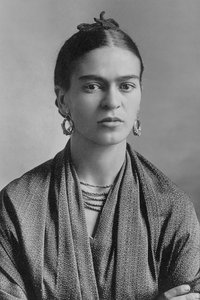 Frida Kahlo
A Life Forged in Pain and Passion Magdalena Carmen Frida Kahlo y Calderón, known to the world simply as Frida Kahlo, was more than an artist; she was a force of nature, a defiant spirit whose life became inextricably woven into her art. Born on July ...
While the muralists looked outward toward the masses, another voice emerged from the vibrant streets of Coyoacán, looking inward with a piercing, unflinching gaze. Magdalena Carmen Frida Kahlo y Calderón, known globally as Frida Kahlo, created an art form that was intensely personal, often blurring the lines between autobiography and myth. Her life, marked by the physical trauma of a devastating bus accident and the emotional turbulence of her tumultuous marriage to Diego Rivera, became the very ink with which she wrote her visual diary.
Though André Breton, the founder of Surrealism, famously championed her as a natural surrealist, Kahlo herself often resisted such labels. Her work did not seek to depict the illogical dreams of the unconscious mind so much as the visceral reality of her own suffering and identity. In masterpieces like My Dress Hangs There (1933), we see a captivating blend of personal narrative and cultural critique. The painting, created during her time in New York, uses a vibrant palette of warm earth tones contrasted with cooler blues to explore themes of displacement and the longing for her Mexican roots. Through the symbolic presence of her iconic Tehuana dress hanging amidst American industrial symbols, she masterfully critiques capitalism while asserting her cultural permanence.
Kahlo’s technique was meticulous, often incorporating elements of collage and folk art to create a textured, dreamlike atmosphere. Her self-portraits serve as windows into a soul that navigated the complexities of gender, pain, and heritage. To encounter her work is to engage in an intimate dialogue with a woman who transformed physical limitation into boundless creative expression. For those moved by her resilience, owning a hand-painted reproduction allows for a daily reconnection with her unwavering spirit and the profound beauty found within vulnerability.
Symbolism and Heritage: Decoding Pre-Hispanic and Colonial Influences
Latin American art, an introduction · Mexican muralism: Los Tres Grandes—David Alfaro Siqueiros, Diego Rivera, and José Clemente Orozco · International Style ...
The aesthetic brilliance of Mexican art history does not exist in a vacuum; it is deeply rooted in a complex tapestry of pre-Hispanic civilizations and colonial legacies. Long before the arrival of European masters, the Olmec, Maya, and Aztec civilizations utilized mural painting to communicate religious doctrines and historical triumphs. This ancient tradition of storytelling through imagery provided a foundational layer upon which later Mexican artists would build, creating a unique visual language that is distinctly Mesoamerican in its symbolic depth.
During the colonial period, art was often used as a tool for evangelization, with religious themes dominating the canvas and the church ceiling. However, this era also saw a fascinating hybridization of styles. Indigenous artisans integrated their own motifs, colors, and sensibilities into Christian iconography, creating a unique Mestizo aesthetic. This blending of the sacred and the indigenous is evident in the way later artists utilized pre-Hispanic artifacts, such as jade ornaments and ancient pottery, as symbols of national pride and ancestral connection.
Understanding these layers of symbolism is essential for any true student of art history. Every vibrant color choice and every recurring motif—from the agave plant to the eagle—carries a weight of historical significance. This rich heritage makes Mexican art an endlessly fascinating subject for study and curation, offering a depth of meaning that rewards the observant viewer with a profound sense of continuity between the ancient past and the modern era.
From Coyoacán to the World: The Legacy of Casa Azul and National Identity
The Frida Kahlo Museum (Spanish: Museo Frida Kahlo), also known as The Blue House (La Casa Azul) for the structure's cobalt-blue walls, is a historic house museum and art museum dedicated to the life and work of Mexican artist Frida Kahlo. It is in t...
No exploration of Mexican art is complete without a journey to La Casa Azul, the Blue House. Located in the heart of Coyoacán, this cobalt-walled sanctuary was not merely the birthplace and home of Frida Kahlo; it was a living laboratory of artistic collaboration and cultural expression. The house itself, with its vibrant blue exterior and lush central courtyard, embodies the bohemian energy that defined the Mexican avant-garde during the early twentieth century.
Today, the Frida Kahlo Museum serves as a portal into an era where art and life were inextricably intertwined. Within these walls, one can find the remnants of a life lived with fierce honesty—from her cherished Tehuana dresses to the very easel she used while convalescing. The museum preserves the intimate atmosphere of the period, allowing visitors to walk through the same spaces where Kahlo and Rivera debated art, politics, and the future of Mexico. It is a place where the personal becomes political, and where the domestic space is elevated to a site of monumental cultural importance.
The legacy of Casa Azul extends far beyond its physical boundaries, influencing how we perceive the relationship between an artist's environment and their creative output. The house stands as a testament to the power of place in shaping identity. For collectors, the essence of this era—the warmth, the color, and the profound sense of belonging—can be captured through carefully selected artworks that honor this enduring Mexican spirit.
Preserving the Vision: Collecting and Honoring Mexican Masterpieces
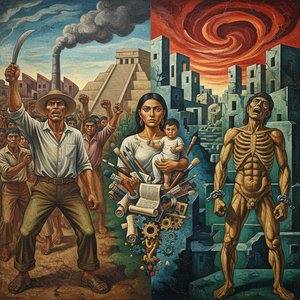 Revolution on Canvas: Exploring the Socio-Political Power & Artistic Legacy of Mexican Muralism
The Genesis of a Movement: Post-Revolutionary Mexico & the Call for New Art Museo Nacional de Arte Explore Mexico's art history at MUNAL! Discover 3,000+ works from the 16th-20th centuries in a stunning palace. See iconic sculptures & colonial to mod...
The preservation of Mexican art history is a responsibility shared by historians, museums, and passionate collectors alike. The works of the Muralists and Kahlo are not merely relics of a bygone era; they are living legacies that continue to shape contemporary movements, including the Chicano art movement in the United States. To collect these works—or their high-quality reproductions—is to participate in the ongoing narrative of a nation's struggle and triumph.
For the discerning enthusiast, acquiring a piece of this history requires an appreciation for authenticity and craftsmanship. At OriginalUniqueArt.com, we specialize in bringing these canonical masterpieces into the homes of modern admirers. Our mission is to make fine art accessible through meticulously hand-painted oil reproductions that honor the original artist's technique. Whether it is the bold, impasto brushstrokes reminiscent of the muralists or the delicate, symbolic precision of Kahlo’s portraits, our artists use 100% cotton canvas and professional-grade oils to ensure every piece possesses the tactile depth and tonal range of a true museum original.
We invite you to explore our curated collection of the world's most significant works. From custom commissions that transform your personal memories into the style of the Old Masters to large-format murals that recreate historical grandeur, we provide the tools to curate a space of profound cultural significance. Through our dedication to academic excellence and meticulous craftsmanship, we ensure that the vibrant visions of Mexican art history continue to inspire and illuminate generations to come.


