The Transformation of the Gare d’Orsay The structure on the banks of the Seine began its life not as a sanctuary for paint and sculpture, but as a bustling terminal for the Chemin de Fer de Paris à Orléans. Built between 1898 and 1900 for the Exposit...
The late nineteenth century did not arrive with a quiet whisper, but with a radical break from the controlled, somber environments of the studio. For generations, the Académie des Beaux-Arts dictated a standard of muted earth tones and rigid, historical allegories that felt increasingly disconnected from the pulse of a transforming France. A group of visionaries—names like Monet, Renoir, and Pissarro—chose instead to step into the open air. This movement, known as en plein air painting, was less about a manifesto and more about a sensory rebellion. They traded the heavy shadows of Neoclassicism for the flickering reality of the landscape, seeking to record the precise sensation of a single moment before the light shifted forever.
This transition changed the very definition of what a canvas could hold. It moved art away from the monumental and toward the immediate. When we look at works like those found in the Musée d'Orsay, we see this shift in action; the heavy atmosphere of the nineteenth century meets the shifting textures of artists who sought the ephemeral. They did not merely paint trees or water; they painted the way light breathes upon them. This era marked a cultural pivot where the subject became secondary to the perception of the subject itself.
A Closer Look at the Spectrum: The Physics of Impressionist Color
Chromaticity is an objective specification of the quality of a color regardless of its luminance. Chromaticity consists of two independent parameters, often specified as hue (h) and colorfulness (s), where the latter is alternatively called saturatio...
To understand the impact of this movement, one must look past the scenery and into the science of the palette. The Impressionists were intuitive practitioners of what we now define as color science. They understood that light is not a static entity but a complex mixture of wavelengths. While the human eye perceives white light as a neutral reference, these artists knew it was actually a combination of all visible colors. By utilizing broken brushstrokes, they applied the principle of partitive mixing—placing small dots or strokes of pure color side by side so that, from a distance, the viewer's eye blends them into a single, luminous hue.
This technique relies heavily on the relationship between complementary colors. By placing opposites from the color wheel—such as blue and orange or red and green—in close proximity, they created a visual vibration that mimicked the natural intensity of sunlight. They moved away from the traditional subtractive mixing of pigments, which often resulted in muddy, dark tones, toward a more additive-style approach on the canvas. This allowed for a higher level of saturation and a sense of radiance. Even the shadows were transformed; rather than using black or grey, they infused them with the complementary colors of the light source, ensuring that even the darkest corners of a composition felt alive with reflected light.
The Shifting Horizon: Capturing Atmospheric Transitions
Captivating Subject and Enchanting Atmosphere This exquisite impressionist masterpiece transports viewers to a tranquil water lily pond, where nature’s delicate beauty is captured in a harmonious balance of light and color. The scene centers around a...
The true challenge for any Impressionist was the clock. The movement was obsessed with the transient—the way a morning mist clings to reeds or how a sunset dissolves a horizon into a violet haze. This required an intense focus on the quality of light, which varies dramatically depending on the time of day and weather. Midday light is often white and intense, creating sharp contrasts, whereas the soft, warm hues of dusk favor longer wavelengths, casting the world in gold and pink.
Claude Monet’s later works, particularly his studies of water lilies, exemplify this pursuit of the fleeting. In his triptychs, the boundary between sky and water dissolves, creating a sense of infinite fluidity. This ability to capture atmospheric transitions allows the viewer to experience the passage of time within a single frame. Whether it is the cool, bluish light of a cloudy afternoon or the warm, glowing palette of a rural sunset, these artists mastered the art of the ephemeral. They captured the precise moment when the air feels heavy with moisture or when the sun breaks through clouds to turn a pond into a mosaic of cerulean and gold.
Examining the Surface: Texture, Impasto, and the Vibration of Light
Vibrant Celebration of Nature’s Beauty This captivating still life captures a lush bouquet of flowers rendered with lively, expressive brushwork that embodies the essence of Impressionism. The composition centers on a generous arrangement of blooms i...
Beyond color and light, the physical application of paint provided the movement with its tactile soul. The Impressionist canvas is rarely a smooth, finished surface; it is a landscape in itself. Through the use of impasto—the thick, textured application of oil paint—artists like Vincent van Gogh or even the more structured Paul Cézanne added a dimension of physical depth that mimics the energy of life. These visible, energetic brushstrokes do not just represent movement; they create it.
When light hits a heavily textured surface, it interacts with the ridges and valleys of the paint, creating miniature highlights and shadows within the artwork itself. This adds a layer of complexity to the luminosity. In works like Renoir’s Bouquet in front of a Mirror, the interplay of thick strokes and lighter glazes creates a sense of abundance and vitality. This texture prevents the eye from resting too easily on any one point, forcing a continuous, rhythmic engagement with the canvas. It is this very imperfection—the visible hand of the artist—that provides a depth of field far beyond what a flat, digital print can achieve.
Moving Toward Modernity: The Legacy of Luminous Vision
A Sanctuary of Light: Exploring The Courtauld Gallery Nestled within the grand neoclassical embrace of Somerset House on London’s Strand, The Courtauld Gallery is more than a mere repository of masterpieces; it's an immersive journey into the heart o...
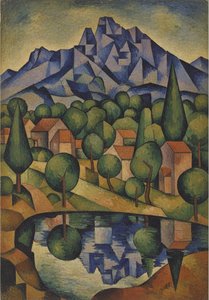
The ripples of the Impressionist revolution extend far into the development of modern art. The movement laid the groundwork for Post-Impressionism and even the bold, graphic intensity of contemporary styles. We see the lineage of this luminous vision in the structured, geometric investigations of Cézanne, which paved the way for Cubism, and in the rhythmic, colorful vitality of Matisse. Even the more modern, aggressive contours found in contemporary Pop Art owe a debt to the Impressionist liberation of color and form.
Today, we continue to find solace in these works because they mirror our own experience of time. In an age defined by digital permanence, there is something profoundly moving about an artwork that celebrates the transient. Whether exploring the curated collections of The Barnes Foundation or wandering through the halls of the Courtauld Gallery, the legacy remains: a reminder to pause, to notice the subtle shift in a shadow, and to find wonder in the everyday. At OriginalUniqueArt.com, we celebrate this enduring spirit by bringing these textures and light-drenched moments to life through meticulous, hand-painted reproductions that honor the original artist's passion.
Explore the profound legacy of Paul Cézanne. Discover how his mastery of geometric forms and vibrant color bridged Impressionism and Cubism, offering timeless inspiration for fine art collectors and enthusiasts seeking to understand the foundations of modern art.
Discover the enchanting alchemy of Impressionism. Explore how the mastery of oil on canvas, through glazing and impasto, captures eternal light and emotion. Perfect for lovers of Monet and Van Gogh seeking the profound depth of hand-painted fine art.
Embark on a visual journey through the luminous world of Impressionism. Discover how masters like Claude Monet captured the magic of reflections and light, and learn how to bring this timeless, hand-painted elegance into your home with our museum-quality oil reproductions.

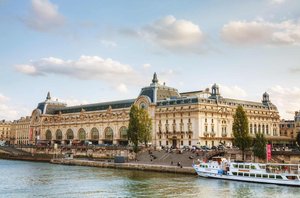 Musée d'Orsay
 Chromaticity
 The Water Lily Pond, Pink Harmony
 Bouquet in front of a Mirror
 Courtauld Gallery