High Medieval Art Guide: Masterpieces of Gold, Devotion, and Gothic Grandeur
Explore the majesty of High Medieval Art. From Gothic cathedrals to gilded altarpieces, discover the era of spiritual grandeur. Expert insights into masterpieces of gold and devotion for art enthusiasts and professional decorators seeking historical elegance.
The Dawn of a New Era: From Romanesque Shadows to Gothic Light Shadows & Splendor: A Journey Through the Soul of Gothic Art and Architectural Grandeur The Divine Ascent: From Romanesque Shadows to Gothic Light The Shadow of Faith: Exploring Gothic Ar...
To understand the High Medieval period, one must first envision a Europe emerging from a long, heavy silence. Before the soaring heights of the 12th century, the Romanesque era held the world in a state of earth-bound stability, characterized by thick, fortress-like walls and dim, introspective spaces. However, as the High Middle Ages took hold between 1000 and 1300 AD, a fundamental shift occurred in the human perception of the cosmos. This was an era of rebirth, where relative stability allowed for urban growth and a newfound spiritual confidence that reached toward the heavens. The heavy, somber shadows of the preceding centuries began to dissolve, replaced by an architectural ambition that sought to conquer height and light.
This transition was not merely a change in construction technique but a profound theological revolution. Architects in Northern France began to experiment with pointed arches, ribbed vaults, and flying buttresses, engineering marvels that allowed walls to become thinner and windows to grow larger. As these structures rose, they transformed the cathedral from a dark sanctuary into a luminous vessel of divine presence. This period witnessed the birth of an aesthetic language where stone seemed to defy gravity, creating cavernous spaces that invited the soul to ascend alongside the eyes. It was a time when the physical world began to mirror the celestial hierarchy, setting the stage for the most breathtaking era of Western visual culture.
Sacred Splendor: The Theological Power of Gold and Luminous Iconography
The Original Epic: Why High Medieval Art is the Ultimate Visual Powerhouse Medieval art The medieval art of the Western world covers a vast scope of time and place, with over 1000 years of art in Europe, and at certain periods in Western Asia and Nor...
In the heart of the Gothic era, light was far more than a physical phenomenon; it was a manifestation of the divine itself. For the medieval viewer, to step into a cathedral was to enter a space where the boundary between the earthly and the eternal became permeable. This was achieved through the masterful use of gold and vibrant stained glass, creating what can only be described as a high-impact visual language. When we gaze upon gilded surfaces, such as those found in Byzantine-influenced works, we are not merely observing precious metal; we are witnessing an attempt to capture the uncreated light of heaven. The golden glow strips away worldly shadows, focusing the heart on the sanctity of the subject and creating a transcendental space that feels removed from time.
This luminous atmosphere was meticulously orchestrated through advanced artistic techniques designed to evoke awe. Artists utilized methods such as glazing and bole staining to achieve a depth of color and a textural richness that seemed to pulse with life. The iconography of this period—featuring figures like the Virgin Mary receiving the divine messenger Gabriel—was encoded with complex theological truths, intended to be read by both the literate and the illiterate alike. Every shimmer of gold leaf and every hue of cobalt blue in a window served a singular purpose: to act as a shimmering bridge between the human condition and the divine presence, ensuring that the viewer remained in a state of constant spiritual contemplation.
Masterpieces in Wood and Stone: Analyzing the High Altar of St Mary and Gothic Sculpture
A Masterpiece Forged in Wood and Faith The High Altar of St Mary (Crucifixion), crafted by the renowned German sculptor Wit Stwosz between 1477 and 1489, stands as a monumental achievement of late Gothic art. More than simply a religious depiction, i...
While the cathedrals provided the stage, it was the monumental sculpture and altarpieances that provided the narrative soul of the High Medieval period. Few works embody this dramatic intensity more profoundly than the High Altar of St Mary in Kraków’s St Mary’s Basilica. Crafted by the renowned German sculptor Wit Stwosz between 1477 and 1489, this retable is a monumental achievement of late Gothic art. It is a profound exploration of human emotion rendered in intricately carved wood, where the artist utilized sturdy oak for structure and supple linden for the figures to achieve an almost palpable sense of grief and hope. The Crucifixion scene within this altar presents Christ not as a passive figure, but as one of immense suffering, his body contorted in agony, surrounded by apostles whose faces reflect a devastatingly human despair.
Beyond the grand altarpieces, the era was defined by a flourishing of sculptural workshops, such as the Ptujska Gora workshop in Slovenia. These ateliers were beacons of the International Gothic style, bringing sophisticated techniques from European epicenters like Prague to the far reaches of the continent. Using materials like sandstone, these craftsmen produced works of serene dignity, such as the sculpture of St. Barbara, which captured a sense of profound spiritual contemplation. Whether carved in the heavy wood of a German retable or the fine sandstone of a Slavic pilgrimage church, these sculptures functioned as immersive portals, drawing the viewer into a world where every fold of drapery and every expression of sorrow was engineered for maximum emotional resonance.
The Evolution of Devotion: Transitioning from Medieval Piety to Renaissance Humanism
A Courtly Vision: The Life and Art of Master Theodoric Master Theodoric, or Magister Theodoricus as he was known in Latin inscriptions, stands as the most thoroughly documented painter of Bohemian Gothic art. Born sometime before 1328 – his precise o...
As the High Middle Ages progressed toward the late 14th and 15th centuries, the art began to reflect a subtle but significant shift in the human experience. We see the emergence of a period that bridged the gap between intense medieval piety and the burgeoning realism of Renaissance humanism. This was a time when artists began to move beyond purely symbolic representations toward a more nuanced depiction of the human form and its emotional depth. The works of masters like Wit Stwosz exemplify this transition; while his themes remained deeply rooted in religious devotion, his execution embraced an emerging naturalism and a "late Gothicbaroque" style that prioritized expressive movement and psychological complexity over strict geometric precision.
This evolution was mirrored by the rise of courtly art, seen in the works of figures like Master Theodoric, the favored painter of Holy Roman Emperor Charles IV. His work represented a more sophisticated, courtly vision of the Gothic, blending religious narrative with an increasing awareness of the individual. This era was a crucible of innovation, where the rigid structures of early medieval iconography began to soften, allowing for a greater exploration of the human saga. It was no longer just about the depiction of divine truth, but about capturing the weight of that truth upon the human soul, setting the stage for the profound anatomical and perspectival breakthroughs that would soon define the Renaissance.
Preserving the Legacy: Modern Applications of Medieval Aesthetics in Interior Design
Introduction Imagine stepping back in time—to a world emerging from shadow, where faith and reason wrestled for dominance, and artistic expression blossomed with newfound complexity. The 13th to late-Medieval period (roughly the 1000s through the ear...
The grandeur of the High Medieval era continues to exert a powerful influence on contemporary aesthetics, particularly in the realm of high-end interior design and architectural curation. The principles of "Gothic Grandeur"—the use of dramatic scale, the interplay of light and shadow, and the introduction of rich, tactile textures—are frequently employed by professionals to create spaces of profound character and authority. In luxury hospitality and corporate environments, the integration of elements like large-format murals or multi-panel group paintings can recreate the epic visual impact of a medieval retable, providing a sense of historical continuity and prestige.
Modern designers often look to the "remixing" of art history to bring this era to life. By utilizing techniques such as custom canvas wraps or even recreating the appearance of aged craquelure, one can introduce the soulful depth of the Middle Ages into a modern setting. Whether it is through the use of gold-toned accents that mimic sacred splendor or the installation of large-scale frescoes that evoke the soaring heights of a cathedral ceiling, the legacy of the High Medieval period remains a vital tool for those seeking to transform a space from a mere room into a sanctuary of beauty and contemplation.
Note for Professionals: At OriginalUniqueArt.com, we specialize in bringing these historical masterworks into the modern era through high-quality, hand-painted oil reproductions. For procurement managers and decorators looking to furnish large-scale projects with museum-grade aesthetics, our catalog offers unparalleled depth, from custom portrait commissions to multi-panel architectural sets. Visit us at OriginalUniqueArt.com to explore our full collection of classical masterpieces.
Immerse yourself in the profound emotion of Rogier van der Weyden’s greatest works. From Northern Renaissance mastery to exquisite textures, explore 25 iconic Flemish paintings and find museum-quality reproductions for your collection. Discover all masterpieces on OriginalUniqueArt.com.
Explore the epic scale and bold impact of High Medieval art. From the golden glow of sacred masterpieces to the dramatic intensity of Gothic sculpture, discover the visual power that continues to inspire modern design. Dive into history with an expert eye for aesthetic greatness.
Discover the breathtaking elegance of International Gothic art. Explore a world of gilded manuscripts, courtly splendor, and the delicate transition from medieval symbolism to Renaissance naturalism through an expert art-historical lens.
Explore 10 defining masterpieces of Geometric Abstraction! Discover Kandinsky, Mondrian & Malevich’s iconic works. Find museum-quality art reproductions and curated decor ideas to elevate your home at OriginalUniqueArt.com.
Explore the profound beauty of Gothic art. From soaring cathedrals to sacred panel paintings, discover the history, symbolism, and spiritual legacy of this transformative era through our expert-led guide for art lovers and collectors.

 Gothic Grandeur: Exploring the Spiritual Majesty and Architectural Innovation of Medieval Masterpieces
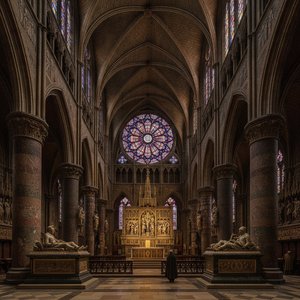 Gothic Grandeur: Decoding the Bold Design and Epic Visual Impact of High Medieval Art
 High Altar of St Mary (Crucifixion)
 master theodoric
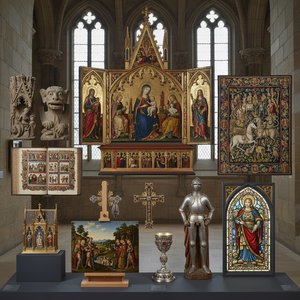 Late Medieval Masterpieces: 10 Artworks That Defined an Era | OriginalUniqueArt



