Captivating Subject and Rich Symbolism This remarkable Baroque masterpiece vividly depicts the biblical theme of charity and compassion through the depiction of the Seven Acts of Mercy. The scene captures a moment of divine intervention and human kin...
To enter the world of Baroque art is to witness a profound dialogue between the visible and the invisible, where light does not merely illuminate but actively participates in the drama of salvation. During the seventeenth century, the canvas became a sacred stage, utilizing the technique of chiaroscuro—the intense, calculated contrast between deep shadows and radiant highlights—to bridge the gap between the earthly and the divine. This was not art for mere decoration; it was an immersive experience designed to stir the soul. In the hands of masters like Caravaggio, this manipulation of light created a sense of immediate, visceral presence, pulling the viewer into the very center of the sacred narrative.
The brilliance of this era lies in how shadow serves as a vessel for mystery. When we look at works such as The Seven Acts of Mercy by Caravaggio, we see how darkness swallows the periphery, forcing our gaze toward the luminous gestures of compassion and divine intervention. This technique, often referred to as tenebrism, allows the artist to sculpt figures out of the void, imbuing them with a three-dimensional weight that feels almost tangible. It is a visual language where every flicker of light represents a moment of grace, and every encroaching shadow reminds us of the human struggle. This interplay creates a tension that is both beautiful and unsettling, mirroring the complex spiritual landscape of the Counter-Reformation.
The Weight of the Cross: Emotional Realism and Physical Suffering
While the Renaissance often sought to portray the divine through idealized beauty and calm rationality, the Baroque era embraced the raw, unvarnished reality of human suffering. The Crucifixion, as a central motif, became an exploration of anatomical precision and psychological depth. Artists moved away from the triumphant Christ of earlier centuries to focus on the physical agony of the sacrifice. In the works of Matthias Grünewald, for instance, we encounter a visceral realism where the wounds, the crown of thorns, and the very texture of the flesh are rendered with an intensity that demands empathy.
This commitment to realism extends beyond the physical to the emotional landscape of those witnessing the event. The sorrow of the Virgin Mary or the bewildered grief of John the Apostle is not merely depicted; it is felt through the meticulous rendering of facial expressions and the heavy, slumped postures of mourning figures. In the paintings of Caravaggio, we see an intensification of emotion where the weight of grief is physically manifested in the stark, shadowed anatomy of the grieving. This era of art teaches us that true devotion often requires us to look directly into the face of pain to find the seeds of redemption.
Mastering the Moment: The Dramatic Composition of the Counter-Reformation
The Dramatic Visions of Giovan Battista Beinaschi Giovan Battista Beinaschi, a name perhaps less immediately recognizable than some of his Baroque contemporaries, nevertheless occupies a significant place in the artistic landscape of 17th-century Ita...
The Baroque period revolutionized how stories were told on canvas by choosing the most climactic, high-stakes moment of an event. Rather than showing the quiet moments before or after a tragedy, painters like Simon Vouet and Giovan Battista Beinaschi captured the precise second when action and emotion collide. This sense of "movement imported into mass" creates a dynamic energy that prevents the viewer from remaining a passive observer. The use of diagonal lines, swirling drapery, and pyramidal structures guides the eye upward, simulating a spiritual ascension even amidst scenes of earthly turmoil.
This compositional mastery was deeply tied to the needs of the Church during the Counter-Reformation. Art was tasked with being didactic—teaching the faithful through compelling imagery that was easy to understand yet impossible to ignore. By utilizing dramatic diagonals and theatrical lighting, artists could direct the viewer's attention to specific symbolic elements, such as the bound hands of a martyr or the luminous face of a saint. In the works of Aureliano Milani, we see how the legacy of the Carracci brothers was utilized to bring a muscularity and energy to figure articulation, ensuring that every limb and gesture contributed to the overarching narrative of faith and sacrifice.
Sacred Sculptures and Painted Altarpieces: A journey Through European Sanctuaries
A Sanctuary of Sacred Splendor In the heart of Valladolid, where the echoes of Spain’s imperial past still linger in the air, lies the National Museum of Religious Carvings—a profound sanctuary dedicated to the spiritual and artistic soul of a nation...
The experience of Baroque devotion was never confined to a single medium; it was an architectural and sculptural symphony. In places like the National Museum of Religious Carvings in Valladolid, one can encounter the breathtaking zenith of Spanish sculptural mastery. Here, artists like Gregorio Fernández breathed life into wood and stone, creating polychrome figures so realistic that they seemed to pulse with a quiet, internal prayer. These sculptures were designed to exist within the context of grand altarpieces, where the interplay of natural light from cathedral windows would dance across carved drapery, creating an ever-changing spectacle of devotion.
This sacred atmosphere is echoed in the architectural grandeur of spaces like the Jesuit Church in Mannheim or the Santa Chiara monastery in Naples. In these settings, the boundaries between the building and the art dissolve. Massive frescoes by artists such as Egid Quirin Asam utilize quadratura—an illusionistic painting technique—to trick the eye into perceiving celestial depths that transcend physical walls. Whether it is a gilded stucco ceiling or a marble pilaster, every element of the environment was orchestrated to transport the faithful into a state of divine contemplation, making the entire sanctuary a living monument to the Baroque spirit.
Beyond the Canvas: The Enduring Resonance of Crucifixion Iconography
Crucifixions and crucifixes have appeared in the arts and popular culture from before the era of the pagan Roman Empire. The crucifixion of Jesus has been depicted in a wide range of religious art since the 4th century CE, frequently including the ap...
The themes explored in these Baroque masterpieces—sacrifice, redemption, and the search for meaning amidst suffering—remain strikingly relevant in our modern era. While we may view these works through a historical or aesthetic lens, the emotional gravity of a well-placed brushstroke or the haunting glow of a saint’s face continues to stir something universal within us. Even in more contemporary, subversive interpretations, such as the existential struggles found in the work of Francis Bacon, the echoes of the Crucifixion motif persist, proving that the iconography of the cross is a permanent fixture in the human psyche.
Ultimately, religious art serves as a bridge between our world and the infinite. It offers us a rare opportunity to pause and reconnect with the profound mysteries of existence. Whether we are admiring the delicate grace of a Renaissance Madonna or the dramatic, shadow-drenched intensity of a Spanish Baroque masterpiece, we are participating in a centuries-old dialogue about what it means to believe, to suffer, and to hope. These works remind us that even in the deepest shadows, there is a search for light, and even in the greatest agony, there is a profound beauty to be found.
At OriginalUniqueArt.com, we celebrate this enduring passion for the masters. We invite you to explore our collection of high-quality, hand-painted reproductions that bring the dramatic soul of the Baroque into your contemporary space, preserving the texture, emotion, and grandeur of history for the modern collector.
Dive into the raw emotion and dramatic lighting of history's most iconic crucifixion paintings. From Baroque tenebrism to modern surrealism, explore masterpieces that define visual intensity. Expertly curated for lovers of profound art and high-impact design.
Explore the dramatic world of Baroque art! Discover iconic masters like Caravaggio & Rembrandt, their techniques, and the movement's lasting impact. Expert insights for collectors & enthusiasts at OriginalUniqueArt.
Explore the breathtaking drama of Baroque art. Discover how masters like Rubens and Caravaggio used chiaroscuro to evoke profound emotion, faith, and grandeur through the masterful interplay of light and shadow in this expert art history guide.

 The Seven Acts Of Mercy
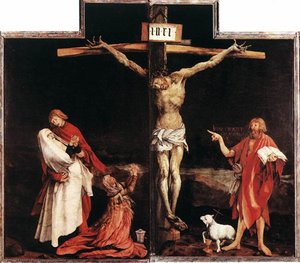 The Crucifixion
 Giovan Battista Beinaschi
 National Museum of Religious Carvings
 Crucifixion in the arts




