The portraiture of Queen Elizabeth I (1533–1603) spans the evolution of English royal portraits in the early modern period (1400/1500–1800), from the earliest representations of simple likenesses to the later complex imagery used to convey the power ...
To gaze upon a portrait from the Elizabethan era is to witness more than a mere likeness; it is to read a carefully constructed manifesto of statehood and divine right. During the reign of Elizabeth I, the art of the portrait evolved from simple, intimate representations into a complex language of symbols designed to project the majesty of the "Virgin Queen." In her earlier years, we see a softer iconography—delicate roses and pious prayer books that spoke to her personal devotion and the fragile peace of a nation finding its footing. However, as England emerged from the shadows of religious conflict and faced the existential threat of the Spanish Armada in 1588, the imagery shifted toward the monumental.
The later portraits of Elizabeth I became masterclasses in political branding. The introduction of globes, crowns, swords, and classical columns served to anchor her authority within a global context, while pearls and moons whispered of her purity and celestial connection. This was an era where the artist acted as a propagandist. While masters like Nicholas Hilliard—the Queen’s official limner and goldsmith—specialized in the exquisite intimacy of portrait miniatures painted with watercolours on vellum, other artists worked to create the larger-than-life presence required for the long galleries of great country houses. These works were not just art; they were tools of diplomacy, commissioned as gifts for foreign monarchs to assert England's rising prominence during a period of unprecedented cultural flowering in poetry, music, and theatre.
Mastering the Brush: The Evolution of Oil Painting Techniques in British Royal Courts
Oil painting is a painting method involving the procedure of painting with pigments combined with a drying oil as the binder. It has been the most common technique for artistic painting on canvas, wood panel, or copper for several centuries. The adva...
The transition from the delicate precision of tempera to the rich, luminous depth of oil painting revolutionized how history was recorded on canvas. While the oldest known oil paintings trace back to the 7th-century Buddhist murals in Bamiyan, Afghanistan, it was the European refinement of the medium that allowed British royal portraitists to capture the very essence of light and texture. The technique is a slow, deliberate dance of chemistry. By combining pigments with drying oils—such as linseed, poppy seed, or walnut oil—artists gained the ability to layer translucent glazes, creating a sense of "breathing" skin and shimmering fabric that egg tempera simply could not achieve.
At the heart of this mastery lies the fundamental rule of "fat over lean." To prevent the inevitable tragedy of cracking and peeling, each subsequent layer of paint must contain a higher proportion of oil than the one beneath it. This meticulous process, often involving the use of turpentine as a thinning agent, allows for a profound range of tones, from the deepest shadows to the most brilliant highlights. We see this technical evolution in the works of Hans Holbein the Younger, whose influence brought a new psychological penetration to the English court. In his depictions, such as his portrait of Jane Seymour, we witness a shift where the figure begins to move away from a flat pattern toward a more vital, three-dimensional presence, setting the stage for the grander, more atmospheric traditions that would follow in the centuries to come.
Victorian Elegance: Still Life and Character in 19th-Century Portraiture
As we move forward through the corridors of time into the Victorian era, the focus of British art shifted from the grand political statements of the Tudor monarchs to a more intimate, often soulful exploration of character and the beauty of the everyday. This period saw the rise of artists who found profound meaning in the quietude of a single object or the dignified stillness of a human face. Edward Ladell, a master of the still life, exemplified this Victorian sensibility. His works, characterized by an almost photographic realism, captured the subtle interplay of light on glass and the rich textures of fruit and flowers, often arranged with an exotic flair that reflected the era's fascination with luxury and global trade.
Parallel to this was the rise of portraitists like Herbert Colborne Oakley, who possessed a rare ability to freeze human dignity within the canvas. Influenced by the monumental philosophy of George Frederic Watts, Oakley utilized sophisticated glazing techniques to sculpt emotion through light. His portraits were not merely records of appearance but explorations of the human psyche, rendered with a serene, meditative grace. This era of painting was defined by a reverence for craftsmanship and an obsession with detail—a period where the artist’s ability to render the reflection on a polished surface or the soft weight of a velvet sleeve served as a testament to the enduring elegance of British artistic identity.
From Miniature to Monumental: The Changing Scale of British Historical Art
A Window into a Nation’s Soul: Exploring the Yale Center for British Art Nestled within the heart of New Haven, Connecticut, the Yale Center for British Art isn't merely a museum; it’s an immersive experience, a pilgrimage through five centuries of B...
The physical scale of British portraiture has always been a reflection of its changing social purpose. In the Elizabethan age, the portrait miniature was a deeply personal object, often painted on vellum and glued to playing cards, intended to be held in the hand or worn close to the heart. These were intimate tokens of loyalty and affection, circulating through a court defined by secret plots and political intrigue. However, as the centuries progressed, the demand for larger-scale works grew alongside the architectural ambitions of the British aristocracy.
The development of large-scale oil paintings on canvas allowed for the creation of "monumental" art—works designed to dominate entire walls in the great halls of estates. This shift required a different kind of technical prowess, moving from the fine brushwork of the miniaturist to the bold, expressive use of palette knives and larger brushes. We see this trajectory reflected in the very institutions that preserve our heritage, such as the British Council Collection or the Yale Center for British Art, which house works ranging from the small-scale and intimate to the expansive and breathtaking. This evolution in scale mirrors the expansion of the British experience itself, moving from the localized concerns of a Tudor kingdom to the global reach of an empire, with art serving as the permanent visual record of that journey.
The Chemistry of Legacy: Preserving the Texture and Soul of Masterpieces
There's a calendar on the wall of a drying room I keep thinking about, dates crossed out in blue, then in black, then finally in a red that means something has gone wrong twice already. The room itself does nothing, which is the whole point of it. Ca...
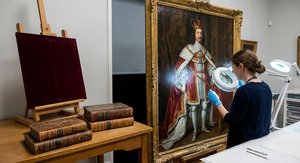
To truly appreciate a historical masterpiece, one must understand that a painting is a living, breathing chemical entity. The longevity of the works we admire today—from the heavy, textured impasto of later eras to the smooth, glazed surfaces of the Renaissance—depends entirely on the slow, invisible process of oxidative polymerisation. Unlike watercolours that dry through evaporation, oil paint cures by absorbing oxygen from the air, cross-linking into a solid, durable film. This is a stubborn, slow-moving science; an independent artist may spend months waiting for layers to cure properly before applying a protective varnish of pine resin or frankincenter.
This chemical complexity is what gives a hand-painted reproduction its "soul." When we look at the visible brushstrokes and the deep tonal range of a high-quality oil painting, we are seeing the result of intentional layering and the careful management of moisture and oil. The preservation of these textures—preventing the dreaded cracking that occurs when the "lean" layers are applied too heavily over "fat" ones—is the ultimate challenge of the art historian and the conservator alike. Whether it is a contemporary realist piece like Reginald Henry Campbell’s portrait of Walter Runciman or a rediscovered Victorian treasure, the enduring power of these works lies in this delicate balance between artistic vision and the immutable laws of chemistry, ensuring that the textures of the past remain vibrant for generations to come.
At OriginalUniqueArt.com, we celebrate this intersection of history and artistry. Whether you are looking to transform a modern memory into a Renaissance-style masterpiece through our custom commissions or seeking to explore the profound beauty of historical reproductions, we bring the expertise of the masters to your contemporary space.
Explore the captivating history of royal portraiture with OriginalUniqueArt. Discover the symbolism, artistry, and enduring legacy of regal imagery in art. Expert insights for collectors & enthusiasts.
Discover the enduring beauty of Victorian portraiture reimagined through Impressionist light. Explore exquisite hand-painted oil reproductions and bespoke commissions that capture the soul of 19th-century elegance for your home. Experience museum-quality artistry with OriginalUniqueArt.com.
Discover the luminous magic of oil on copper paintings. Explore the alchemical brilliance, Renaissance history, and exquisite techniques that create a jewel-like radiance unlike any canvas, perfect for discerning collectors seeking unparalleled depth and light.
Explore the hidden secrets of Old Master paintings through X-ray imaging and radiography. Discover how science reveals pentimento, pigment alchemy, and the profound layers of history beneath the surface of classical masterpieces.

 Portraiture of Elizabeth I
 Oil painting
 Yale Center for British Art
 Waiting for the Paint to Cure: How Long a Commissioned Oil Painting Really Takes