The Aesthetic of Silence: Defining Minimalism in Contemporary Design
In the frantic rhythm of the modern era, there exists a profound longing for stillness—a desire to retreat from the cacophony of digital noise into spaces that breathe. This movement toward minimalism is far more than a mere trend in interior styling; it is an architectural and emotional pursuit of clarity. At its core, minimalist design seeks to strip away the superfluous, leaving behind only what is essential, intentional, and beautiful. It is an aesthetic of silence, where the absence of clutter becomes a deliberate choice, allowing the soul to find repose within the architecture of a room.
To understand minimalism is to appreciate the power of the void. It is not about emptiness, but about curated presence. When we remove the distractions of ornate patterns and excessive ornamentation, we invite a new kind of focus. This discipline requires a sophisticated eye, one that recognizes that a single, well-placed object can command more attention than a thousand scattered trinkets. In this context, design becomes a meditative practice, transforming a house into a sanctuary of quiet luxury.
Curating the Void: How Minimalist Art Creates Visual Breathing Room
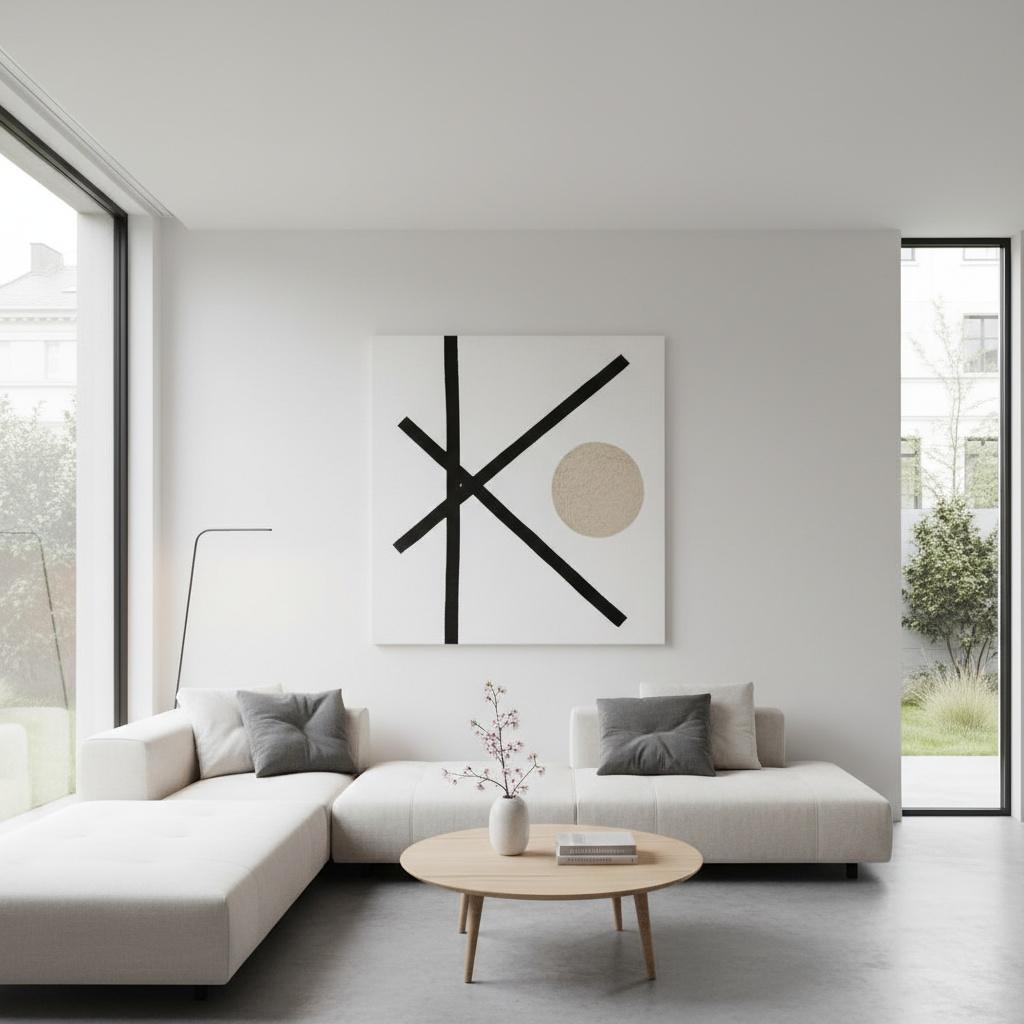
The true magic of a minimalist interior lies in its ability to facilitate visual breathing room. In a densely decorated space, the eye is constantly pulled in different directions, exhausted by the struggle to process competing stimuli. However, when art is introduced with restraint, it acts as an anchor. A single, impactful piece of art provides a focal point that stabilizes the room, offering the gaze a place to rest and contemplate without distraction.
This curation requires a delicate balance between the artwork and the surrounding negative space. The "void" around a painting is just as vital as the pigment on the canvas itself. By allowing significant margins of empty wall space, we grant the artwork the dignity it deserves, turning a simple wall into a gallery-grade presentation. This intentionality creates an atmosphere of sophisticated tranquility, where every element feels purposeful and every shadow tells a story of light and form.
Sculptural Sophistication: Integrating Geometric Metalwork and Modern Forms
In the realm of minimalist luxury, texture and shape take center stage. When color palettes are muted, the silhouette becomes the primary language of expression. This is where geometric wall art and modern sculptures emerge as essential protagonists in the design narrative. Consider the striking impact of an elegant stainless steel geometric sculpture; its laser-cut precision and mathematical symmetry introduce a sense of order and structural integrity to a living space.
The introduction of metallic elements, such as rose gold or gold finishes, adds a layer of warmth and prestige without disrupting the minimalist ethos. These pieces—often inspired by the intricate symmetries found in Islamic art—provide a sculptural sophistication that bridges the gap between modern abstraction and classical elegance. Whether it is the sharp lines of a stainless steel starburst or the fluid curves of an iron violin sculpture, these objects serve as much more than decoration; they are architectural interventions that redefine the very dimensions of the room.
Texture and Light: The Role of Tactile Depth in a Minimalist Palette
A common misconception is that minimalism lacks depth. On the contrary, when color is restrained, the importance of tactile texture becomes paramount. Without a riot of hues to engage the senses, the eye begins to seek out the subtle interplay of light on different surfaces. This is where the distinction between a flat print and a true masterpiece becomes evident. A high-quality reproduction, characterized by visible, impasto brushstrokes and thick layers of oil paint, introduces a three-dimensional quality that breathes life into a monochromatic room.
Light plays a transformative role in this sensory experience. As sunlight moves across a room, it catches the ridges of a textured canvas or the reflective sheen of a polished metal sculpture, creating a dynamic environment that changes throughout the day. This interplay between light and shadow ensures that even the most minimal space remains visually engaging and emotionally resonant. It is through this tactile depth that a minimalist interior achieves its ultimate goal: a sense of richness that is felt rather than merely seen.
Beyond Decoration: Transforming Living Spaces into Mindful Sanctuaries
Ultimately, the integration of minimalist art is an act of transformative design. It is a journey from the superficial to the profound. By choosing pieces that emphasize form, texture, and light, we move beyond mere decoration and enter the realm of lifestyle curation. We are no longer just filling walls; we are constructing environments that support mindfulness, clarity, and peace.
A home curated with such intention becomes a mindful sanctuary—a place where the external world fades, and the internal self can flourish. Whether through the commanding presence of a large-scale geometric sculpture or the quiet elegance of a textured oil painting, minimalist art provides the framework for a life lived with purpose. In the end, the power of less is found in the abundance of meaning it allows us to experience.
For those seeking to elevate their personal collections or transform their professional spaces, OriginalUniqueArt.com offers an unparalleled gateway to fine art excellence. From bespoke, hand-painted oil reproductions that capture the very soul of the Old Masters to exquisite contemporary sculptures and museum-quality Giclée prints, OriginalUniqueArt provides the tools for sophisticated curation. Whether you are looking to commission a custom portrait from a personal photograph or seeking expert art consultation to find the perfect piece for a modern interior, our global legacy of quality ensures that your vision is realized with unmatched artistry and prestige.