The Silent Vocabulary: An Introduction to Iconography and Visual Metaphor
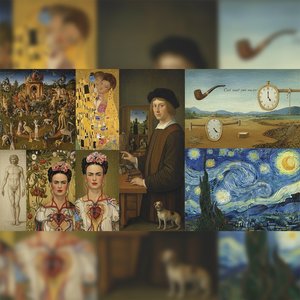
To the untrained eye, a painting may appear as a mere arrangement of pigment and light, a beautiful window into a distant era. Yet, for the true connoisseur, every brushstroke serves as a syllable in a profound, silent language. This is the realm of iconography—the study of symbols and images that convey complex theological, philosophical, or personal narratives without the need for written text. Throughout history, artists have utilized visual metaphors to bridge the gap between the tangible world and the intangible realm of human emotion and spiritual truth. When we gaze upon a classical masterpiece, we are not merely observing a scene; we or participating in a sophisticated dialogue where a single wilted rose or a strategically placed skull can alter the entire meaning of the composition.
Understanding this vocabulary requires more than just aesthetic appreciation; it demands an immersion into the cultural and historical context of the era in which the work was birthed. The power of symbolic art lies in its ability to layer meaning, offering a surface-level beauty that rewards the patient observer with deeper, often subversive, truths. As we peel back these layers, we begin to see that the canvas is not a static object but a living vessel of human intellect and mystery.
Celestial Narratives: Decoding the Sun, Moon, and Stars in Folk and Mythic Art
The heavens have always served as the ultimate canvas for humanity's most primal aspirations. In many traditions, particularly within folk art and mythic compositions, celestial bodies act as the primary protagonists of a cosmic drama. Consider the captivating interplay found in works such as Marj Bond’s Eagle and Jaguar Warriors (Sun, Moon, Star). Here, the bold lines and textured surfaces do more than depict warriors; they anchor the figures within a divine hierarchy. The sun represents the vital, life-giving force of the present moment, while the moon offers a reflective, cyclical perspective on time and femininity.
The inclusion of stars further expands this narrative, suggesting an infinite reach that connects the earthly struggle of the warrior to the eternal rhythm of the universe. These celestial symbols are rarely mere decorations; they are anchors of identity and destiny. By weaving these elements into the fabric of the artwork, the artist invites the viewer to contemplate their own place within the vast, swirling mechanics of the cosmos, turning a singular image into a map of spiritual existence.
The Elegance of Allegory: Symbolism in Art Nouveau and the Secessionist Movement
As we transition from the mythic to the more modern, the turn of the 20th century brought a refined, often melancholic approach to symbolism through movements like Art Nouveau and the Vienna Secession. In this era, symbolism became more stylized, moving away from literal depictions toward elegant, flowing allegories. The works of Koloman Moser, particularly his Vignettes for the Secessionausstellung, exemplify this transition. His prints utilize delicate, rhythmic lines to evoke a sense of sophisticated beauty that borders on the ethereal, where every curve and figure carries a weight of cultural significance.
This period mastered the art of "melancholic beauty," using organic forms to represent the fleeting nature of life and the decadence of the era. Similarly, in the works of Raphael Kirchner, such as Girls with purple surrounds, we see how color and form are used to create an atmosphere of psychological depth. The use of specific hues—like the enveloping purples—serves as a symbolic shroud, suggesting mystery, royalty, or perhaps the twilight of an era. In these movements, the symbol is no longer just a signifier; it is an aesthetic experience in itself, wrapped in the luxurious textures of the fin de siècle.
Nature’s Hidden Language: Flora, Fauna, and the Subtext of the Natural World
The natural world provides perhaps the most abundant library of symbols available to the artist. From the smallest petal to the most predatory beast, nature is imbued with a subtext that speaks to growth, decay, strength, and vulnerability. In classical portraiture and landscape painting, the inclusion of specific flora is rarely accidental. A lily may signify purity and rebirth, while an ivy vine climbing a crumbling pillar serves as a poignant reminder of the persistence of life amidst the ruins of human ambition.
Fauna, too, plays a critical role in this botanical and zoological lexicon. The lion represents courage and sovereignty, while the serpent introduces themes of temptation or transformation. When an artist meticulously renders these elements, they are constructing a landscape of meaning where the environment itself reflects the internal state of the subjects depicted. To study these natural symbols is to learn how to read the very breath of the earth as captured through the medium of oil and pigment.
The Weight of Color: Psychological and Spiritual Resonance in Pigment
Beyond form and figure, color operates as one of the most potent symbolic tools in an artist's repertoire. Color possesses a psychological weight that can bypass the intellect and strike directly at the soul. Deep blues often evoke the infinite, the divine, or the sorrowful, reminiscent of the Virgin Mary’s mantle in Renaissance iconography. Conversely, vibrant reds can pulse with the energy of passion, the violence of war, or the sanctity of martyrdom.
The mastery of color involves understanding how different pigments interact with light and shadow to create emotional resonance. An artist does not merely choose a color for its hue, but for its ability to manipulate the viewer's emotional temperature. The interplay of warm ochres and cool ultramarines can create a sense of balance or profound tension, guiding the eye through a narrative arc that is felt as much as it is seen. In the hands of a master, color becomes a spiritual medium, capable of illuminating the deepest recesses of the human psyche.
Curating Meaning: How to Integrate Symbolic Masterpieces into the Modern Collector's Home
For the modern collector, acquiring art is an act of curation that extends far beyond mere decoration; it is the construction of a personal sanctuary of meaning. Integrating symbolic pieces into a contemporary living space requires a thoughtful approach to composition and atmosphere. A single, large-scale symbolic work can serve as a focal point, a "soul" for a room that invites contemplation and conversation.
When selecting works, consider how the themes of the art resonate with your own values and the energy of your architectural environment. Whether it is a multi-panel set that expands a narrative across a wide wall or a meticulously rendered oil reproduction that brings the grandeur of the Old Masters into a modern study, each piece should contribute to a cohesive intellectual landscape. By surrounding oneself with art that possesses depth and hidden layers, one transforms a house into a gallery of personal history and enduring wisdom.
At OriginalUniqueArt.com, we celebrate this profound connection between the viewer and the canvas. From our beginnings in 2004 as ArtsCad, our mission has been to make the profound beauty of the Old Masters and the intricate symbolism of art history accessible to a global audience. Whether you are seeking a hand-painted oil reproduction that captures the tactile impasto of a masterpiece or a high-fidelity Giclée print for your collection, we provide the expertise and craftsmanship necessary to bring these enduring stories into your home.