The Art of First Impressions: Establishing Prestige through Curated Wall Decor
In the realm of high-end hospitality and executive design, the atmosphere of a workspace is never merely incidental; it is a silent ambassador of brand identity. For the discerning hotel designer, the lobby or the private executive suite serves as a stage where prestige is performed through texture, light, and visual narrative. When a guest or a client enters a room, their perception of authority and luxury is instantly shaped by the walls that surround them. A sterile, modern office may offer efficiency, but it lacks the soul required to inspire awe. By introducing curated wall decor—specifically pieces that evoke the grandeur of the Old Masters—a designer can bridge the gap between contemporary minimalism and timeless sophistication. The psychological impact of fine art lies in its ability to command attention and signal a deep appreciation for heritage. A carefully selected reproduction does more than fill a void; it establishes a conversation. Whether it is the commanding presence of a portrait or the serene landscape that offers a moment of respite, these works act as anchors within an interior. They provide a sense of permanence in an era of transient design, grounding a modern glass-and-steel structure with the weight of human history and artistic achievement.Architectural Synergy: Integrating Historical Masterpieces into Modern Office Design
The true mastery of interior design is found in the seamless dialogue between the old and the new. Integrating historical masterpieces into a modern office requires more than mere placement; it demands an understanding of architectural synergy. Consider the interplay of light and shadow within a contemporary suite, where clean lines and neutral palettes provide the perfect canvas for the rich, emotive brushstrokes of an Impressionist or Baroque reproduction. The challenge for the professional designer is to ensure that the art does not merely sit upon the wall but becomes an intrinsic part of the architectural fabric. This integration can be achieved through a thoughtful study of color and form. Much like Carl Fieger’s 1911 watercolor studies for diplomatic interiors, which utilized muted greens and golds to harmonize with structural elements, modern designers can use art to soften the edges of industrial materials. When a reproduction is chosen to echo the tonal range of the room—perhaps pulling subtle ochres from a Renaissance landscape to complement leather upholstery—the result is a cohesive, immersive environment. This level of curation transforms a functional workspace into an curated gallery, where every element feels intentional and deeply considered.Beyond the Frame: Utilizing Large-Scale Murals and Ceiling Frescoes for Grandeur
For projects of immense scale, such as hotel atriums or grand ministerial halls, the boundaries of traditional framing must be transc拓展. To truly elevate a space, one must look upward and outward, utilizing large-format murals and ceiling frescoes to create an enveloping sense of wonder. There is a profound architectural power in recreating the grandeur of historical ceilings, reminiscent of the intricate designs seen in Enrico Del Debbio’s ministerial projects. Such works do not merely decorate a room; they redefine its volume, drawing the eye upward and expanding the perceived boundaries of the architecture. These large-scale commissions, painted on massive canvas rolls, allow designers to implement historical splendor with modern precision. A ceiling fresco can transform a standard corporate boardroom into a space of monumental importance, much like the Sistine Chapel inspires reverence through its sheer scale and narrative depth. These installations act as architectural landmarks within a building, providing a focal point that is both breathtaking and structurally integrated. When art transcends the frame to become part of the ceiling or the wall itself, it ceases to be an accessory and becomes the very essence of the space.The Tactile Advantage: Why Hand-Painted Oil Reproductions Outshine Digital Prints
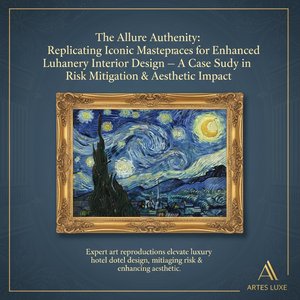
In an age dominated by digital reproduction, there is a growing hunger for the authentic and the tactile. For the luxury designer, the distinction between a high-quality Giclée print and a hand-painted oil reproduction is fundamental to the success of a project. While a print offers accuracy, it remains a flat, two-dimensional interpretation of an image. In contrast, a handmade oil reproduction possesses a "soul" that can only be achieved through the physical application of pigment. The visible brushstrokes, the impasto texture, and the subtle variations in light created by layered oils provide a depth that digital inks simply cannot replicate. The tactile advantage lies in the way light interacts with the surface of the canvas. A hand-painted work features a topographical complexity; the ridges of the paint catch the ambient light of a room, creating a dynamic experience that changes as one moves through the space. This physical presence is essential for high-end environments where the goal is to provide a multi-sensory experience. Furthermore, the use of professional-grade materials—such as flexible gesso and safflower oils to prevent yellowing—ensures that these pieces remain vibrant and structurally sound for generations, protecting the designer's long-term aesthetic investment.Tailored Excellence: Custom Commissions and Bespoke Color Matching for Professional Spaces
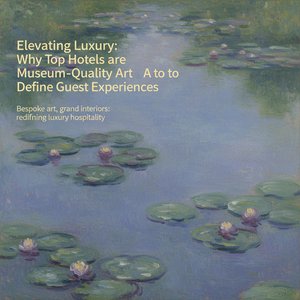
The pinnacle of luxury design is customization. No two professional spaces are identical, and therefore, no two art selections should be. The ability to "remix" art history or to commission bespoke pieces allows a designer to achieve a level of precision that off-the-shelf solutions cannot offer. Through advanced services like digital mockups, designers can visualize exactly how a composition will interact with their specific color palette and furniture arrangements before a single drop of paint touches the canvas. This removes the uncertainty often associated with large-scale commissions. Whether it is requesting a "period shift"—transforming a modern photograph into a 17th-century Rembrandt-style portrait—or utilizing multi-panel layouts to span a wide, contemporary staircase, the possibilities for bespoke creation are limitless. Designers can even request specific color matching to ensure that the blues of a Monet landscape perfectly align with the velvet of an accent chair. This level of tailored excellence ensures that the artwork is not just a beautiful addition, but a custom-engineered component of the interior design strategy, resulting in a workspace that is truly unique, prestigious, and profoundly inspiring.For professionals seeking to realize these visions, OriginalUniqueArt.com offers an unparalleled service for the global design community. From hand-painted oil reproductions to large-scale architectural murals, OriginalUniqueArt provides the expertise and craftsmanship required to transform modern offices into timeless masterpieces.