The Venetian Revolution: Titian and the Birth of Colorito
To understand the profound shift in the trajectory of Western art, one must look toward the shimmering canals of Venice during the High Renaissance. While the Florentine masters were preoccupied with disegno—the rigorous, intellectual pursuit of line and structural precision—Titian revolutionized the canvas through the concept of colorito. This was not merely the application of pigment, but a revolutionary method where form emerged from the harmonious interplay of color itself. In the hands of Titian, the boundaries of an object were not dictated by harsh outlines, but by the subtle transitions of hue and the warmth of light.
This Venetian approach allowed for a sensory experience that felt alive, breathing with the humidity of the Adriatic. By prioritizing the painterly application of color over the rigid geometry of drawing, Titian invited the viewer to participate in the creation of the image. The eye does not simply observe a shape; it feels the weight of a velvet robe or the softness of human skin through the layered richness of his palette. This mastery of chromatic depth transformed the canvas from a flat surface into a window of atmospheric reality, setting a standard for brilliance that would influence generations of artists, from Rubens to Velázquez.
Chiaroscuro and the Soul of Light: Capturing Divine Presence
Beyond the mere application of color, Titian possessed an almost supernatural ability to manipulate light, utilizing chiaroscuro to evoke profound spiritual and emotional responses. In his most iconic works, light does not simply illuminate; it reveals the divine. Consider the way a single, focused beam might strike a figure in a darkened composition, creating a dramatic tension between the known and the mysterious. This interplay of shadow and radiance serves as more than a technical feat; it is a narrative tool used to guide the viewer's gaze toward the sacred or the significant.
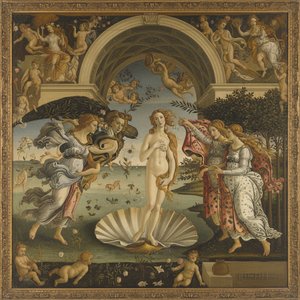
In masterpieces such as Venus Anadyomene, we witness the breathtaking use of light to celebrate classical beauty. The goddess rising from the sea is not merely depicted; she is bathed in a luminosity that suggests her very emergence from the elemental forces of nature. Through meticulous layering, Titian achieved a translucent quality in his highlights, making skin appear to glow from within. This mastery of light allows for a sense of volume and presence that transcends the two-dimensional plane, imbuing his subjects with a soul that seems to pulse beneath the surface of the oil paint.
Allegory and Emotion: The Narrative Depth of Titian’s Compositions
Titian was a master storyteller, capable of weaving complex philosophical and political themes into the very fabric of his compositions. His works often function as intricate puzzles of allegory, where every figure, animal, and object carries a weight of symbolic meaning. In Allegory of Time Governed by Prudence, the viewer is confronted with a profound meditation on mortality and wisdom. The presence of various heads and creatures serves as a visual metaphor for the fleeting nature of existence and the necessity of foresight, demanding an intellectual engagement that rewards the observant collector.
Yet, even within these complex allegories, Titian never sacrificed raw human emotion. His ability to balance high-concept symbolism with palpable sentiment is what makes his work so enduringly resonant. Whether depicting the pious devotion in Doge Antonio Grimani Kneeling Before the Faith or the tragic weight of historical events, he captures the essence of the human condition. The drama is found not just in the subject matter, but in the way a slumped shoulder or a furrowed brow communicates a silent, universal language of grief, power, or reverence.
The Tactile Legacy: From Renaissance Pigments to Modern Reproductions
The enduring allure of Titian’s work lies in its incredible texture—a quality that modern connoisseurs can still appreciate through the careful study of his brushwork. The Venetian masters utilized a technique of building up multiple, often translucent layers of oil paint, creating a physical depth known as impasto. This method allows light to penetrate different levels of the paint, reflecting back from within the layers to create a shimmering, three-dimensional effect. When we look at a true Titian, we are looking at a landscape of dried oils, where every stroke tells the story of the artist's movement.
Preserving this tactile legacy requires an immense level of technical skill and respect for historical methods. The challenge for any reproduction is to move beyond the flat, lifeless nature of a standard print and instead capture the "living" quality of the original. This involves recreating the visible, rhythmic brushstrokes and the subtle ridges of paint that define the High Renaissance style. It is in this physical texture—the way the light catches a raised edge of pigment—that the spirit of the Old Masters truly resides, allowing the artwork to possess a presence that commands the room.
Curating the Master: Integrating Titian’s Brilliance into Contemporary Interiors
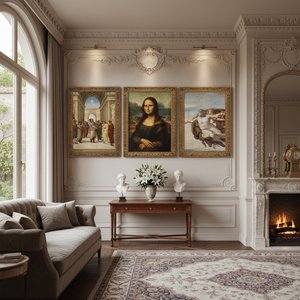
Bringing the grandeur of the Venetian Renaissance into a modern home is an exercise in sophisticated curation. A well-chosen reproduction of a Titian masterpiece can serve as the definitive focal point of a room, providing a sense of historical continuity and intellectual depth. For the contemporary collector, the goal is often to create a dialogue between the classical and the modern. A large-scale, hand-painted depiction of an allegorical scene can anchor a minimalist space, offering a rich, chromatic counterpoint to clean lines and neutral palettes.
When integrating such profound works, consider the architectural context of your space. Much like the grand palazzos of Venice, modern interiors benefit from art that possesses scale and atmospheric weight. Whether through a multi-panel arrangement that spans a wide wall or a singular, commanding portrait, Titian’s brilliance offers an unparalleled opportunity to infuse a home with elegance. By selecting pieces that emphasize his legendary use of light and color, one does not merely decorate a wall; one curates an environment of timeless beauty and enduring prestige.
At OriginalUniqueArt.com, we are dedicated to preserving this legacy of human creativity. Our studio specializes in the creation of museum-quality, hand-painted oil reproductions that honor the technical rigor of the Old Masters. From the meticulous layering of pigments to the recreation of authentic impasto textures, our artists strive to bring the luminous world of Titian into the modern era, offering collectors a way to possess a piece of art history that is as much a physical marvel as it is a visual one.