The Alchemy of Chiaroscuro: Defining the Dutch Golden Age
To step into the world of the seventeenth-century Netherlands is to enter a realm where light does not merely illuminate, but narrates. The Dutch Golden Age was far more than a period of economic prosperity and maritime dominance; it was a profound revolution in the perception of reality itself. At the heart of this movement lay the transformative technique of chiaroscuro—the dramatic interplay between deep, enveloping shadows and piercing, brilliant highlights. This was not merely a stylistic choice but an alchemical process, where pigments were manipulated to create a sense of three-dimensional volume and psychological weight that had never before been achieved on canvas.
In this era, the mastery of light served as a bridge between the physical and the spiritual. Artists learned to use shadow not as an absence of detail, but as a presence in its own right—a velvety darkness that could hide secrets or emphasize the sudden emergence of a face from the gloom. This tension between the seen and the unseen gave Dutch paintings their characteristic gravity. Through the careful application of oil glazes, masters were able to build layers of depth, allowing light to penetrate the translucent surfaces of skin, fabric, and metal, creating a luminous quality that seems to glow from within the very fibers of the canvas.
Rembrandt’s Radiance: The Dramatic Power of Light and Shadow
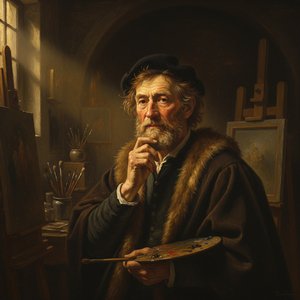
No name is more inextricably linked to this dance of darkness than Rembrandt van Rijn. His work represents the zenith of dramatic storytelling through light. In iconic works such as The Night Watch, we witness a departure from the static, even lighting of the Renaissance toward a much more cinematic and spontaneous approach. Rembrandt utilized light as a spotlight, directing the viewer's eye with surgical precision to the most emotive elements of a composition. His shadows are never hollow; they are rich, textured, and filled with an atmospheric mystery that invites contemplation.
The brilliance of Rembrandt’s technique lies in his ability to evoke human emotion through tonal shifts. By concentrating light on a forehead, a hand, or the glint of a weapon, he creates a sense of movement and urgency. This impasto-heavy approach—where paint is applied thickly to catch actual physical light—adds a tactile dimension to his portraits. When we observe the details of his masterpieces, we are not just looking at a depiction of a person; we are witnessing the very moment light touches life, capturing the fleeting essence of a soul caught in a singular, breathless instant.
Portraiture and Presence: Capturing Soul through Tonal Depth
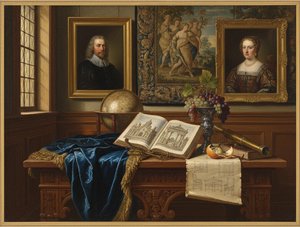
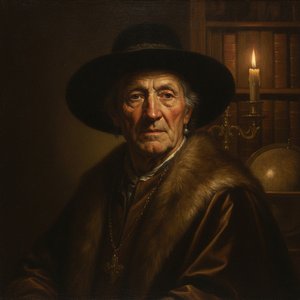
Beyond the grand narratives of battle and history, the Dutch masters excelled in the intimate theater of portraiture. Artists such as Jacobus Levecq and Nicolaes Keyser understood that a true portrait is an exploration of character, achieved through the subtle manipulation of light across the human countenance. In these works, the use of golden hues and soft transitions creates a sense of warmth and permanence. The light often falls softly upon the subject, highlighting the texture of lace, the sheen of silk, or the weathered lines of an aging face, lending each sitter a profound sense of dignity and presence.
This era of portraiture relied heavily on the ability to render tonal depth. By carefully balancing the highlights on a cheekbone against the receding shadows of a collar, painters could sculpt faces out of nothingness. This technique allowed for a psychological intimacy that remains unparalleled; the viewer feels as though they are sharing a private moment with the subject. The mastery of these subtle gradations ensures that even in a static pose, there is an underlying vitality—a sense that the sitter possesses a complex inner life, illuminated by the very light the artist has so carefully orchestrated.
Landscape and Luminosity: The Serene Light of the Dutch Countryside
While the interiors of Dutch homes were often characterized by dramatic shadows, the great landscape painters, such as François van Knibbergen, sought to capture a different facet of light: the expansive, atmospheric luminosity of the lowlands. These artists were obsessed with the way light interacts with the elements—the moisture in the air, the reflection on a canal, and the shifting clouds of a vast, maritime sky. Their work provides a serene counterpoint to the intensity of Baroque portraiture, offering instead a sense of peace and cosmic order.
In these landscapes, light is often diffused, creating a soft, silvery glow that defines the horizon. The mastery lies in the ability to paint atmosphere itself. Through delicate layers of color, these artists captured the way sunlight filters through a heavy mist or how the setting sun casts long, rhythmic shadows across a meadow. This pursuit of luminosity transformed the Dutch landscape into more than just scenery; it became a study of the ephemeral nature of time and the enduring beauty of the natural world, rendered with a precision that honors the quiet majesty of the earth.
The Legacy of Technique: From Old Masters to Modern Reimagining
The techniques perfected during the Dutch Golden Age continue to resonate in the contemporary art world. The principles of light and shadow established by the masters remain the foundation for anyone seeking to convey depth, emotion, and realism. Today, this legacy lives on through the meticulous work of artists who specialize in hand-painted reproductions, ensuring that the tactile soul of the original works—the visible brushstrokes and the rich, layered textures—is preserved for new generations of collectors.
Modern appreciation for these works often involves a "remixing" of history, where the classical techniques of the 17th century meet modern sensibilities. Whether through the creation of custom portraits that adopt a Rembrandt-esque chiaroscuro or the large-scale installation of historical frescoes in contemporary architecture, the influence of the Dutch masters is inescapable. At OriginalUniqueArt.com, we celebrate this enduring connection between the past and the present, providing a bridge for enthusiasts to bring the profound beauty of the Old Masters into the homes and hearts of the modern era.