The Artistic Lineage: Serov’s Early Influences and Training
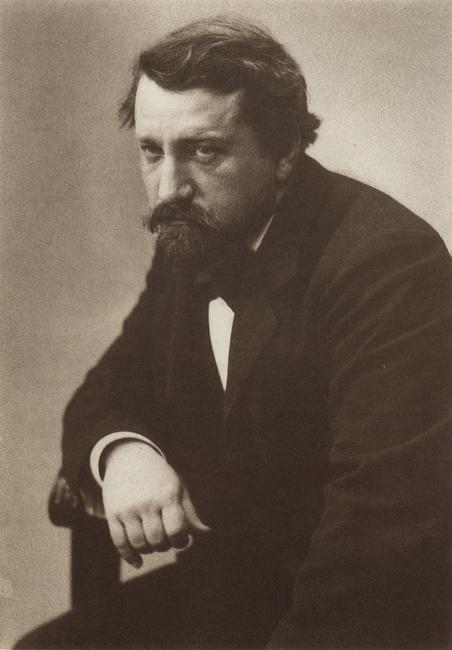 Wikipedia: Valentin Serov
Valentin Alexandrovich Serov (Russian: Валенти́н Алекса́ндрович Серо́в; 19 January [O.S. 7 January] 1865 – 5 December 1911) was a Russian painter and draughtsman, generally considered the primary portraitist of his generation. == Life and work == ...
Valentin Alexandrovich Serov, a name synonymous with the golden age of Russian portraiture, didn't emerge from a vacuum. His artistic journey was deeply rooted in a family steeped in creative expression and nurtured by rigorous academic training. Born in 1865 in St. Petersburg to composer Alexander Serov and his wife Valentina, herself a talented musician, young Valentin was immersed in an atmosphere of aesthetic sensibility from the very beginning. This privileged upbringing wasn’t merely about exposure; it was a deliberate cultivation of talent. His parents recognized his potential early on, initiating studies in Paris and Moscow under the watchful eye of Ilya Repin – a pivotal figure in Russian realism whose influence would shape Serov's foundational approach to art.
Repin instilled in Serov a commitment to capturing life as it was, with unflinching honesty and meticulous detail. However, Serov’s education didn’t end there. He continued his formal training at the St. Petersburg Academy of Arts under Pavel Chistyakov, mastering the technical skills necessary for portraiture – anatomy, composition, and color theory. Yet, even within this structured environment, a nascent individuality began to emerge. Serov wasn't content with simply replicating reality; he sought to infuse his work with a psychological depth that went beyond mere physical likeness. This early period also saw him drawn to the Old Masters, absorbing lessons from their techniques and compositions during visits to Russian and European museums. The seeds of his future brilliance – a blend of realism, impressionistic flair, and profound insight into the human condition – were being sown.
Portraying an Era: Serov's Mastery of Belle Époque Society
 Portrait of Princess Zinaida Yusupova
Admire Valentin Serov’s ‘Portrait of Princess Zinaida Yusupova,’ a stunning 1902 realism masterpiece. Explore its elegant details, Belle Époque style & captivating subject matter.
The late 19th and early 20th centuries in Russia—the Belle Époque—were a time of both opulent grandeur and simmering social unrest. Serov became the chronicler of this fascinating period, his canvases populated with members of the aristocracy, intellectuals, artists, and actors who defined its cultural landscape. He didn’t simply paint portraits; he captured an *attitude*, a sensibility, a fleeting moment in the lives of these individuals that revealed their inner worlds. Works like “Portrait of Princess Zinaida Yusupova” (1902) exemplify this mastery. The painting isn't just about depicting a beautiful woman; it’s about conveying her intelligence, confidence, and aristocratic bearing with an elegance that is both captivating and subtly unsettling.
Serov possessed an uncanny ability to distill the essence of his sitters, often employing innovative compositional techniques and a restrained color palette – frequently dominated by blacks, greys, and browns – to create a sense of intimacy and psychological tension. He moved away from the brightly colored styles prevalent in earlier decades, favoring instead a more nuanced approach that emphasized light and shadow to sculpt form and reveal character. His portraits weren’t merely decorative; they were penetrating studies of personality, offering glimpses into the complex lives of Russia's elite. This ability to capture not just *who* someone was but *how* they felt set him apart from his contemporaries.
Psychological Insight: Decoding the Inner Lives of Serov’s Sitters
 Portrait of Konstantin Korovin
Admire Valentin Serov’s "Portrait of Konstantin Korovin" (1891). An exquisite oil painting showcasing Impressionistic style & intimate portraiture. Discover Russian art history.
What truly distinguishes Serov is his profound psychological insight. He wasn't interested in superficial flattery; he sought to capture the inner lives of his subjects, their vulnerabilities, anxieties, and hidden depths. This often involved a meticulous observation of body language, facial expressions, and even the surrounding environment. Consider “Portrait of Konstantin Korovin” (1891), an intimate depiction of the fellow artist. The painting reveals not just Korovin’s physical appearance but also his restless energy and artistic temperament. Serov achieved this through subtle details – the angle of his gaze, the slight tension in his posture, the carefully chosen background that hints at his bohemian lifestyle.
Serov's technique wasn’t about grand gestures or dramatic flourishes; it was about a quiet intensity of observation and a masterful control of light and shadow. He understood that true portraiture wasn’t simply about replicating physical features but about capturing the *soul* of the sitter. This required a deep empathy and an ability to connect with his subjects on a personal level, allowing him to reveal their inner selves through subtle nuances and carefully constructed compositions. He often described his process as “searching” for the essence of the individual, a quest that demanded patience, sensitivity, and a keen understanding of human psychology.
Beyond Portraiture: Landscapes, Drawings, and Artistic Experimentation
While Serov is best known for his portraits, to limit him solely to this genre would be a disservice. He was also a skilled landscape painter and draughtsman, constantly experimenting with different techniques and styles throughout his career. His landscapes, often depicting scenes of country life, reveal a romantic sensibility and a keen eye for atmospheric effects. These works provided a respite from the demands of portraiture, allowing him to explore different themes and develop his artistic voice.
Furthermore, Serov was a prolific draftsman, producing numerous charcoal drawings that showcase his remarkable technical skill and sensitivity to line and form. “Portrait of Princess Polina Shcherbatova” (1911), executed in charcoal, is a testament to his mastery of this medium. The drawing captures the aristocratic elegance of the sitter with an economy of means that is both striking and evocative. He also embraced Impressionistic techniques at times, fragmenting forms and emphasizing the play of light and color. This willingness to experiment and push boundaries demonstrates Serov’s commitment to artistic innovation and his refusal to be confined by conventional categories.
Serov’s Legacy: A Lasting Impact on Russian Art History
Valentin Serov's influence on Russian art history is undeniable. He bridged the gap between realism and impressionism, creating a unique style that was both technically masterful and psychologically insightful. His portraits captured the spirit of an era, offering glimpses into the lives of Russia’s elite during a time of profound social change. He left behind a body of work that continues to captivate audiences today, inspiring artists and art lovers alike.
Serov's legacy extends beyond his individual paintings. He trained a generation of Russian artists, instilling in them a commitment to realism, psychological depth, and artistic innovation. His influence can be seen in the work of numerous subsequent portraitists who sought to emulate his mastery of technique and his ability to capture the essence of their sitters. Today, Serov’s paintings are held in major museums around the world, serving as enduring testaments to his genius and his profound contribution to the art of portraiture. At OriginalUniqueArt, we celebrate his work by offering high-quality reproductions that allow you to experience the beauty and psychological depth of Serov’s masterpieces in your own home.