The Dawn of Optimism: Paris Before the Storm (1871-1882)
The Belle Époque (French pronunciation: [bɛlepɔk]) or La Belle Époque (French for 'The Beautiful Era') was a period of French and European history that began after the end of the Franco-Prussian War in 1871 and continued until the outbreak of World W...
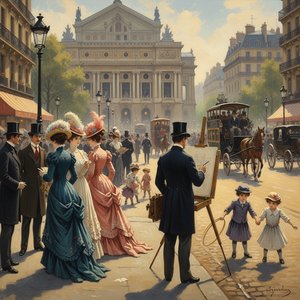
The years following the Franco-Prussian War and the tumultuous Paris Commune witnessed a remarkable shift in Parisian spirit. Though scars remained, a palpable sense of optimism began to bloom, laying the foundation for what would become known as the Belle Époque – “the beautiful era.” This wasn’t merely a superficial gloss; it was a genuine resurgence fueled by economic prosperity, technological innovation, and a burgeoning confidence in progress. Paris underwent a dramatic transformation under Baron Haussmann's urban renewal projects, creating wide boulevards, grand public spaces, and an atmosphere ripe for artistic exploration. The rebuilding of the city wasn’t just about aesthetics; it was about forging a new identity, one that embraced modernity while still cherishing its rich cultural heritage. This period, preceding the full flowering of Impressionism, served as a crucial incubator – a time when artists began to question traditional academic standards and seek new ways to represent the rapidly changing world around them.
Realism's Embrace: Capturing Everyday Life in Paint
Realism, Realistic, or Realists may refer to: == In the arts == Realism (arts), the general attempt to depict subjects truthfully in different forms of the arts Arts movements related to realism include: == In philosophy == Philosophical realism ...
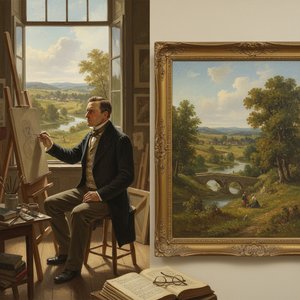
Before the shimmering brushstrokes of Monet and Renoir fully captivated audiences, Realism held sway. Artists like Gustave Courbet had already challenged the established order by depicting contemporary life with unflinching honesty – scenes of laborers, rural landscapes, and unidealized portraits. This movement wasn’t about romanticizing or escaping reality; it was a deliberate attempt to portray life *as it was*, often focusing on the lives of ordinary people. However, Realism evolved beyond mere documentation. Artists began to explore the psychological nuances of their subjects, capturing not just what they saw but also how they felt. This emphasis on truthful representation paved the way for Impressionism’s focus on subjective experience and fleeting moments. Giovanni Boldini, though often associated with a more refined style, inherited this Realist sensibility, imbuing his portraits with a sense of psychological depth and capturing the elegance and sophistication of Parisian society with remarkable skill. His “Woman at a Piano,” for example, isn’t simply a depiction of a woman playing music; it's an intimate glimpse into her inner world.
Impressionism Takes Hold: A Revolution in Light and Color
Impressionism was a 19th-century art movement characterized by visible brush strokes, open composition, emphasis on accurate depiction of light in its changing qualities (often accentuating the effects of the passage of time), ordinary subject matter...
The 1870s marked the birth of Impressionism – a movement that would irrevocably alter the course of art history. Rejecting the meticulous detail and historical narratives favored by the Académie des Beaux-Arts, a group of rebellious artists—Monet, Renoir, Sisley, Pissarro, and others—ventured outdoors to capture the ephemeral effects of light and atmosphere. They weren’t interested in recreating reality perfectly; they sought to convey *the impression* of a scene – the way light danced on water, the fleeting colors of a sunset, the vibrancy of a bustling street. This radical approach involved visible brushstrokes, open compositions, and an emphasis on capturing the momentary sensation rather than precise form. The name “Impressionism” itself was initially derisive, coined by critic Louis Leroy after viewing Monet’s “Impression, soleil levant,” but it ultimately stuck, becoming synonymous with this groundbreaking style. Oddly enough, Monet himself advised artists to 'forget what objects you have before you,' prioritizing the sensation of light and color over strict representation – a testament to their commitment to optical realism.
Belle Époque Society: Portraits of a Flourishing Era
The Belle Époque wasn’t just an artistic movement; it was a cultural phenomenon. Parisian society flourished, embracing new forms of entertainment—cabarets, music halls, and grand expositions—and indulging in the pleasures of leisure and luxury. This vibrant social scene provided ample inspiration for artists seeking to capture the spirit of the age. Painters like Jean-Georges Béraud masterfully documented the bustling streets, elegant cafes, and fashionable gatherings that defined Parisian life. His work offers a fascinating glimpse into the daily routines and social interactions of the era. Similarly, James Jacques Joseph Tissot captured the elegance and refinement of Victorian and Belle Époque society with his meticulously detailed depictions of fashionable women and leisurely pursuits. Artists like Boldini also excelled at portraying this world, capturing not just appearances but also the underlying psychology and social dynamics of their subjects. Emanuele Muzio at the Podium exemplifies this – a portrait that conveys authority, sophistication, and the cultural importance of music in Belle Époque Milan.
Beyond Paris: The Wider European Artistic Landscape
While Paris undoubtedly served as the epicenter of artistic innovation during the Belle Époque, the influence of Impressionism and Realism extended far beyond its borders. Artists across Europe were grappling with similar questions about representation, modernity, and the changing world around them. In France, Gaston La Touche captured luminous landscapes and idyllic scenes, influenced by Degas and Manet, while Eugène Galien-Laloue brought the energy of Parisian streets to life in his vibrant paintings. These artists, though often overshadowed by their Parisian counterparts, contributed significantly to the broader artistic landscape of the era. They shared a common desire to capture the beauty and complexity of modern life, albeit through different lenses and with unique stylistic approaches. The Belle Époque wasn’t simply a French phenomenon; it was a European-wide awakening that transformed the way artists saw – and represented – the world.
OriginalUniqueArt’s Collection: Reliving the Belle Époque Today
At OriginalUniqueArt, we are passionate about bringing the masterpieces of the Belle Époque to life. Our collection features stunning reproductions of works by Monet, Renoir, Degas, Béraud, Boldini, and many others, allowing you to experience the beauty and vibrancy of this remarkable era in your own home. Whether you’re drawn to the shimmering landscapes of Impressionism or the intimate portraits of Belle Époque society, we offer a wide range of options to suit your taste and budget. Each reproduction is meticulously crafted by skilled artists using high-quality materials, ensuring that it captures the essence of the original artwork. Explore our collection today and discover the enduring legacy of the Belle Époque – a time of optimism, innovation, and artistic brilliance. From custom reproductions based on your favorite photos to expertly framed prints, OriginalUniqueArt offers a unique opportunity to connect with art history and bring a touch of Parisian elegance into your life.