Introduction: The Enduring Power of Affect in Visual Art
 Exploring Emotional Depth in Art: A Cross-Historical Analysis of Affective Representation
Explore the rich history of emotional representation in art! This analysis delves into affect theory, Romanticism, Goya's masterpieces & color psychology. Discover how artists evoke feeling and connect with viewers across time.
For centuries, art has served as a mirror to the human condition, reflecting not merely our physical world but the turbulent landscape of our inner lives. While technical skill and aesthetic beauty undoubtedly hold value, it is the capacity of an artwork to evoke emotion – to stir within us feelings of joy, sorrow, awe, or even unease – that truly elevates it beyond mere representation. This ability to communicate affect, this visceral language spoken not in words but in brushstrokes, color, and composition, has been a driving force throughout art history. The pursuit of capturing and conveying emotion is not simply about depicting a feeling; it’s about creating an experience, forging a connection between the artist's internal state and the viewer’s own emotional resonance. This exploration delves into that very core – how artists across eras have sought to unlock and articulate the complexities of human feeling, and what those efforts reveal about our shared psychological landscape.
From Physiognomy to Feeling: Early Attempts at Mapping Emotional Expression
An emotional expression is a behavior that communicates an emotional state or attitude. It can be verbal or nonverbal, and can occur with or without self-awareness. Emotional expressions include facial movements like smiling or scowling, simple behav...
The earliest systematic attempts to understand emotional expression can be traced back to the pseudoscientific field of physiognomy, popular in antiquity and revived during the Renaissance. Thinkers believed that one could decipher a person’s character – and therefore their emotions – by studying their facial features. While demonstrably flawed, this fascination with external signs as indicators of internal states laid the groundwork for later investigations into the relationship between body language and feeling. Artists like Leonardo da Vinci meticulously studied human anatomy, not just to accurately depict form but also to understand the muscular movements underlying expressions. However, it wasn’t until the Enlightenment that a more scientific approach began to emerge, most notably with Charles Darwin's groundbreaking work, The Expression of Emotions in Man and Animals (1872). Darwin posited that emotional displays were not arbitrary but evolved adaptations, serving crucial communicative functions. This idea – that emotions are universal and biologically rooted – profoundly influenced the way artists approached their subjects, prompting a shift from idealized representations to more naturalistic portrayals of human experience. Early portraiture often focused on conveying status or piety; Darwin’s theories encouraged a deeper exploration of psychological states.
Romanticism's Embrace of Subjectivity and the Cultivation of Intense Emotion
Affect theory may refer to theories from philosophy, psychology, or the humanities. Definitions and applications vary across psychology, psychoanalysis, neuroscience, medicine, interpersonal communication, literary theory, critical theory, media stud...
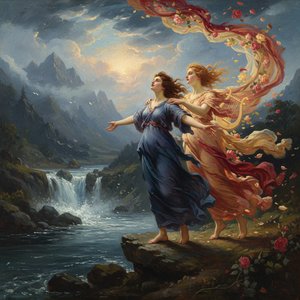
The Romantic movement, flourishing in the late 18th and early 19th centuries, marked a radical departure from the Enlightenment’s emphasis on reason. Rejecting the constraints of classical formalism, Romantic artists prioritized individual subjectivity, imagination, and – crucially – emotion. This wasn't simply about depicting happiness or sadness; it was about exploring the full spectrum of human feeling, including awe, terror, melancholy, and the sublime. Artists like Caspar David Friedrich captured a sense of profound loneliness and spiritual yearning in his landscapes, using vast natural vistas to evoke feelings of insignificance and wonder. J.M.W. Turner’s turbulent seascapes weren't merely depictions of weather; they were visual metaphors for the overwhelming power of nature and the fragility of human existence. Eugène Delacroix, a key figure in French Romanticism, infused his paintings with dramatic energy and passionate intensity, often drawing inspiration from historical events and literary sources. The emphasis shifted from objective reality to the artist’s *internal* experience, making emotion not just a subject matter but the very essence of the artwork. This period saw a deliberate cultivation of sensitivity, where art became a vehicle for exploring the depths of the human soul.
Goya’s Disquieting Visions: Exploring Darkness, Trauma, and the Subconscious
Francisco Goya stands as a pivotal figure bridging Romanticism and the burgeoning anxieties of modernity. While rooted in the traditions of court painting, Goya increasingly turned his attention to the darker aspects of human nature and the horrors of war. His series The Disasters of War (1810-1820) is a harrowing indictment of violence and suffering, depicting scenes of brutality with unflinching realism. But Goya’s exploration of emotion extended beyond explicit depictions of conflict. His “Black Paintings” (1819-1823), created directly on the walls of his own home, are profoundly unsettling works that delve into themes of madness, despair, and the subconscious. These paintings – often grotesque and disturbing – reveal a psychological depth rarely seen before. Goya’s use of color is particularly striking; dark, muted tones create an atmosphere of dread and isolation, while distorted figures and nightmarish imagery evoke feelings of unease and terror. He wasn't simply *showing* emotion; he was attempting to convey the raw, visceral experience of trauma and psychological torment. Goya’s work foreshadowed the Expressionist movement, anticipating their focus on inner turmoil and subjective experience.
The Rise of Modernity and the Fragmentation of Affect in Expressionism
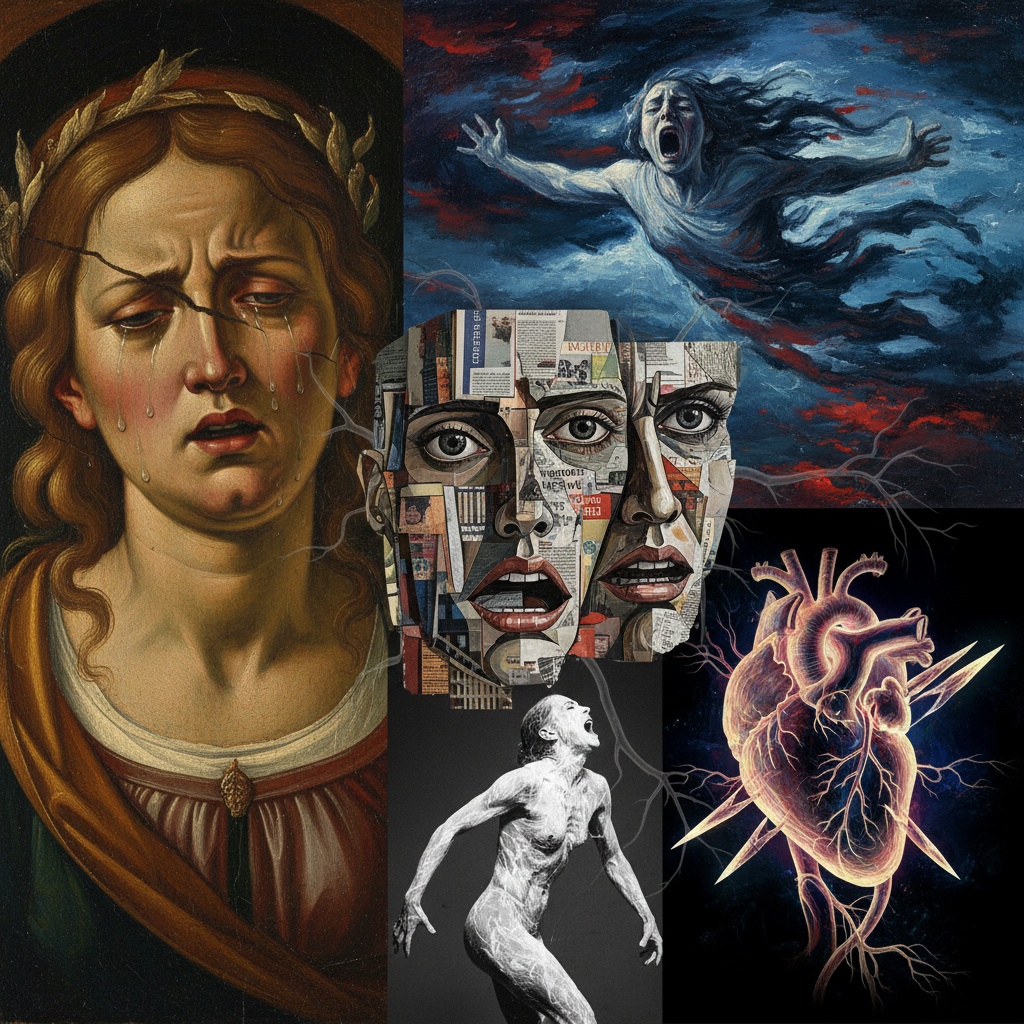
The early 20th century witnessed a period of rapid social and technological change that profoundly impacted artistic expression. Expressionism emerged as a reaction to the dehumanizing effects of industrialization, urbanization, and the looming threat of war. Artists like Edvard Munch sought to convey their inner emotional states – often angst, despair, and alienation – through distorted forms, jarring colors, and bold brushstrokes. The Scream (1893), perhaps the most iconic image of Expressionism, is a powerful depiction of existential anxiety, capturing a sense of overwhelming dread and isolation. Egon Schiele’s raw and unsettling portraits explore themes of sexuality, mortality, and psychological vulnerability. Franz Marc, a key figure in Der Blaue Reiter group, used color symbolically to express spiritual purity and emotional intensity. Unlike the Romantic emphasis on sublime beauty, Expressionists deliberately rejected traditional aesthetic conventions, prioritizing authenticity over representation. Their work often feels fragmented and chaotic, reflecting the fractured nature of modern experience. The focus shifted from depicting external reality to conveying the artist’s *internal* world, even if that world was unsettling or disturbing.
Color as Emotional Catalyst: A Psychological Exploration Through Art History
Throughout art history, color has been more than just a decorative element; it's a powerful emotional catalyst. The understanding of color psychology – the study of how colors affect human emotions and behavior – dates back to Goethe’s Theory of Colours (1810), which explored the subjective experience of color perception. Romantic artists intuitively understood this power, using vibrant hues to evoke feelings of passion and awe, or muted tones to create an atmosphere of melancholy and isolation. Delacroix's masterful use of color in “Liberty Leading the People” amplifies the painting’s emotional impact, with reds symbolizing revolution and energy, blues representing hope and freedom. The Fauvist movement, led by Henri Matisse, took this exploration even further, using bold, non-naturalistic colors to create compositions that were both expressive and joyous. Later, Expressionists like Marc employed color symbolically, associating specific hues with particular emotions or spiritual states. Understanding the artist’s use of color provides a crucial insight into their emotional intent, revealing layers of meaning beyond the surface representation. From the warm embrace of reds and oranges to the cool serenity of blues and greens, color remains one of the most potent tools in an artist's arsenal for communicating affect.