The Rise of Victorian Naturalism: A Rejection of Academic Convention
The mid-19th century witnessed a seismic shift in the artistic landscape, a rebellion against the rigid conventions of the British Royal Academy and its unwavering adherence to idealized forms and historical narratives. This burgeoning movement, known as Victorian Naturalism, wasn’t merely a stylistic departure; it was a philosophical statement—a yearning for authenticity, spiritual depth, and a profound connection with the natural world. Artists increasingly felt stifled by the academic emphasis on polished technique over genuine emotion and observation. They sought to break free from the constraints of prescribed subject matter, turning instead towards contemporary life, mythology, and literature as sources of inspiration. This rejection wasn’t simply about *what* was painted but *how* it was painted—a meticulous attention to detail, a commitment to truthful representation, even when that meant depicting imperfections or unsettling realities.
The prevailing artistic climate favored grand historical scenes populated by noble figures and moralizing allegories. Victorian Naturalists, however, found beauty in the everyday, in the fleeting moments of human existence, and in the untamed splendor of nature itself. This wasn’t a wholesale abandonment of skill; rather, it was a redirection of that skill towards capturing the nuances of light, texture, and atmosphere with unprecedented accuracy. The desire to portray life as it truly *was*, not as it was idealized or romanticized, became the defining characteristic of this revolutionary approach.
Pre-Raphaelite Roots: Detail, Symbolism & the Pursuit of Authenticity
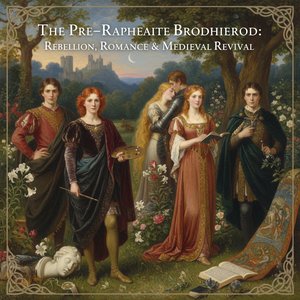
At the heart of Victorian Naturalism lay the Pre-Raphaelite Brotherhood (PRB), founded in 1848 by a group of young artists—among them Dante Gabriel Rossetti, John Everett Millais, and William Holman Hunt. Their name itself was a declaration of intent: a rejection of the artistic standards that had developed after Raphael, whom they saw as representing a corruption of earlier Renaissance ideals. The Pre-Raphaelites weren’t advocating for a return to medieval art *per se*, but rather to the spirit of meticulous observation and intense spirituality that characterized painting before the High Renaissance.
Their canvases are immediately recognizable by their breathtaking detail, vibrant colors, and often complex symbolism. Millais's 'Pomona,' for example, is not simply a portrait of a beautiful woman; it’s a carefully constructed allegory rich with references to classical mythology and Victorian social commentary. The apples surrounding Pomona represent abundance and temptation, while her gaze—both inviting and aloof—hints at a deeper psychological complexity. This commitment to symbolism wasn't arbitrary; it was integral to their belief that art should be intellectually stimulating as well as visually arresting.
The PRB also championed a return to direct observation of nature, painting *en plein air* whenever possible to capture the subtleties of light and atmosphere. They meticulously studied botanical details, anatomical accuracy, and the effects of natural light on surfaces—a dedication that set them apart from their academic contemporaries.
Dante Gabriel Rossetti and the Cult of Beauty: 'Art for Art's Sake'
Amongst the Pre-Raphaelites, Dante Gabriel Rossetti emerged as a particularly influential figure, pushing the boundaries of Victorian art in new and provocative directions. While initially committed to the Brotherhood’s principles of realism and symbolism, Rossetti increasingly focused on themes of love, loss, and sensuality, often drawing inspiration from medieval poetry—particularly the works of Dante Alighieri and Shakespeare. His fascination with these literary giants profoundly influenced his artistic vision, leading him to explore complex psychological states and ambiguous narratives.
Rossetti’s later work is characterized by a lush, dreamlike quality, populated by ethereal female figures and rich symbolic imagery. Paintings like 'The Loving Cup' exemplify his evolving style—a focus on beauty for its own sake, rather than as a vehicle for moral or didactic messages. This philosophy, encapsulated in the slogan “Art for Art’s Sake,” challenged the Victorian emphasis on art as a tool for social improvement. Rossetti believed that art should be judged solely on its aesthetic merits, independent of any external considerations.
His reclusive lifestyle and bohemian existence further cemented his reputation as an unconventional artist—a figure who prioritized artistic expression above all else. He surrounded himself with objects of beauty—blue china, exotic animals, and a vast collection of books—creating a world that reflected his own aesthetic sensibilities.
Edward Burne-Jones: Myth, Aesthetic Idealism & a Medieval Revival
Closely aligned with Rossetti’s vision was Edward Burne-Jones, whose work embodies the epitome of Aesthetic idealism. While initially influenced by the Pre-Raphaelite emphasis on detail and realism, Burne-Jones developed a distinctive style characterized by flowing lines, luminous colors, and a profound sense of melancholy. He drew heavily from medieval mythology—Arthurian legends, Chaucerian tales, and the poetry of William Morris—creating a world that was both fantastical and deeply evocative.
Burne-Jones’s paintings are not simply illustrations of these stories; they are reinterpretations—infused with his own unique sensibility and philosophical concerns. His figures often appear suspended in time, their expressions enigmatic and their surroundings dreamlike. He sought to capture a sense of spiritual longing and transcendent beauty, rejecting the materialism and ugliness of modern life.
Beyond painting, Burne-Jones also made significant contributions to stained glass design, creating intricate panels that brought his aesthetic vision to a wider audience. His work played a crucial role in reviving interest in medieval craftsmanship and inspiring the Arts and Crafts movement.
Beyond the Brotherhood: Thomas Cooper Gotch & John Mulcaster Carrick
While Rossetti and Burne-Jones are often considered the defining figures of Victorian Naturalism, other artists contributed significantly to this rich and diverse movement. Thomas Cooper Gotch, for example, was known for his romantic, allegorical genre scenes—often depicting young girls in idyllic settings. His paintings capture a sense of innocence and vulnerability, tinged with a subtle undercurrent of melancholy.
John Mulcaster Carrick, praised by John Ruskin for his serene rural and coastal views, similarly embraced the beauty of the natural world. His work is characterized by its meticulous attention to detail and atmospheric perspective—creating a sense of tranquility and harmony. Both Gotch and Carrick, while distinct in their individual styles, shared the Pre-Raphaelite commitment to truthful representation and symbolic depth.
The Legacy of Victorian Naturalism: Influences on Modern Aesthetics
The impact of Victorian Naturalism extended far beyond the 19th century. The movement’s emphasis on beauty, symbolism, and craftsmanship profoundly influenced subsequent generations of artists—inspiring the Aesthetic Movement, Symbolism, and even early modern art. The Pre-Raphaelites' rejection of academic convention paved the way for new forms of artistic expression, challenging traditional notions of what constituted “good” art.
Today, the works of Rossetti, Burne-Jones, Millais, and their contemporaries continue to captivate audiences with their breathtaking beauty, intellectual depth, and enduring relevance. Their commitment to authenticity, spiritual exploration, and the pursuit of aesthetic perfection remains a powerful inspiration for artists and art lovers alike. At OriginalUniqueArt, we are proud to offer high-quality reproductions of these iconic masterpieces, allowing you to experience the verdant gaze of Victorian Naturalism in your own home. Explore our collection today and discover the timeless beauty of this revolutionary movement.