The Polymathic Vision: Ruskin’s Diverse Intellectual Landscape
 Wikipedia: John Ruskin
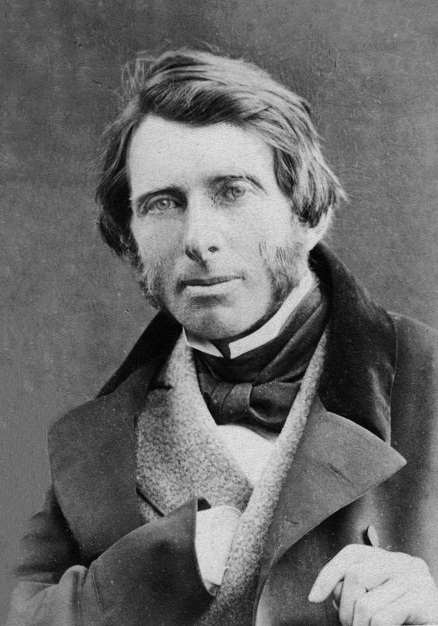
John Ruskin (8 February 1819 – 20 January 1900) was an English polymath – a writer, lecturer, art historian, art critic, draughtsman and philanthropist of the Victorian era. He wrote on subjects as varied as art, architecture, political economy, educ...
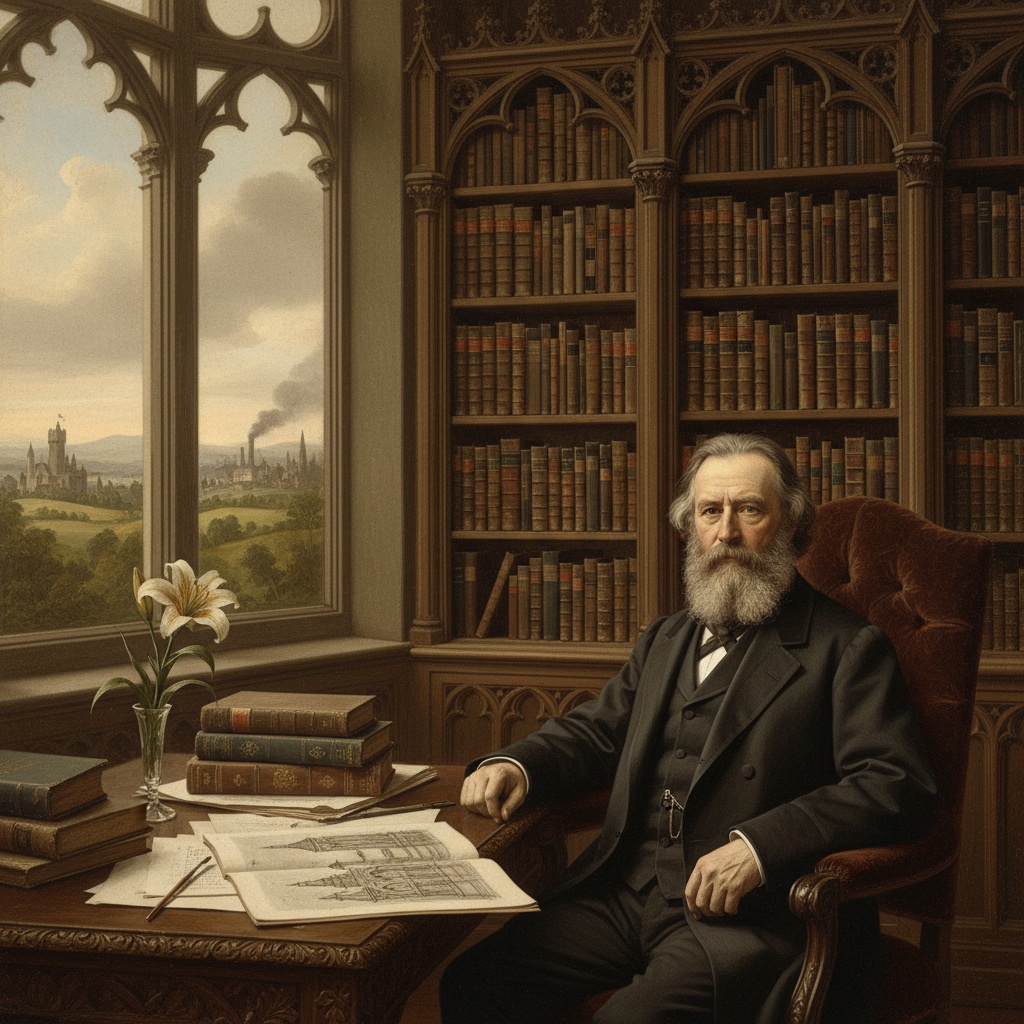
John Ruskin (1819-1900) defies easy categorization. To label him simply as an art critic feels profoundly inadequate, a reduction of a mind that roamed freely across disciplines – geology, botany, ornithology, political economy, mythology, and education all fell within his expansive purview. He was, fundamentally, a seeker, driven by a relentless desire to understand the interconnectedness of beauty, truth, and morality in a rapidly changing world. Born into a comfortably affluent family, Ruskin’s early life was shaped by two powerful forces: the romantic sensibilities fostered by his father and the devout evangelicalism instilled by his mother. This duality – a passion for aesthetic experience coupled with a deep-seated religious conviction – would become the defining characteristic of his work. He wasn't merely *describing* art; he was attempting to decipher its spiritual and social significance, believing it held vital clues to a more harmonious existence. His prolific output—essays, treatises, poetry, travel guides, even fairy tales—testifies to this boundless intellectual curiosity.
Truth to Nature: Ruskin's Core Aesthetic Principles & Turner's Influence
Ruskin first gained prominence with the publication of Modern Painters (1843), a sprawling defense of J.M.W. Turner’s work that quickly evolved into a broader exploration of aesthetic principles. At its heart lay the concept of “truth to nature,” but this wasn't a call for mere photographic realism. For Ruskin, it meant an artist’s honest and empathetic engagement with the natural world—a deep observation born from experience and feeling. He argued that true art didn’t simply *represent* nature; it revealed its underlying spiritual essence. Turner became his exemplar because of his ability to convey not just the visual appearance of landscapes but also their emotional power, their sense of awe-inspiring grandeur and sublime transience. Ruskin saw in Turner a rejection of industrial mechanization and a celebration of the organic beauty that was rapidly disappearing from Victorian England. He championed detail, not as an end in itself, but as evidence of careful study and genuine connection to the subject matter. This emphasis on meticulous observation would profoundly influence a generation of artists.
Art, Labor, and Society: Ruskin’s Critique of Industrialization
As Ruskin matured, his focus shifted from purely aesthetic concerns to a scathing critique of Victorian society's social ills. He became increasingly alarmed by the dehumanizing effects of industrialization, witnessing firsthand the exploitation of labor and the degradation of craftsmanship. He believed that meaningful work was essential for human flourishing, providing not only economic sustenance but also spiritual fulfillment. The rise of mass production, with its emphasis on efficiency and profit, stripped away this inherent dignity, reducing workers to mere cogs in a machine. In works like Unto This Last (1860), he advocated for a radical restructuring of society based on principles of cooperation, fairness, and the value of individual skill. He argued that art itself was inextricably linked to these social concerns; true beauty could only exist in a just and equitable world. The elaborate ornamentation found in Gothic architecture, for example, wasn’t simply decorative but reflected the collective pride and skilled labor of generations of artisans.
The Pre-Raphaelite Brotherhood: A Movement Inspired by Ruskin’s Ideals
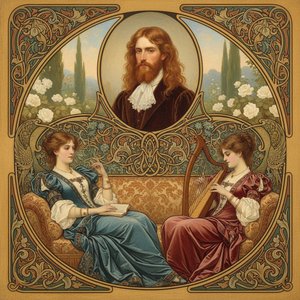
Ruskin's ideas proved particularly resonant with a group of young artists who formed the Pre-Raphaelite Brotherhood in 1848. Rejecting the academic conventions of their time, they sought to return to the perceived purity and sincerity of art before Raphael—hence the name. Artists like Dante Gabriel Rossetti, John Everett Millais, and Edward Burne-Jones embraced Ruskin’s emphasis on “truth to nature,” meticulous detail, and moral purpose. Millais' Autumn Leaves, for instance, exemplifies this commitment to precise observation and evocative symbolism. Similarly, Burne-Jones’s serene depiction of faith in Fides embodies the spiritual depth that Ruskin championed. While not all Pre-Raphaelites explicitly adhered to every aspect of Ruskin’s philosophy, his writings provided a crucial intellectual framework for their rebellion against artistic and social norms. He became their most vocal advocate, defending their work from harsh criticism and championing their commitment to authenticity.
Ruskin as Educator: The Slade Professor & the Guild of St. George
In 1869, Ruskin accepted the position of Slade Professor of Fine Art at Oxford University, a role he used to challenge conventional art education. He believed that traditional methods focused too heavily on technical skill and neglected the importance of observation, feeling, and moral understanding. He established the Ruskin School of Drawing, emphasizing direct engagement with nature and encouraging students to develop their own unique artistic voices. However, his unconventional teaching style—often delivered as impassioned lectures rather than formal instruction—proved controversial. More significantly, in 1871, he founded the Guild of St. George, an ambitious attempt to create a utopian community based on principles of craftsmanship, cooperation, and social justice. The Guild aimed to revive traditional skills, provide meaningful work for artisans, and promote a more ethical approach to production. While the Guild ultimately faced numerous challenges, it remains a testament to Ruskin’s unwavering belief in the transformative power of art and labor.
A Lasting Legacy: Ruskin's Enduring Relevance in Contemporary Thought
Though his influence waned in the early 20th century, John Ruskin has experienced a remarkable resurgence in recent decades. His concerns about environmental degradation, ethical consumerism, and the importance of craftsmanship resonate powerfully with contemporary audiences. His writings anticipated many of the key themes that define our current moment—the need for sustainable practices, the value of local communities, and the search for meaning in a world dominated by technology and mass production. Ruskin’s emphasis on connecting art to life, on recognizing the inherent dignity of labor, and on seeking beauty as a pathway to moral understanding continues to inspire artists, scholars, and activists alike. His legacy is not simply about preserving the past but about forging a more just and harmonious future—a future where art serves as a catalyst for social change and a celebration of the interconnectedness of all things. At OriginalUniqueArt.com, we believe in making these masterpieces accessible, allowing you to experience the beauty and profound insights that Ruskin so passionately championed.