Introduction: The Enduring Appeal of Art's Emotional Landscape
From the earliest cave paintings to the most contemporary installations, art has served as a mirror reflecting humanity’s deepest emotions and aspirations. But what is it about certain compositions, colors, or forms that so powerfully resonates within us? This enduring appeal isn’t merely aesthetic; it taps into something fundamental about our shared human experience – a primal need for expression, connection, and meaning. The power of inspirational art lies not just in *what* we see, but in *how* it makes us feel, prompting introspection, sparking dialogue, and ultimately enriching our lives. It’s a journey beyond the visual, into the realm of subjective interpretation and profound emotional response.
The Historical Roots of Aesthetic Response: From Ancient Philosophy to Modern Psychology
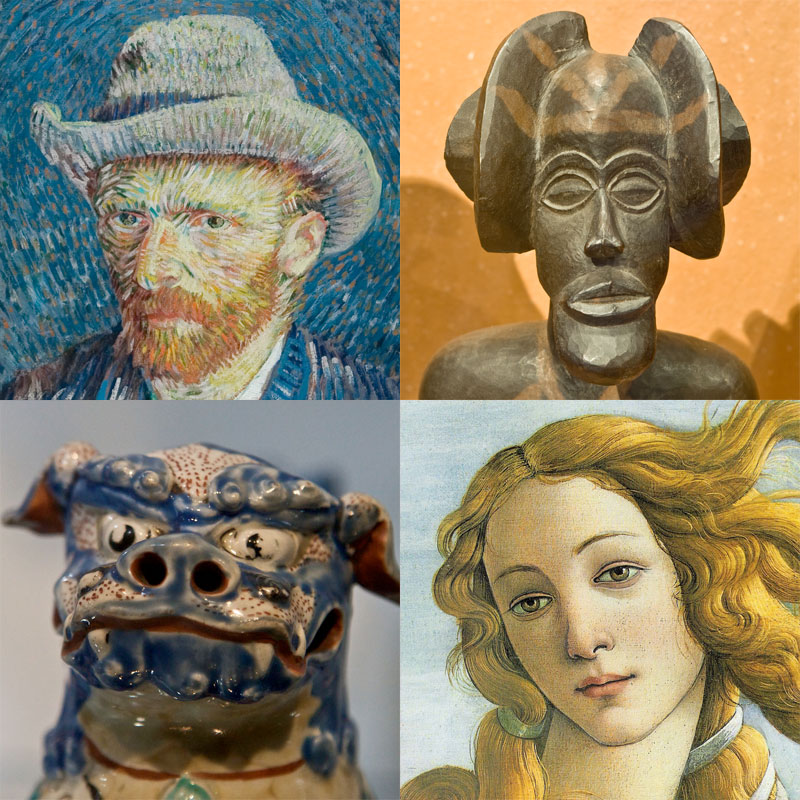 Wikipedia: Art
Art is a diverse range of cultural activity centered around works utilizing creative or imaginative talents, which are expected to evoke a worthwhile experience, generally through an expression of emotional power, conceptual ideas, technical proficie...
The quest to understand aesthetic response stretches back millennia. Plato, in his dialogues, grappled with the nature of beauty and its relationship to truth, suggesting art was an imitation of an imitation – a step removed from reality itself. Aristotle, however, saw value in this very act of *mimesis*, believing it inherent to human learning and understanding. Centuries later, thinkers like Immanuel Kant explored the subjective experience of aesthetic judgment, positing that beauty resided not in the object but in the observer’s “disinterested pleasure.” This notion – a separation from practical concerns – allowed for art to be appreciated purely for its form and emotional impact. Fast forward to the 20th century, and psychology began to unravel the neurological underpinnings of these responses. Researchers discovered that viewing art activates areas of the brain associated with reward, empathy, and even spiritual experiences, confirming what artists and audiences have intuitively known for centuries: art profoundly affects our inner state.
Color Theory and the Language of Feeling: A Deep Dive into Chromatic Resonance
 The Chromatic Spectrum of Feeling: Exploring Color & Emotion in Art History
Explore the fascinating relationship between color and emotion in art history. Discover how master artists used color to evoke feelings & cultural meanings, plus the psychology behind it all.
Central to this emotional impact is color. For millennia, cultures have imbued colors with symbolic meaning, often rooted in natural phenomena. Red, associated with blood and fire, frequently represents passion, energy, or danger; blue, evoking the vastness of the sky and sea, often signifies tranquility, peace, or melancholy. But beyond these cultural associations lies a more fundamental psychological connection. Warm colors – reds, oranges, yellows – tend to be stimulating and energizing, while cool colors – blues, greens, purples – are generally calming and soothing. Artists masterfully manipulate this chromatic language to evoke specific moods and feelings. Consider the vibrant intensity of Van Gogh’s sunflowers, or the serene blues of Monet's water lilies; these aren’t simply depictions of nature but carefully orchestrated emotional experiences. The interplay of color, light, and shadow creates a visual symphony that bypasses rational thought and speaks directly to our subconscious.
Abstract Expressionism as a Conduit for Pure Emotion: Kandinsky, Malevich, and Beyond
 Wassily Kandinsky
Discover Wassily Kandinsky (1866-1944), the pioneer of abstract art! Explore his vibrant expressionism, spiritual themes & Bauhaus legacy through stunning reproductions.
The early 20th century witnessed a radical shift in artistic expression with the rise of Abstract Expressionism. Artists like Wassily Kandinsky and Kazimir Malevich abandoned representational forms altogether, seeking to convey emotion directly through color, shape, and line. Kandinsky, often considered the pioneer of abstract art, believed that colors possessed spiritual qualities and could evoke specific emotional responses – a concept he explored extensively in his writings and paintings. His untitled compositions are not depictions *of* anything but rather expressions *of* inner states, inviting viewers to connect with pure feeling. Malevich’s Suprematism, exemplified by works like “Suprematism (17)”, pushed abstraction even further, reducing forms to their most basic geometric elements – squares, circles, and rectangles – in an attempt to access a universal language of emotion beyond the constraints of representation. These artists weren't simply rejecting tradition; they were forging a new path towards a more direct and visceral connection with the human psyche.
The Neuroscience of Art Appreciation: How Our Brains Process Beauty and Meaning
Modern neuroscience provides compelling evidence for the profound impact of abstract art. Studies using fMRI technology have shown that viewing abstract paintings activates areas of the brain associated with reward, pleasure, and emotional processing – similar to those activated by experiences like listening to music or falling in love. Furthermore, research suggests that our brains actively seek patterns and meaning even in seemingly random compositions. This process of “aesthetic judgment” isn’t a passive reception but an active construction of experience, shaped by individual preferences, cultural background, and personal history. The brain doesn't simply *see* the artwork; it interprets it, assigns value to it, and generates an emotional response based on these complex factors. This explains why two individuals can have vastly different reactions to the same piece – beauty truly is in the eye of the beholder.
Cultivating Emotional Well-being Through Visual Art: Creating a Harmonious Space
The power of art extends beyond mere aesthetic pleasure; it has the potential to profoundly impact our emotional well-being. Surrounding ourselves with artworks that resonate with us can create a more harmonious and uplifting environment, fostering feelings of calm, inspiration, or joy. Choosing pieces based on personal preference – whether it’s the vibrant energy of Kandinsky, the geometric simplicity of Malevich, or another style altogether – allows us to curate spaces that reflect our inner selves. OriginalUniqueArt.com offers a vast collection of museum-quality reproductions, allowing you to bring these masterpieces into your home and experience their transformative power firsthand. From custom paintings tailored to your specifications to expertly framed prints, we believe everyone deserves access to art that inspires and enriches their lives. Explore our selection today and discover the perfect pieces to cultivate emotional well-being and create a space that truly reflects your soul.