The Primordial Mark: Drawing’s Ancient Roots & Early Functions
Before the vibrant hues of paint and the enduring solidity of sculpture, there was line. The impulse to mark a surface – to capture form, narrate experience, or simply explore the possibilities of visual expression – is arguably as fundamental to the human spirit as language itself. Evidence of this primal urge stretches back millennia, from the ochre handprints adorning cave walls in Lascaux and Altamira to the delicate sketches found on ancient Egyptian papyrus. These weren’t merely depictions; they were acts of creation, imbued with ritualistic significance, attempts to understand and control the world through representation. Early drawings functioned as mnemonic devices, hunting guides, and perhaps most profoundly, as a means of connecting with the spiritual realm. The very act of drawing—of bringing something into being on a blank surface—held power, transforming observation into tangible reality.
Renaissance Revolution: Linear Perspective and the Birth of Illusionism
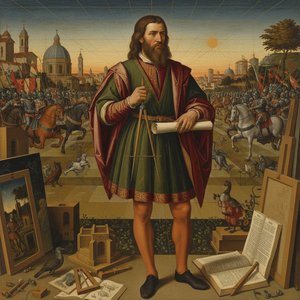
The Renaissance witnessed an explosion of artistic innovation, fueled by a renewed interest in classical learning and a burgeoning scientific spirit. Central to this transformation was the rediscovery and systematization of linear perspective – a technique that irrevocably altered how artists depicted space and depth. Prior to the 15th century, spatial representation often relied on intuitive methods, resulting in flattened compositions or hierarchical arrangements where size dictated importance rather than distance. Artists like Filippo Brunelleschi are credited with pioneering this new approach, demonstrating mathematically precise ways to create the illusion of three-dimensional reality on a two-dimensional plane. Leon Battista Alberti, in his treatise *Della Pittura* (On Painting), codified these principles, providing artists with a theoretical framework for constructing believable pictorial space. Paolo Uccello’s “Perspective Study of a Chalice” exemplifies this fascination; the chalice and other objects are rendered with meticulous geometric precision, converging orthogonals drawing the viewer's eye towards a vanishing point. This wasn’t simply about technical accuracy; it was about creating a window into another world, inviting the observer to step *into* the artwork.
Beyond Representation: Linearity, Emotion, and Artistic Expression in the 18th & 19th Centuries
As art evolved beyond the strict confines of Renaissance realism, drawing began to explore new territories. The 18th century saw a rise in monochrome drawings emphasizing subtlety of tone and emotional nuance. Artists like Giulio Parigi captured the quiet dignity of everyday life with delicate hatching techniques, as seen in “Maid drawing water from a well near a farmhouse.” The focus shifted from precise replication to capturing atmosphere and mood. This trend continued into the 19th century, with artists utilizing drawing not just as preparatory studies but as finished works in their own right. The rise of Romanticism brought an emphasis on subjective experience and emotional intensity, often expressed through dynamic compositions and expressive linework. Drawing became a vehicle for exploring inner states, anxieties, and the sublime power of nature.
Spherical Perspectives & Symbolic Geometry: Kuzma Petrov-Vodkin’s Unique Vision
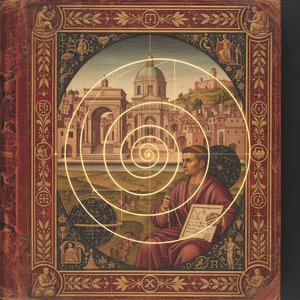
Kuzma Petrov-Vodkin, a visionary Russian painter working in the early 20th century, stands as a compelling example of an artist who radically reinterpreted traditional perspective. Rejecting conventional linear systems, Petrov-Vodkin developed his own unique “spherical perspective,” characterized by receding forms that converge not towards a single vanishing point but rather around a central focal area. This technique, often employed in compositions imbued with religious symbolism—such as “The Dream”—created a sense of all-encompassing space and heightened emotional resonance. His work blends elements of iconography, Post-Impressionism, and Russian folk art, resulting in a distinctive style that is both deeply spiritual and visually arresting. Petrov-Vodkin’s use of color and line wasn't merely decorative; it was integral to conveying his philosophical and religious beliefs.
Drawing as Foundation: From Sketch to Masterpiece – Alberti and the Art of Underdrawing
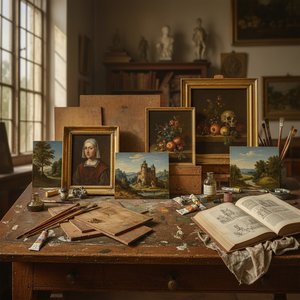
While we often admire finished paintings, it’s crucial to remember that many masterpieces began as humble drawings. Leon Battista Alberti's emphasis on drawing wasn’t limited to its role in establishing perspective; he also championed its importance as a foundational skill for all artists. The practice of *underdrawing* – creating preliminary sketches directly onto the canvas or panel before applying paint—was essential for planning composition, defining forms, and ensuring anatomical accuracy. These underdrawings, often revealed through scientific analysis today, offer invaluable insights into an artist’s creative process. They demonstrate a meticulous approach to design, revealing layers of thought and refinement that lie beneath the surface of the finished work. The ability to translate three-dimensional reality onto a two-dimensional plane—a skill honed through diligent drawing practice—remained paramount.
The Ongoing Dialogue: Drawing's Legacy in Modern and Contemporary Art
Drawing’s story doesn’t end with the Renaissance or the 19th century. Throughout the modern era, artists continued to push the boundaries of the medium, challenging traditional notions of representation and exploring new materials and techniques. From the expressive lines of Expressionism to the conceptual explorations of Minimalism, drawing has remained a vital form of artistic expression. Today, contemporary artists embrace a diverse range of approaches—from hyperrealistic graphite renderings to abstract gestural marks—demonstrating the enduring power of line to convey emotion, ideas, and experiences. The fundamental impulse that drove our ancestors to mark cave walls continues to resonate in the work of artists today, proving that drawing is not merely a technique but an essential aspect of human creativity.