The Salon: The Crucible of French Artistic Tradition
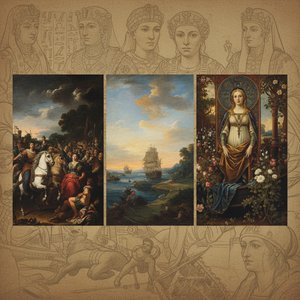
For centuries, the name “Salon” evoked not merely a space but an institution—the official art exhibition of the Académie des Beaux-Arts in Paris. Originating in 1667 under Louis XIV’s patronage as a showcase for members of the Royal Academy of Painting and Sculpture, it quickly became *the* arbiter of taste in France. The very name derives from the Salon d'Apollon within the Louvre Palace where these early exhibitions were held. Initially intended to celebrate academic achievement, the Salon evolved into an annual event by 1737, wielding immense power over artists’ careers and public perception. Success at the Salon meant commissions, recognition, and social standing; rejection could be devastating. The selection process, overseen by a jury of established artists, favored historical, mythological, and religious subjects rendered with meticulous technique—a standard that would soon face a formidable challenge.
The Salon wasn’t simply about art; it was a social spectacle. Attendees weren't merely viewing paintings but participating in a complex dance of patronage, critique, and networking. Writers like Denis Diderot began to publish influential reviews, shaping public opinion and establishing the role of the art critic. The Salon became a microcosm of French society, reflecting its values, anxieties, and evolving aesthetic sensibilities. It was within these gilded halls that artists sought not only validation but also their place in the cultural narrative.
From Rococo to Revolution: Shifting Styles & Societal Tides
Rococo, less commonly Roccoco ( rə-KOH-koh, US also ROH-kə-KOH; French: [ʁɔkɔko] or [ʁokoko] ), also known as Late Baroque, is an exceptionally ornamental and dramatic style of architecture, art, and decoration which combines asymmetry, scrolling cu...
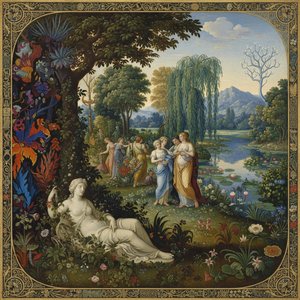
The 18th century witnessed a dramatic shift from the grandeur of Baroque to the playful elegance of Rococo. Characterized by asymmetry, ornate detailing, and pastel hues, Rococo art—think Fragonard’s whimsical scenes or Boucher’s idyllic landscapes—reflected the aristocratic tastes of the French court. However, beneath the surface of this lighthearted style lay growing social unrest. The Enlightenment's emphasis on reason and individual liberty began to challenge traditional authority, and artists increasingly turned their attention to contemporary life and political themes.
The French Revolution irrevocably altered the art world. The Académie’s control was loosened, and the Salon briefly opened its doors to all French artists. This period saw a rise in Neoclassicism—a deliberate return to classical forms as an expression of republican ideals. Jacques-Louis David became the leading figure, using his paintings to promote revolutionary values. Yet, even after Napoleon's rise and subsequent restoration of order, the Salon remained a battleground for artistic innovation and ideological conflict.
Impressionism's Radical Dawn: Challenging Conventions and Capturing Light
The mid-19th century saw a growing dissatisfaction with the academic constraints imposed by the Salon. A group of artists—Claude Monet, Camille Pissarro, Pierre Auguste Renoir, Berthe Morisot, and others—began to explore new ways of representing the world. Rejecting traditional subject matter and techniques, they focused on capturing fleeting moments in time, the effects of light and color, and the vibrancy of modern life. Their independent exhibitions, starting with the groundbreaking show of 1874, were initially met with ridicule.
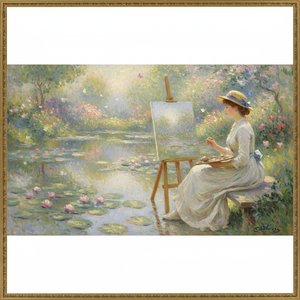
The name “Impressionism” itself was born from a critical barb—Louis Leroy’s dismissive review of Monet’s Impression, soleil levant. However, what began as an insult became the defining characteristic of the movement. Artists like Monet abandoned detailed rendering in favor of visible brushstrokes and an emphasis on *en plein air* painting – working directly from nature to capture the immediacy of perception. This radical approach challenged the very definition of art, prioritizing subjective experience over objective representation.
Post-Impressionism: Beyond Representation – Exploring Emotion and Form
While Impressionism sought to capture the fleeting effects of light and atmosphere, Post-Impressionism represented a move beyond mere optical observation. Artists like Paul Cézanne, Vincent van Gogh, and Paul Gauguin built upon Impressionist foundations but explored more subjective and expressive approaches. Cézanne focused on underlying geometric structures, paving the way for Cubism; Van Gogh used bold colors and swirling brushstrokes to convey intense emotion; and Gauguin sought spiritual meaning in primitive cultures.
Post-Impressionism wasn’t a unified style but rather a diverse range of individual explorations. These artists rejected the limitations of Impressionism, seeking to imbue their work with deeper personal meaning and symbolic content. They laid the groundwork for many of the 20th century's most influential art movements, pushing the boundaries of artistic expression and challenging conventional notions of beauty.
The Enduring Influence of French Masters on Modern Art
The legacy of French art extends far beyond the 19th century. The innovations pioneered by Impressionists and Post-Impressionists—visible brushstrokes, emphasis on color, subjective perspective—continue to resonate with artists today. Their influence can be seen in movements ranging from Fauvism and Expressionism to Abstract Art and beyond.
The French masters not only transformed artistic technique but also challenged the very purpose of art. They liberated artists from the constraints of academic tradition, encouraging them to explore their own unique visions and express their individual emotions. Their work continues to inspire awe and provoke contemplation, reminding us of the power of art to capture the beauty, complexity, and ever-changing nature of the world around us.
Collecting French Art Today: A Guide for Enthusiasts
For those seeking to acquire a piece of this rich artistic heritage, collecting French art offers a rewarding journey. While iconic works by Monet or Renoir command high prices, numerous opportunities exist to build a meaningful collection at various price points.
- Focus on a Movement: Consider specializing in Impressionism, Post-Impressionism, or another period that resonates with your aesthetic preferences.
- Explore Lesser-Known Artists: Discovering talented artists beyond the famous names can yield both artistic satisfaction and investment potential.
- Consider Prints & Reproductions: High-quality OriginalUniqueArt reproductions offer an accessible way to enjoy French masterpieces without a substantial financial commitment.
- Research Provenance: Understanding the history of ownership can add value and authenticity to your acquisitions.
- Seek Expert Advice: Consult with art dealers, appraisers, or online resources like OriginalUniqueArt for guidance and support.
Ultimately, collecting French art is about more than just acquiring objects; it’s about connecting with a rich cultural legacy and celebrating the enduring power of human creativity. At OriginalUniqueArt, we are dedicated to making these timeless masterpieces accessible to all.