The Essence of Acrylics: Understanding Chemistry and Versatility
To step into the world of acrylic painting is to embrace the medium of the modern era, a liquid polymer emulsion that offers an immediacy and flexibility unmatched by its historical predecessors. Unlike the slow-drying, heavy-bodied nature of oil paints, which demand patience and a meticulous approach to drying times, acrylics are characterized by their rapid evaporation and subsequent formation of a durable, water-resistant film. This chemical composition allows for a unique spontaneity; an artist can layer colors with incredible speed, building complexity within a single session. The versatility of this medium lies in its ability to mimic almost any other form of painting. When thinned with water, it behaves like a delicate watercolor, capturing soft, ethereal washes; when applied thickly with a palette knife, it transforms into a robust impasto, capable of holding deep ridges and sculptural textures. For the art student, understanding this duality is essential. It is not merely about applying pigment to a surface, but about manipulating a responsive, plastic medium that reacts to every stroke, offering a playground for both controlled precision and expressive, gestural freedom.
The Essential Toolkit: Curating Brushes, Surfaces, and Mediums for Success
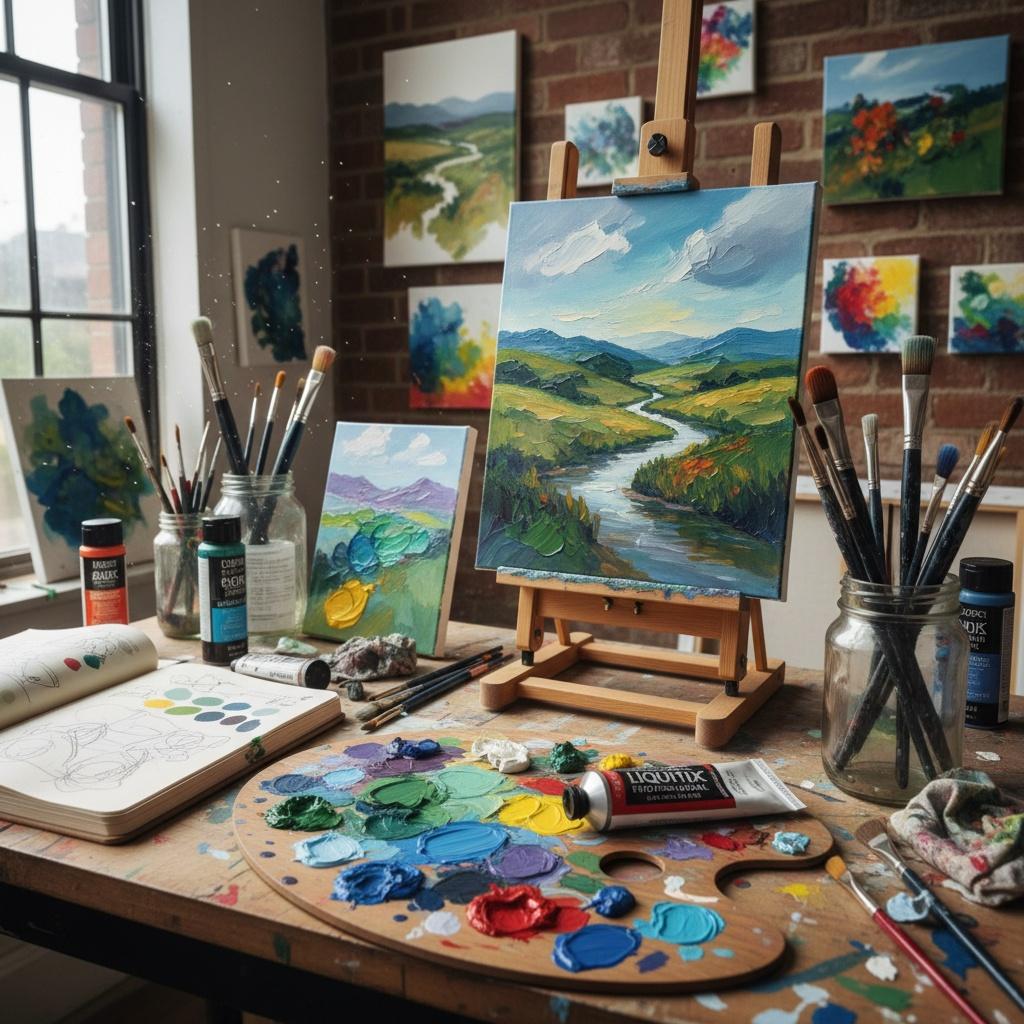
A masterfully executed painting begins long before the first drop of pigment touches the canvas; it starts with the thoughtful curation of one's toolkit. For the aspiring professional, selecting the right implements is a matter of both technical necessity and artistic intent. Because acrylic paint can be quite abrasive on bristles, synthetic brushes—often made of high-quality nylon or polyester—are frequently preferred over traditional natural hair. These synthetics possess the necessary "spring" and resilience to handle the weight of heavy-bodied paints while maintaining their shape through repeated use. Beyond the brush, the choice of substrate is paramount. While the heavy-duty cotton canvas remains a staple for its durability and texture, students should also explore primed wood panels or even heavy-weight acrylic paper for studies and detailed works. However, the true secret to unlocking the medium's potential lies in the use of additives, known as mediums. By incorporating glazing mediums, one can achieve a luminous transparency that invites light into the layers; conversely, using thickening or impasto mediums allows the artist to sculpt with the paint itself. Mastering these tools is akin to learning a new language, where each brush and medium serves as a vital syllable in the artist's visual vocabulary.
Mastering Fundamental Techniques: From Fluid Washes to Textured Impasto
The true magic of acrylic painting unfolds through the mastery of technique, a journey that moves from the ethereal to the tactile. One of the most foundational skills is the application of the wash, a method where paint is heavily diluted to create translucent, atmospheric layers. This technique is often used to establish the initial tonal values of a composition, providing a soft, glowing foundation upon which more opaque details can be built. As the artist progresses, they may encounter the transformative power of drybrushing, where a nearly exhausted brush is dragged across a textured surface to highlight peaks and create a sense of weathered age or light-drenched highlights. On the opposite end of the spectrum lies the breathtaking complexity of impasto. Here, the paint is applied in thick, unblended dollops, creating a three-dimensional topography on the canvas. This technique demands a command over the medium's viscosity and allows the artist to capture the very energy of their movement, making the brushstrokes themselves a central element of the artwork's emotional impact. Learning to navigate between these fluid and structural techniques is what allows an artist to breathe life and dimension into their creative visions.
Color Theory in Practice: Navigating Pigment, Opacity, and Blending
In the realm of acrylics, color theory takes on a unique dimension due to the medium's inherent opacity and rapid drying time. Unlike oils, where colors can be blended seamlessly on the palette or directly on the canvas for hours, an acrylic artist must work with a sense of urgency and foresight. Understanding the pigment load and the transparency of each specific tube is critical; some pigments are naturally translucent, while others are intensely opaque. This distinction dictates how layers will interact—an opaque white layer can completely obscure what lies beneath, whereas a transparent glaze will only subtly shift the hue of the underlying color. Furthermore, the challenge of blending requires a strategic approach to "wet-on-wet" painting, where the artist must manipulate colors before the polymer film sets. This necessitates a deep understanding of chromatic harmony and the ability to predict how much time remains before a transition becomes permanent. For the student, learning to navigate these shifts in opacity and temperature is essential for creating depth, light, and a sophisticated sense of atmospheric perspective within their work.
Advanced Strategies: Managing Drying Time and Achieving Professional Depth
To reach the pinnacle of professional practice, an artist must move beyond basic application and begin employing advanced strategies to manage the medium's most challenging characteristics. One of the greatest hurdles in acrylic painting is the rapid drying time, which can stifle complex blending. To combat this, seasoned artists utilize retarders—specialized additives designed to slow the evaporation process, thereby extending the "open time" of the paint and allowing for more nuanced transitions. Additionally, achieving true professional depth requires a sophisticated approach to layering. By building up multiple thin, transparent glazes, an artist can create a sense of internal luminosity that appears to radiate from within the painting itself. This technique, often seen in the works of the Old Masters, is entirely achievable with acrylics through disciplined application. As you refine these skills, you may find inspiration in the way history is preserved and reimagined. At OriginalUniqueArt.com, we celebrate this very intersection of tradition and innovation, specializing in the breathtaking reproduction of historical masterpieces and the creation of custom oil works that honor the textures and souls of the great artists. Just as an acrylic student learns to build depth through layers, we strive to bring the depth of art history into the modern home, ensuring that every brushstroke tells a story of enduring beauty.