Introduction: Defining Realism – Beyond Mere Representation
In philosophy, verisimilitude (or truthlikeness) is the notion that some propositions are closer to being true than other propositions. The problem of verisimilitude is the problem of articulating what it takes for one false theory to be closer to th...
Realism, as a movement in art, often evokes images of meticulous detail, photographic accuracy, and an unwavering commitment to depicting the world ‘as it is.’ However, to define realism solely through these terms risks overlooking its deeper philosophical undercurrents and artistic ambitions. It wasn’t simply about replicating visual reality; it was a conscious rejection of idealized forms, romanticized narratives, and academic conventions that had dominated art for centuries. Emerging in the mid-19th century as a response to social upheaval and burgeoning scientific inquiry, realism sought truth – not necessarily beauty, but an honest portrayal of human existence, with all its complexities, imperfections, and often harsh realities. This pursuit extended beyond subject matter; it permeated technique, composition, and even the very materials employed by artists who dared to challenge established norms.
A Historical Canvas: The Evolution of Realistic Painting Movements
There is no exact definition of what constitutes art. Artists have explored many styles and have used many different techniques to create art. == Art techniques == == See also == Art movement Creativity techniques Hockney–Falco thesis Kallirosc...
The roots of realism can be traced back through various periods, finding precursors in the Dutch Golden Age masters like Johannes Vermeer. His ‘Portrait of a Woman’ exemplifies an astonishing attention to detail and subtle emotional nuance – qualities that would become hallmarks of the movement. Yet, it was Gustave Courbet who truly ignited the realist flame with works such as ‘The Stone Breakers,’ a deliberately unglamorous depiction of manual labor that shocked audiences accustomed to historical or mythological scenes. Following Courbet, artists like Jean-François Millet focused on rural life and the dignity of peasant existence, while Édouard Manet pushed boundaries further by challenging traditional notions of beauty and propriety with paintings like ‘Le Déjeuner sur l’herbe.’ These pioneers weren't merely documenting their surroundings; they were making a statement about social conditions, class structures, and the lives of ordinary people. The movement wasn’t monolithic; it branched into various sub-styles – from the social realism of artists addressing political issues to the psychological realism that delved into the inner lives of individuals.
The Pillars of Verisimilitude: Mastering Color, Value & Detail
 F.A.Q.: Painting Techniques – Achieving Museum-Quality Reproductions for Elite Collectors
Discover 's expert techniques for creating museum-quality art reproductions. Trusted by elite collectors worldwide, we offer authentic handmade oil paintings & custom artwork with unparalleled quality and personalized service.
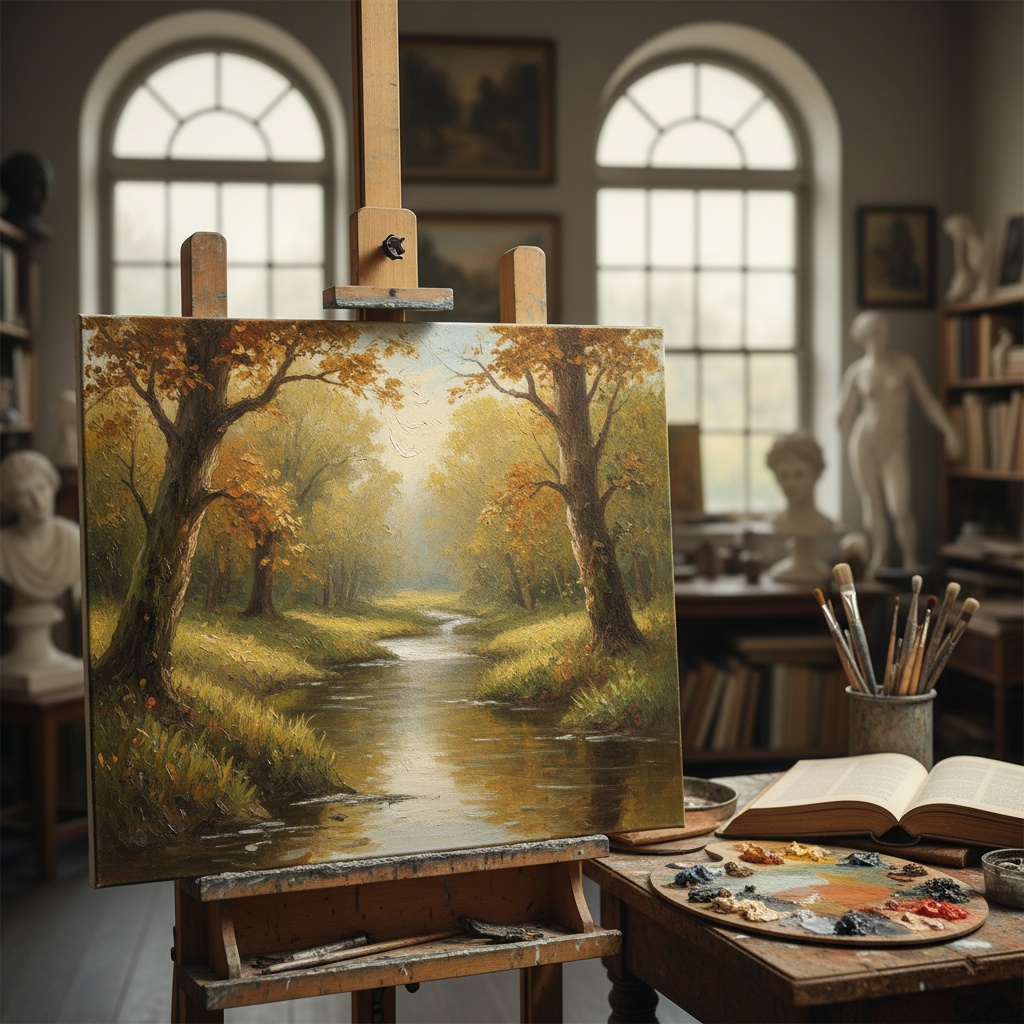
Achieving a convincing sense of reality in painting hinges on a delicate balance between observation and interpretation. It’s not simply about copying what one sees; it's about understanding how light interacts with surfaces, creating the illusion of depth, form, and texture. Color plays a crucial role – accurate placement is essential for reflecting light and shadow, but equally important is the subtle interplay of hues and tones to create atmospheric perspective. Value, or the relative lightness or darkness of colors, is arguably even more critical; it’s value that defines shape and volume, giving objects their three-dimensionality. As Matt Philleo articulates in ‘How to Create Realistic Effects: The Mystery of Realism in Painting,’ knowing when *not* to paint detail is as important as knowing when to include it. Adding hints of color – a touch of light blue in a beard to suggest reflected sky, for example – can imply texture and depth without overwhelming the composition. The eye naturally fills in gaps, creating a more immersive and believable image.
Psychological Realism: Capturing Emotion and the Human Condition
While technical skill is paramount, true realism extends beyond mere visual accuracy to encompass the emotional and psychological states of its subjects. Artists sought to portray not just *what* people looked like, but *how* they felt – their anxieties, hopes, fears, and vulnerabilities. This required a deep understanding of human anatomy, expression, and gesture, as well as an ability to convey subtle nuances through brushwork and composition. Honoré Daumier’s work often captured the pathos and struggles of the working class with poignant sensitivity, while later artists explored the complexities of modern life and the alienation experienced by individuals in rapidly changing societies. The goal wasn't simply to create a likeness; it was to evoke empathy and understanding in the viewer, prompting reflection on the human condition.
Techniques of the Masters: From Vermeer to Contemporary Approaches
Throughout history, artists have employed a variety of techniques to achieve realistic effects. Vermeer’s mastery of light and shadow, achieved through meticulous layering and glazing, remains legendary. Courbet favored a direct painting style with thick impasto, emphasizing the materiality of paint itself. Later realists experimented with different brushwork styles – from the smooth, blended surfaces of academic training to the broken brushstrokes of Impressionism, which sought to capture fleeting moments of light and atmosphere. Today, contemporary hyperrealist painters push the boundaries even further, creating images that are virtually indistinguishable from photographs. However, regardless of the specific technique employed, a common thread unites these artists: a dedication to observation, precision, and an unwavering commitment to capturing the essence of their subjects. The use of oil paints remains central, allowing for rich color depth and subtle blending – qualities difficult to replicate with other mediums.
Realism in the Digital Age: Reproductions, Customization & Legacy
 F.A.Q.: Transforming Cherished Memories into Heirloom Art with Custom Paintings
Transform your cherished photos into stunning, museum-quality oil paintings with . Our expert artists deliver bespoke portraits and personalized art – a lasting legacy for discerning collectors. Request a quote today!
The desire to experience and own realistic art continues unabated, even in a world saturated with digital images. At OriginalUniqueArt.com, we bridge the gap between historical masterpieces and contemporary collectors by offering handmade oil paintings and museum-quality reproductions of renowned artworks. Our expert artists meticulously recreate these works using traditional techniques, ensuring authenticity and unparalleled quality. Beyond reproductions, we specialize in transforming cherished photos into bespoke portraits – a lasting legacy for discerning individuals. The process allows for complete customization: size, orientation, framing style, even the artistic style itself can be tailored to your preferences. Whether you seek to replicate a beloved classic or create a unique family heirloom, our team provides personalized service and ensures that every detail meets your expectations. We offer digital mockups for complex orders, allowing you to approve the final artwork before it’s shipped. Ultimately, realism isn't just about replicating an image; it’s about preserving a memory, celebrating beauty, and connecting with the artistic heritage of generations past.