Early Influences & The Ashcan School: Davis's Formative Years
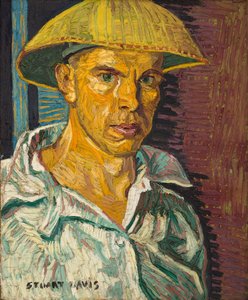 Stuart Davis
Stuart Davis: Explore bold American Modernism! Jazz-inspired paintings & proto-pop art from this Ashcan School pioneer. Discover his vibrant style today!
Stuart Davis, a name synonymous with the bold energy of American Modernism, didn’t emerge from a vacuum. His artistic journey began amidst the gritty realism of the Ashcan School in early 20th-century New York. While he would ultimately forge his own path—a vibrant explosion of color and abstraction—the foundations were laid observing the everyday life of the city: bustling streets, crowded tenements, and the raw vitality of a rapidly changing nation. Davis initially absorbed the Ashcan School’s commitment to depicting authentic American experience, but quickly felt constrained by its purely representational approach. He sought something more than mirroring reality; he wanted to *capture* its essence, its rhythm, its underlying structure. This early period was crucial in honing his observational skills and developing a keen awareness of form and composition—elements that would later be radically transformed in his signature style.
His exposure to Robert Henri, a leading figure of the Ashcan School, proved formative. Henri encouraged direct observation and a rejection of academic conventions, instilling in Davis a belief in the power of individual expression. However, it was the 1913 Armory Show that truly ignited his artistic imagination. Encountering European avant-garde movements—Cubism, Fauvism, Futurism—Davis experienced a revelation. These styles offered a vocabulary for expressing the dynamism and fragmentation of modern life, a language far removed from the traditional constraints he had known.
The Rise of American Modernism: Rejecting Tradition, Embracing Abstraction
American modernism, much like the modernism movement in general, is a trend of philosophical thought arising from the widespread changes in culture and society in the age of modernity. American modernism is an artistic and cultural movement in the Un...
The interwar period witnessed a burgeoning sense of national identity in America, coupled with a desire to break free from European artistic dominance. American Modernism wasn’t simply an imitation of European trends; it was a conscious effort to create an art that reflected the unique character of the United States—its energy, its industrialization, and its diverse cultural landscape. Davis became a central figure in this movement, actively championing a distinctly American aesthetic. He believed that American artists should draw inspiration from their own surroundings, rejecting the historical narratives and stylistic conventions of Europe.
This rejection manifested as an increasing embrace of abstraction. Davis wasn’t interested in depicting objects realistically; he sought to distill them down to their essential forms—geometric shapes, bold colors, and dynamic compositions. He saw abstraction not as a departure from reality but as a more powerful way of representing it. His paintings became increasingly flattened, emphasizing the two-dimensionality of the canvas and rejecting traditional notions of perspective and depth. This move towards abstraction was also fueled by his fascination with advertising and popular culture—sources that were often dismissed by the art establishment but which Davis recognized as potent symbols of modern American life.
Jazz Age Rhythms in Paint: Exploring the Dynamic Connection Between Music and Art
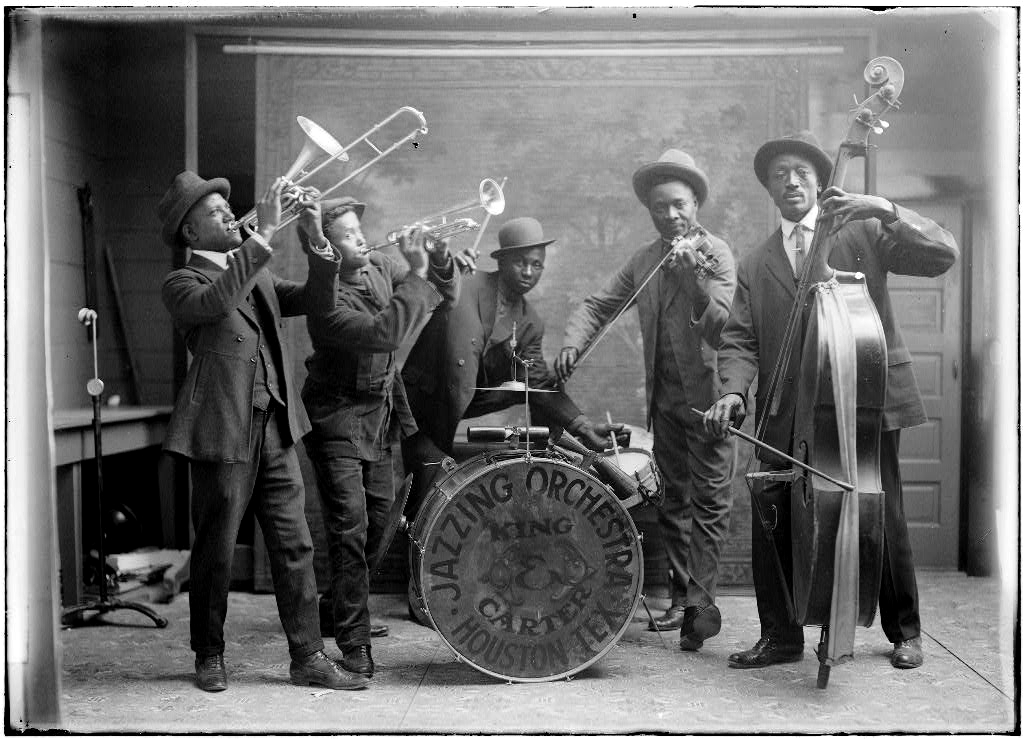 Wikipedia: Jazz Age
The Jazz Age was a period from 1920 to the early 1930s in which jazz music and dance styles gained worldwide popularity. The Jazz Age's cultural repercussions were primarily felt in the United States, the birthplace of jazz. Originating in New Orlean...
The 1920s, known as the Jazz Age, provided a crucial source of inspiration for Davis. The improvisational spirit of jazz—its syncopated rhythms, its vibrant energy, and its embrace of spontaneity—resonated deeply with his artistic sensibilities. He didn’t simply depict scenes from jazz clubs; he sought to *translate* the experience of listening to jazz into visual form. His paintings became increasingly dynamic, characterized by bold colors, fragmented shapes, and a sense of movement that mirrored the energy of a jazz performance.
“Visa” (1951), for example, exemplifies this connection. The painting’s vibrant typography and abstract forms evoke the fast-paced rhythm of modern life, while its bold colors capture the energy of jazz music. Davis often spoke about the parallels between jazz improvisation and his own artistic process—the idea of starting with a basic motif and then developing it through a series of variations. He saw both art and jazz as expressions of American vitality, reflecting the dynamism and complexity of modern culture.
Key Works & Recurring Motifs: A Closer Look at Davis’s Signature Style
 Fabric Design, knots and streaks pattern
Stuart Davis's 'Fabric Design, knots and streaks pattern' bursts with vibrant blues and reds, showcasing his pioneering American Modernism style. A dynamic interplay of circles and lines creates an engaging abstract composition.
Throughout his career, Davis developed a distinctive visual vocabulary characterized by recurring motifs—tobacco packages, household objects, and geometric shapes. Works like “Fabric Design, Knots and Streaks Pattern” (1928), demonstrate his ability to transform everyday objects into abstract compositions. He wasn’t interested in the objects themselves but rather in their formal qualities—their shapes, colors, and textures. These motifs served as starting points for a series of variations, each painting building upon previous iterations.
“Study for ‘Rapt at Rappaport’s’” (1942), reveals his working method. Davis rarely started with a blank canvas; he often reworked earlier compositions, layering new forms and colors over existing ones. This process of appropriation and transformation was central to his artistic practice, reflecting his belief in the power of continuous evolution. His paintings are characterized by a dynamic interplay of circles, lines, and rectangles—forms that create a sense of movement and energy. The bold color palettes he employed further enhance this effect, evoking the vibrancy and dynamism of modern American life.
Davis's Late Career & Legacy: Proto-Pop Art and Enduring Influence
 Visa
VisaDiscover 'Visa' by Stuart Davis – a vibrant Pop Art & Cubist collage featuring bold typography & jazz-inspired colors. Explore this dynamic American modernist painting!
In his later years, Davis continued to push the boundaries of abstraction, anticipating many of the key themes of Pop Art. His use of commercial imagery, bold colors, and flattened compositions foreshadowed the work of artists like Andy Warhol and Roy Lichtenstein. While he didn’t explicitly identify as a Pop artist, his paintings laid the groundwork for this important movement.
Davis's legacy extends beyond his influence on Pop Art. He remains a pivotal figure in American Modernism, celebrated for his unique ability to capture the energy and dynamism of modern life. His work continues to resonate with audiences today, offering a powerful vision of America’s cultural landscape during the 20th century. His commitment to abstraction, his embrace of popular culture, and his unwavering belief in the power of individual expression continue to inspire artists and collectors alike.
Collecting Stuart Davis: Considerations for Building a Fine Art Portfolio
Investing in a Stuart Davis painting is acquiring more than just an artwork; it’s owning a piece of American cultural history. His works are increasingly sought after by collectors, representing a significant investment opportunity. When considering a purchase, several factors should be taken into account. Early paintings from the Ashcan School period offer insight into his formative years, while mid-career works showcase his signature style at its peak. Later pieces demonstrate his experimentation and foreshadowing of Pop Art.
Provenance is crucial—understanding the painting’s history of ownership adds value and authenticity. Condition also plays a significant role; well-preserved paintings command higher prices. At OriginalUniqueArt.com, we offer expert appraisal services to help you assess the value and authenticity of potential acquisitions. Our team can provide detailed information about each artwork, including its provenance, condition, and historical significance. We also specialize in custom reproductions, allowing you to experience the beauty of Davis’s work without the investment of an original piece. Explore our collection today and discover the vibrant world of Stuart Davis—a true pioneer of American Modernism.