The Birth of Darkness: Defining Tenebrism & Its Roots
Tenebrism, from Italian tenebroso ('dark, gloomy, mysterious'), also occasionally called dramatic illumination, is a style of painting using especially pronounced chiaroscuro, where there are violent contrasts of light and dark, and where darkness be...
Before the dramatic spotlight, before the chiaroscuro that sculpted form from shadow, there was a gradual shift in artistic sensibility. The High Renaissance’s pursuit of balanced harmony began to yield to an exploration of emotional intensity and psychological realism. This wasn't a sudden rupture, but rather a slow burn—a fascination with the power of darkness as more than just the absence of light. Artists like Albrecht Dürer experimented with stark contrasts in his self-portraits, hinting at the possibilities within extreme tonal variations. Tintoretto’s religious scenes pulsed with a theatrical energy, foreshadowing the coming storm. However, it was in the hands of Michelangelo Merisi da Caravaggio that this nascent interest truly exploded into the revolutionary style we now know as tenebrism – from the Italian tenebroso, meaning ‘dark, gloomy, mysterious.’ Tenebrism wasn’t simply about depicting darkness; it was about harnessing its power to create a visceral, almost shocking emotional impact. It represented a departure from idealized beauty and a descent into the raw realities of human experience.
Caravaggio: The Master of Dramatic Illumination
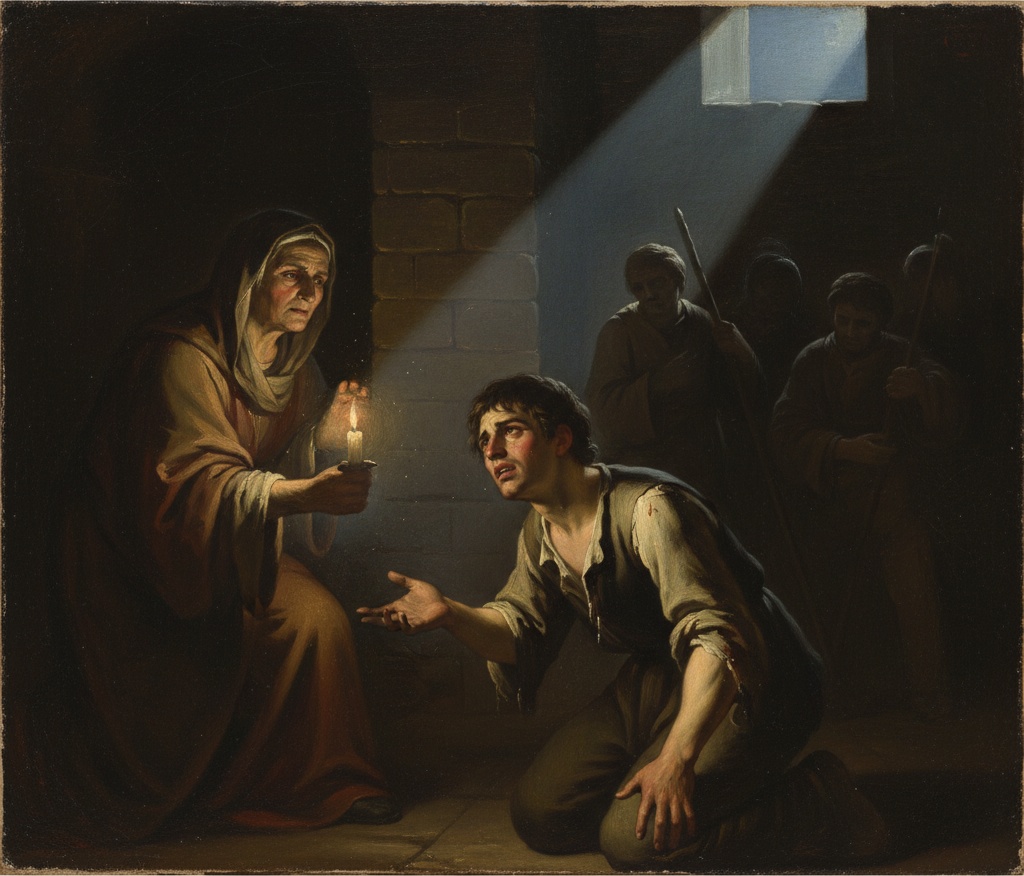
 untitled
Discover Caravaggio’s "untitled" – a dramatic Baroque oil painting featuring intense chiaroscuro & poignant figures. Explore realism, grief, & the artist's revolutionary style.
Michelangelo Merisi da Caravaggio didn’t just invent a technique; he shattered conventions. Rejecting the polished surfaces and mythological subjects favored by his contemporaries, Caravaggio turned to the streets of Rome for inspiration. His models weren't gods or goddesses, but ordinary people – tavern keepers, fortune tellers, even prostitutes. He painted them with unflinching realism, wrinkles, dirt under their fingernails, a palpable sense of lived experience etched onto their faces. But it was his handling of light that truly set him apart. Caravaggio didn’t blend tones gradually; he plunged most of the canvas into profound darkness, then unleashed a single, intense beam of light – often originating from an unseen source – to illuminate key figures and moments. Works like “The Calling of Saint Matthew” exemplify this approach perfectly. The tavern scene is shrouded in shadow, but Christ’s gesture cuts through the gloom, spotlighting Matthew with divine purpose. This wasn't merely a stylistic choice; it was a deliberate attempt to evoke a sense of spiritual revelation, to bring the sacred into the everyday world. “Judith Beheading Holofernes” further demonstrates his mastery – the brutal realism and stark contrast amplifying the horror and psychological tension of the scene. Caravaggio’s studio itself became a laboratory for this effect, meticulously controlled with windows and mirrors redirecting natural light.
Beyond Italy: The Spread of Tenebrism Across Europe
 Francisco de Zurbarán
Francisco de Zurbarán (1598-1664): Spanish Baroque master of dramatic tenebrism & religious art. Explore paintings of monks, saints & still lifes – the 'Spanish Caravaggio'!
Caravaggio's influence radiated outwards from Rome like shockwaves. His revolutionary style quickly captivated artists across Europe, though its interpretation varied significantly depending on the cultural context. In Spain, painters such as Francisco Ribalta and Jusepe de Ribera embraced tenebrism with particular fervor, infusing their religious works with a heightened sense of drama and emotional intensity. Ribera’s “Spanish” (1591), depicting the Holy Family, showcases this beautifully – rich textures, pyramidal composition, and that signature dramatic lighting all contribute to a powerful visual statement. The Netherlands saw the emergence of the Utrecht School, artists like Gerrit van Honthorst who adopted Caravaggio's techniques but often softened the edges, creating more intimate and atmospheric scenes. In France, Georges de La Tour became renowned for his candlelit interiors – captivating religious scenes where figures emerged from the darkness with a quiet dignity. These weren’t mere imitations of Caravaggio; each artist adapted the style to their own sensibilities, exploring different facets of its expressive potential.
Technical Brilliance: Achieving the Tenebrist Effect
The creation of a tenebrist painting was a painstaking process, demanding meticulous control over light and shadow. Unlike traditional chiaroscuro which builds form through gradual tonal shifts, tenebrism required artists to build up layers of dark pigment – often using burnt umber mixed with raw umber – to create an almost impenetrable darkness. This wasn’t simply about applying black paint; it was about creating a sense of depth and volume through carefully modulated tones. Caravaggio himself worked directly from life without preparatory drawings, painting wet-on-wet to capture the immediacy of his observations. His studio setup was crucial – darkened rooms with strategically placed windows allowed him to control every ray of light entering the space. Mirrors were used to redirect natural illumination, creating the precise spotlight effect he desired. The technique wasn’t limited to oil paints; some artists experimented with glazes and varnishes to enhance the luminosity and depth of their shadows.
Tenebrism's Legacy: Influence on Subsequent Art Movements
The impact of tenebrism extended far beyond the Baroque period, leaving an indelible mark on subsequent art movements. While its most intense expression was confined to the 17th century, its principles continued to resonate with artists seeking to explore emotional depth and psychological realism. The dramatic lighting techniques pioneered by Caravaggio found echoes in Romantic painting, particularly in the works of Joseph Wright of Derby. Furthermore, the emphasis on light and shadow paved the way for later developments in photography and cinema – genres such as film noir owe a clear debt to tenebrism’s exploration of darkness and mystery. The technique's enduring appeal lies in its ability to tap into primal human emotions – fear, awe, reverence – by manipulating our perception of light and dark. It reminds us that beauty can be found not only in illumination but also in the shadows that conceal it.
Collecting Tenebrist Works: A Guide for Enthusiasts
Acquiring a work from the tenebrist tradition is an investment in both artistic history and emotional power. Original Caravaggio paintings are, understandably, exceedingly rare and command astronomical prices. However, works by his followers – Ribera, La Tour, Gentileschi – offer compelling alternatives. When considering a purchase, pay close attention to the artist’s handling of light and shadow; does it possess that signature dramatic intensity? Examine the brushwork for authenticity – true tenebrist paintings will reveal visible textures and layers of pigment. Provenance is also crucial; research the artwork's history to ensure its legitimacy. OriginalUniqueArt.com offers a curated selection of high-quality reproductions of masterpieces from this period, allowing you to experience the power of tenebrism in your own home. We specialize in handmade oil paintings created by skilled artists who meticulously recreate the techniques and textures of the originals. Whether you’re seeking a grand statement piece or a more intimate study, exploring the world of tenebrist art is a journey into the heart of human emotion.