The Enduring Appeal of Landscape Art
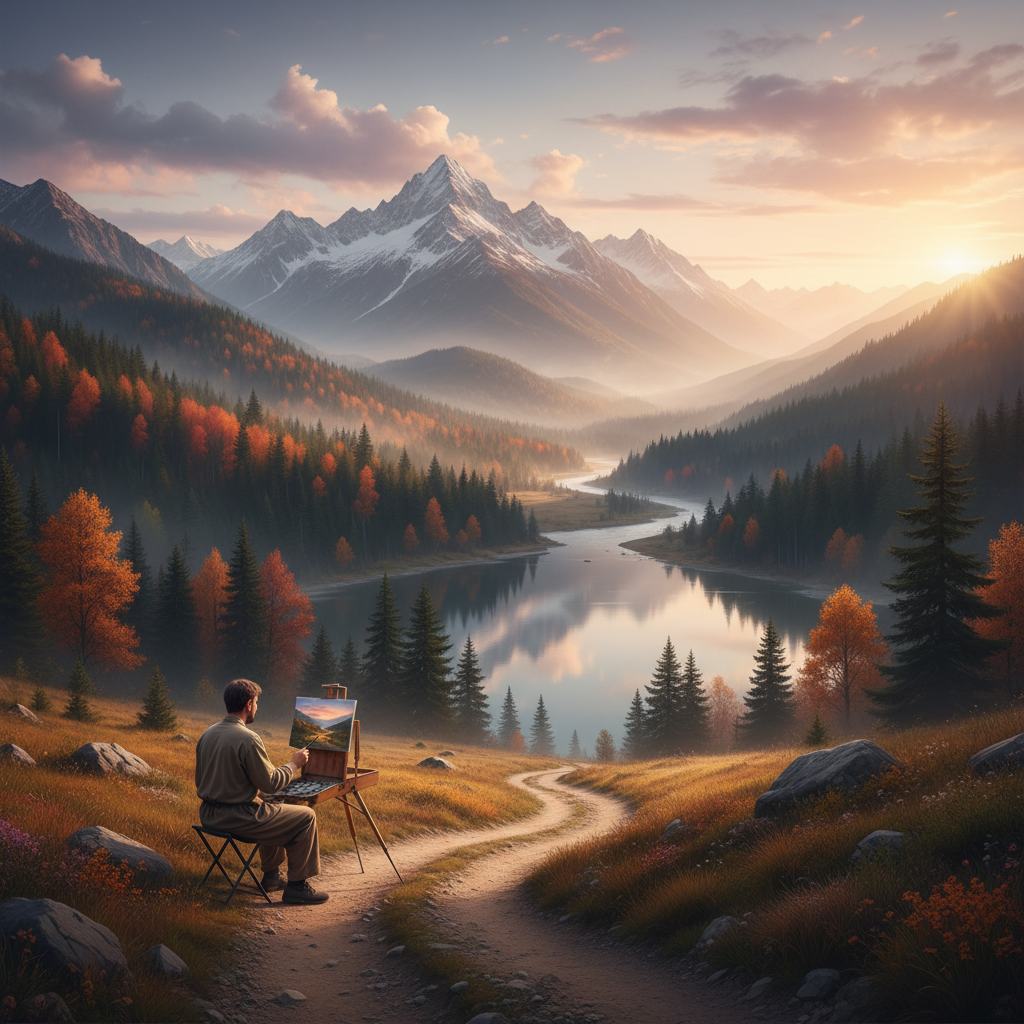
For centuries, humankind has been drawn to depictions of the natural world. More than mere representations of scenery, landscape paintings offer a window into our evolving relationship with nature – a reflection of our spiritual longings, aesthetic sensibilities, and cultural values. Perhaps it’s an innate human desire to reconnect with the origins from which we came, or perhaps it's simply the inherent beauty of light playing across rolling hills or the majestic stillness of ancient trees that captivates us. Whatever the reason, the enduring appeal of landscape art lies in its ability to transport us, offering a momentary escape and a profound sense of peace.
Initially, landscapes often served as backdrops for religious or mythological narratives. But gradually, beginning with the Renaissance and blossoming through the Dutch Golden Age, they began to emerge as independent subjects worthy of artistic exploration in their own right. Artists like Jacob van Ruisdael captured the dramatic skies and expansive vistas of the Dutch countryside with a realism that was both breathtaking and deeply moving. This shift marked a turning point – a recognition of nature’s intrinsic value and its power to inspire awe.
A Journey Through Time: Historical Perspectives on Landscapes
The 19th century witnessed an explosion of interest in landscape painting, fueled by Romanticism's emphasis on emotion, individualism, and the sublime. Artists sought not just to *represent* nature but to *interpret* it – to convey their personal feelings and experiences through brushstrokes and color. Consider the evocative works of J.M.W. Turner, whose swirling skies and atmospheric effects captured the raw power and unpredictable beauty of the natural world. His paintings weren’t simply depictions; they were emotional landscapes, reflecting a profound connection with nature's forces.
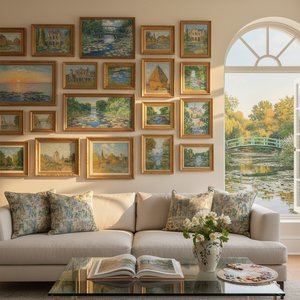
Around the same time, in France, Impressionism revolutionized landscape painting yet again. Artists like Claude Monet, as exemplified by his serene “Untitled (986)” featuring a bridge and flowers, abandoned traditional techniques in favor of capturing fleeting moments of light and color. Monet’s focus wasn't on precise detail but on the *impression* of a scene – the way light danced on water, the subtle shifts in hue as the day progressed. This approach liberated landscape painting from the constraints of realism, paving the way for more abstract and expressive interpretations.
Further afield, distinct traditions flourished. In 15th-century China, artists like Yao Shou excelled in serene landscapes and bamboo paintings, deeply influenced by Chu State aesthetics. These works weren’t merely visual representations; they were imbued with philosophical meaning, reflecting Daoist principles of harmony and balance. Similarly, Korean artist Ro Su-hyoun pioneered landscape folding screens, realistically depicting traditional scenes with remarkable skill.
Evoking Emotion: How Landscapes Impact Our Well-being
The power of landscape art extends beyond aesthetic appreciation; it has a demonstrable impact on our emotional and psychological well-being. Studies have shown that viewing images of nature can reduce stress, lower blood pressure, and promote feelings of calm and relaxation. There’s something inherently restorative about immersing ourselves in depictions of the natural world – a sense of connection to something larger than ourselves.
The colors used in landscape paintings also play a crucial role in evoking specific emotions. Cool blues and greens tend to be calming and soothing, while warm yellows and oranges can evoke feelings of joy and energy. Artists skillfully manipulate color palettes to create desired moods and atmospheres, drawing us into the scene and eliciting an emotional response.
Even the *texture* of a landscape painting can contribute to its emotional impact. Theodore Clement Steele’s “Beech Trees,” with its luminous colors and textured brushwork, invites us to reach out and touch the bark of the trees, to feel the warmth of the sunlight filtering through the leaves. This tactile quality enhances our sense of immersion and connection.
Discovering Your Personal Landscape: Artists and Styles to Explore
The world of landscape art is incredibly diverse, offering something for every taste and preference. American artist George H. Bogert blended Impressionism and Tonalism to create serene nature scenes and atmospheric European vistas. His work often evokes a sense of nostalgia and longing, capturing the beauty of fleeting moments.
Pierre-Auguste Renoir’s “Nude in a Landscape” exemplifies the Impressionist fascination with light, color, and form. The painting's soft brushstrokes and delicate hues create a sensual and idyllic atmosphere. Exploring different artists and styles allows us to refine our own aesthetic sensibilities and discover what resonates most deeply with us.
Consider your personal connection to nature. Do you prefer the dramatic grandeur of mountains, the peaceful tranquility of forests, or the vast expanse of the sea? Identifying your preferences will help guide you in selecting landscape art that truly speaks to your soul.
Bringing the Outdoors In: Incorporating Landscape Art into Your Home
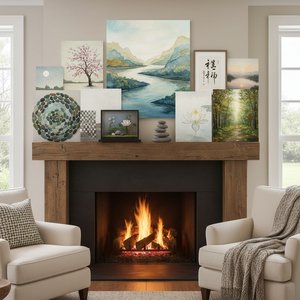
Incorporating landscape art into your home is a wonderful way to create a calming and inviting atmosphere. A large-scale landscape painting can serve as a focal point in a living room or bedroom, while smaller prints can add a touch of nature to hallways or offices.
When choosing landscape art for your home, consider the color scheme and overall style of your décor. A muted palette will complement a minimalist aesthetic, while bolder colors can add vibrancy to a more eclectic space. Don’t be afraid to experiment with different sizes and arrangements until you find what works best for you.
Ultimately, the most important thing is to choose artwork that you love – pieces that evoke positive emotions and bring a sense of peace and tranquility into your life. Landscape art has the power to transform a house into a home, creating a sanctuary where you can reconnect with nature and find solace from the stresses of everyday life.