Early Influences & European Training: The Foundations of Bischoff’s Style
Franz Albert Bischoff (January 14, 1864 – February 5, 1929) was an American artist known primarily for his China painting, floral paintings and California landscapes. He was born in Steinschönau, Austria (now known as Kamenický Šenov, Czech Republic)...
Franz Albert Bischoff, born in the Bohemian town of Steinschönau (modern Kamenický Šenov, Czech Republic) in 1864, embarked on an artistic journey deeply rooted in the traditions of applied design and meticulous craftsmanship. His early training wasn't focused on grand historical narratives or bold experimentation, but rather on the delicate art of watercolor painting and ceramic decoration – a foundation that would subtly yet profoundly shape his later work as a landscape artist. This initial immersion in ornamental detail instilled within him an appreciation for precision, color harmony, and the evocative power of surface texture. While still a teenager, Bischoff immigrated to the United States, carrying with him not only a burgeoning talent but also a distinctly European sensibility—a reverence for established techniques and a keen eye for aesthetic refinement. This formative period in Europe provided the bedrock upon which he would build his unique artistic voice, one that eventually blossomed amidst the sun-drenched landscapes of California.
From Porcelain Painter to California Pioneer: A Transatlantic Journey
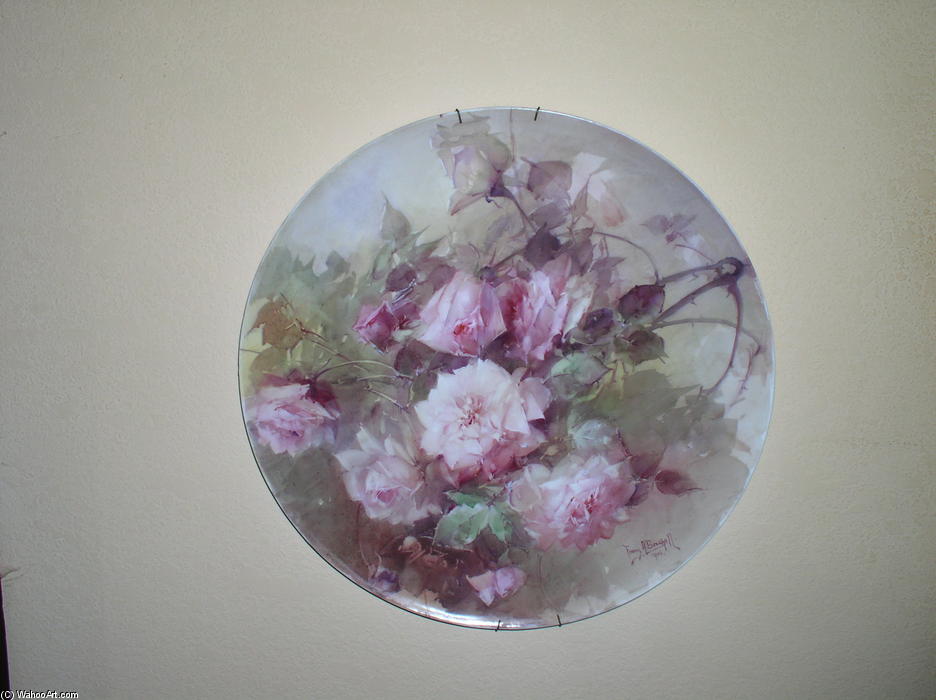 franz bischoff
Franz Bischoff (1864-1929): Austrian painter known for charming OriginalUniqueArt scenes & landscapes. Explore his vibrant watercolors & portraits – a unique blend of realism & whimsy.
The path from European artisan to Californian painter was not a direct one for Bischoff. After arriving in America, he initially found work applying his skills to porcelain decoration in New York, then moving westward through Ohio, Michigan, and Dearborn. He quickly established himself as a skilled craftsman, gaining recognition not only for the beauty of his designs but also for his expertise in ceramic glazes – a testament to his scientific understanding of materials and their interaction with light. However, Bischoff’s ambitions extended beyond the realm of decorative arts. A growing fascination with landscape painting began to take hold, prompting him to seek new horizons. In 1900, he first visited California, an experience that proved transformative. The state's radiant light, diverse terrain, and burgeoning art scene ignited a passion within him, leading to his permanent relocation to the Los Angeles area in 1906. This move marked a pivotal shift in his career, as Bischoff dedicated himself increasingly to capturing the essence of the Californian countryside on canvas.
The Allure of the California Landscape: Capturing Light and Atmosphere
 Landscape at Saint Valery-sur-Somme
Franz Bischoff’s ‘Landscape at Saint Valery-sur-Somme’ – a breathtaking oil painting of California’s beauty. Explore this Impressionistic masterpiece & Bischoff's vibrant style.
California captivated Bischoff with its unique visual character—a quality he sought to translate into his paintings. Unlike the muted tones often associated with traditional landscape art, California offered a dazzling palette of colors, intensified by the region’s abundant sunlight. He was drawn to scenes that evoked a sense of tranquility and natural beauty: rolling hills bathed in golden light, picturesque coastal vistas, and the majestic peaks of the Sierra Nevada mountains. Bischoff wasn't merely documenting these landscapes; he was striving to capture their *atmosphere*—the feeling of warmth, serenity, and boundless space. His technique evolved to reflect this goal, employing a looser brushstroke and a more vibrant color palette than his earlier work. Paintings like ‘Capistrano Mission’ exemplify this shift, showcasing an impressionistic style that beautifully renders the mission's historic charm within a sun-drenched Californian setting. He understood how light could transform ordinary scenes into moments of sublime beauty.
Tonalism, Impressionism, and Beyond: Defining Bischoff's Unique Aesthetic
Tonalism was an artistic style that emerged in the 1880s when American artists began to paint landscape forms with an overall tone of colored atmosphere or mist. Between 1880 and 1915, dark, neutral hues such as gray, brown or blue, often dominated c...
Pinpointing Bischoff’s artistic style is not easily done; he wasn’t strictly aligned with any single movement. His early work reveals a clear influence of Tonalism—a late 19th-century American style characterized by muted colors, atmospheric effects, and a focus on mood and shadow. However, upon arriving in California, his palette brightened, and his brushwork loosened, embracing elements of Impressionism. He shared the Impressionists’ fascination with capturing fleeting moments of light and color, but he infused his paintings with a distinct sense of clarity and detail that set him apart. Furthermore, Bischoff's later works hint at a flirtation with Expressionism, particularly in his bold use of color and dynamic compositions. This willingness to experiment and synthesize different styles is what makes his art so compelling—a unique blend of realism and whimsy, precision and emotion. He wasn’t simply imitating a style; he was forging his own path, drawing inspiration from diverse sources to create something truly original.
Key Works & Lasting Legacy: Examining Bischoff’s Most Celebrated Paintings
 La Loma Bridge, Pasadena
Explore 'La Loma Bridge, Pasadena' by Franz Bischoff – a vibrant Impressionist landscape painting of serene trees & architecture. Discover warmth, texture & tranquility in this unique oil artwork.
Bischoff's oeuvre is rich with captivating landscapes that showcase the beauty of California and beyond. ‘La Loma Bridge, Pasadena,’ for example, beautifully captures the serenity of a tree-lined street, bathed in warm sunlight. His paintings of Zion National Park demonstrate his ability to convey the grandeur of the American West, while works like ‘Landscape at Saint Valery-sur-Somme’ reveal a softer, more atmospheric sensibility. Beyond these iconic pieces, Bischoff produced numerous floral still lifes and scenes of everyday life, each imbued with his signature attention to detail and vibrant color palette. His success during his lifetime—including awards from the California Art Club—testifies to the widespread appreciation for his work. Today, Bischoff’s paintings are held in prominent public and private collections, continuing to inspire art lovers with their timeless beauty and evocative power. He remains a significant figure in the history of California Impressionism, celebrated for his ability to capture the essence of a region and translate it onto canvas.
Bischoff in Context: The California Art Club and the Rise of Regional Impressionism
Franz Bischoff wasn’t working in isolation. He was an active member of the California Art Club, one of the most influential art organizations in Southern California during the early 20th century. Founded in 1909, the club played a crucial role in promoting regional artists and fostering a sense of community among painters who shared a passion for capturing the beauty of the Californian landscape. Bischoff was among the founding members, and his studio served as an important meeting place for fellow artists like Carl Oscar Borg and William Wendt. The California Art Club helped to establish a distinct artistic identity for Southern California, moving away from European traditions and embracing a uniquely American aesthetic. Through exhibitions, workshops, and social events, the club provided a platform for artists like Bischoff to showcase their work and connect with collectors and patrons. His involvement in this vibrant art community solidified his position as a leading figure in the rise of Regional Impressionism—a movement that celebrated the beauty of California and helped to shape the state’s artistic legacy.