The Dawn of Landscape: From Ancient Worlds to Renaissance Visions
Landscape painting, also known as landscape art, is the depiction in painting of natural scenery such as mountains, valleys, rivers, trees, and forests, especially where the main subject is a wide view—with its elements arranged into a coherent compo...
The impulse to depict the natural world is as old as art itself, yet the concept of “landscape” as a distinct genre—a subject worthy of focused artistic attention—evolved gradually over millennia. Early depictions weren’t concerned with recreating vistas for their own sake; instead, nature served as backdrop or symbolic element within broader narratives. The Minoan frescoes from Crete (circa 1500 BCE), though not landscapes in the modern sense, offer tantalizing glimpses of lush gardens and vibrant flora, hinting at an appreciation for natural beauty. Similarly, ancient Egyptian tomb paintings, while primarily focused on funerary rituals and daily life, meticulously rendered the Nile’s reed beds, providing a strong sense of place. These early examples demonstrate a keen observation of nature, but lacked the compositional coherence and atmospheric depth that would characterize later landscape traditions.
The classical world saw the emergence of more sophisticated attempts at representing space, though even here, landscapes often functioned as stage settings for mythological scenes or portraits. Roman frescoes from Pompeii reveal panoramic views populated with figures and architectural elements—a blend of reality and idealization. However, it was in China that landscape painting truly flourished, achieving a level of refinement unparalleled elsewhere. The shan shui tradition (“mountain-water”), developed over centuries, prioritized capturing the essence of nature through ink washes and subtle brushwork. These weren’t attempts to replicate specific locations but rather expressions of philosophical ideals—a search for harmony between humanity and the natural world. The emphasis on distance, mist, and evocative emptiness set a precedent that would influence landscape art for generations.
In the West, the Renaissance marked a turning point. While religious and historical subjects remained dominant, artists began to explore landscape as an independent element within their compositions. Early Renaissance masters like Leonardo da Vinci incorporated atmospheric perspective—the technique of rendering depth through subtle gradations of color and tone—into their backgrounds, creating more realistic and immersive scenes. The Northern Renaissance, with its meticulous attention to detail, saw artists such as Jan van Eyck portray landscapes with remarkable accuracy, capturing the textures of foliage and the play of light on water. These developments laid the groundwork for the emergence of landscape painting as a major genre in the centuries that followed.
En Plein Air: Capturing the Fleeting Moment in 19th-Century Painting
En plein air (pronounced [ɑ̃ plɛ.n‿ɛʁ]; French for 'outdoors'), or plein-air painting, is the act of painting outdoors. This method contrasts with studio painting or academic rules that might create a predetermined look. The theory of 'En plein air' ...
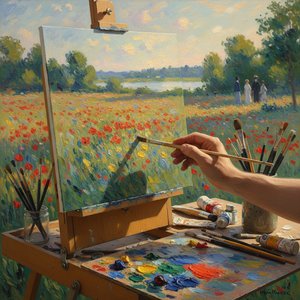
For centuries, artists largely relied on studio work, sketching outdoors and then completing paintings within the controlled environment of their workshops. The limitations were obvious: capturing the nuances of light and atmosphere proved incredibly difficult without direct observation. The seeds of change were sown in the early 19th century with the Barbizon School, a group of French painters who rejected academic conventions and embraced painting directly from nature. Artists like Charles-François Daubigny and Théodore Rousseau ventured into the forests of Fontainebleau, seeking to depict the changing effects of light and weather with unprecedented realism.
The true revolution, however, came with the advent of portable paint tubes in 1841. Before this innovation, artists had to grind their own pigments and mix paints on-site—a laborious process that severely restricted their mobility. The tube allowed for greater spontaneity and freedom, enabling artists to work more easily outdoors. This led to the development of “en plein air” painting – French for ‘in the open air’ – a practice championed by Pierre-Henri de Valenciennes in his treatise Reflections and Advice to a Student on Painting, Particularly on Landscape (1800). Valenciennes advocated for landscape portraiture, emphasizing the importance of direct observation and capturing the unique character of each location.
The Barbizon School’s emphasis on tonal qualities, loose brushwork, and natural light paved the way for Impressionism. Artists began to prioritize capturing a momentary impression—the fleeting effects of sunlight, shadow, and color—over precise detail. This shift in focus demanded a new approach to painting, one that embraced spontaneity and direct observation.
Impressionism's Revolution: Light, Color, and the Outdoor Studio
Impressionism was a 19th-century art movement characterized by visible brush strokes, open composition, emphasis on accurate depiction of light in its changing qualities (often accentuating the effects of the passage of time), ordinary subject matter...
The Impressionist movement, born in Paris during the 1870s, fundamentally altered the course of art history. Claude Monet, Pierre-Auguste Renoir, Alfred Sisley, and Frédéric Bazille—initially united by their shared dissatisfaction with academic painting—began to paint outdoors, capturing the changing light and atmosphere of the French countryside. Their work was radical: visible brushstrokes, open compositions, and a focus on ordinary subject matter challenged established norms.
The name “Impressionism” itself stemmed from Claude Monet’s Impression, soleil levant (1872), which sparked controversy at the First Impressionist Exhibition in 1874. Critic Louis Leroy derisively used the term to mock the painting's unfinished appearance, but it ultimately stuck, becoming synonymous with the movement. The Impressionists weren’t interested in creating photographic representations of reality; instead, they sought to capture the sensation of light and color as perceived by the eye.
They employed short, broken brushstrokes of pure, unmixed color—a technique that created a vibrant, shimmering effect. This contrasted sharply with the smooth, blended brushwork favored by academic painters. The emphasis on capturing “overall visual effects” rather than precise details required a new understanding of color theory and optics. The Impressionists’ commitment to painting outdoors allowed them to observe these effects directly, resulting in works that captured the fleeting beauty of the natural world.
Beyond Impressionism: Tonalism, Post-Impressionism, and Regional Variations
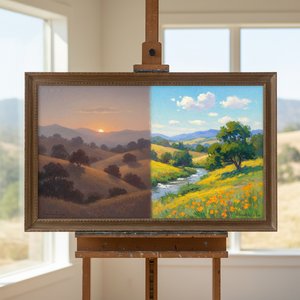 Franz Bischoff: Bridging Tonalism & Impressionism in California Landscape Painting
Explore the captivating art of Franz Bischoff, a pivotal figure bridging Tonalism & California Impressionism. Discover his stunning landscapes, floral works, and lasting legacy with OriginalUniqueArt.
While Impressionism dominated the art scene for a time, it wasn’t long before artists began to explore new directions. Tonalism, emerging in America during the late 19th century, represented a reaction against the perceived superficiality of Impressionism. Artists like Franz Bischoff sought to capture mood and atmosphere through subtle tonal variations and evocative compositions. Bischoff, bridging Tonalism and California Impressionism, created stunning landscapes and floral works that emphasized harmony and tranquility.
Post-Impressionism encompassed a diverse range of styles, each building upon the foundations laid by the Impressionists while pushing artistic boundaries in new directions. Artists like Paul Cézanne explored form and structure, while Vincent van Gogh used expressive brushwork and vibrant colors to convey emotion. These movements demonstrated that Impressionism wasn’t an end point but rather a catalyst for further experimentation.
Regional variations also emerged, reflecting the unique landscapes and artistic traditions of different locales. The Macchiaioli in Italy, painting outdoors to capture natural light, foreshadowed many Impressionist techniques. Similarly, the Newlyn School in England embraced en plein air painting, depicting the rugged beauty of the Cornish coast. These regional movements demonstrate the widespread influence of Impressionism and its enduring appeal.
The Enduring Legacy of Outdoor Painting: Modern Interpretations and Contemporary Practice
The legacy of outdoor painting continues to resonate with artists today. The principles of en plein air—direct observation, capturing fleeting light, and embracing spontaneity—remain central to many contemporary landscape painters. While modern technology offers new tools and techniques, the fundamental impulse to connect with nature remains unchanged.
From California Impressionism’s vibrant depictions of coastal scenes to the atmospheric landscapes of Robert Antoine Pinchon, artists continue to explore the beauty and complexity of the natural world. The influence of earlier masters—Monet, Courbet, and the Barbizon School—can be seen in contemporary works that prioritize capturing mood, atmosphere, and the unique character of each location.
At OriginalUniqueArt.com, we celebrate this rich artistic tradition by offering high-quality reproductions of masterpieces from throughout history. Whether you’re drawn to the vibrant colors of Impressionism or the subtle tonal variations of Tonalism, our collection offers something for every art enthusiast. Explore our selection of landscape paintings and discover the enduring power of outdoor painting – a testament to humanity's timeless fascination with the natural world. Browse our extensive catalog today and bring the beauty of nature into your home.