Early Life & Artistic Beginnings: From Textile Worker to Aspiring Painter
Ferdinand Guillaumin’s path to becoming a celebrated Impressionist painter was anything but conventional. Born in 1846 in Paris, his early life was steeped not in artistic privilege, but in the practical world of commerce. His father, a dyer and textile merchant, expected him to follow in those footsteps, and for a time, young Ferdinand dutifully apprenticed himself to the family trade. However, even amidst the vibrant hues of dyed fabrics, a deeper passion stirred within him – a yearning to capture the fleeting beauty of light and color not through commerce, but through art. This nascent desire led him to evening drawing classes, a clandestine pursuit that would ultimately alter the course of his life. He wasn’t formally trained in the academic tradition; instead, he sought guidance from established artists like Charles Levaillant, whose influence helped him refine his technique and solidify his ambition. The early works reveal a struggle – a tentative exploration of form and composition, but also a clear sensitivity to color that foreshadowed the brilliance to come. It was a period of self-discovery, fueled by an innate talent and a relentless determination to break free from societal expectations.
Guillaumin’s Partnership with Monet & the Birth of Impressionism
Impressionism was a 19th-century art movement characterized by visible brush strokes, open composition, emphasis on accurate depiction of light in its changing qualities (often accentuating the effects of the passage of time), ordinary subject matter...
The pivotal moment in Guillaumin's artistic development arrived when he met Claude Monet in 1872. This encounter wasn’t merely a professional association; it was a meeting of kindred spirits, two artists united by a shared rejection of academic conventions and a fervent belief in capturing the ephemeral qualities of light and atmosphere. They frequented the Café Guerbois, a legendary Parisian haunt where avant-garde ideas were debated and artistic boundaries pushed. Monet became a mentor and close friend, profoundly influencing Guillaumin’s approach to painting. Together with Renoir, Sisley, and Bazille, they formed the core of what would become known as Impressionism. The group challenged established norms by painting *en plein air* – outdoors, directly from nature – striving to depict the immediate sensory experience rather than meticulously recreating reality in a studio. This radical approach was initially met with scorn from the art establishment, but it laid the foundation for a revolutionary new style characterized by visible brushstrokes, vibrant color palettes, and an emphasis on capturing fleeting moments. Guillaumin’s early Impressionist works often feature scenes painted alongside Monet, demonstrating a clear stylistic kinship – a shared fascination with water lilies, haystacks, and the ever-changing effects of sunlight.
The Allure of La Creuse: Capturing Light and Color in Rural France
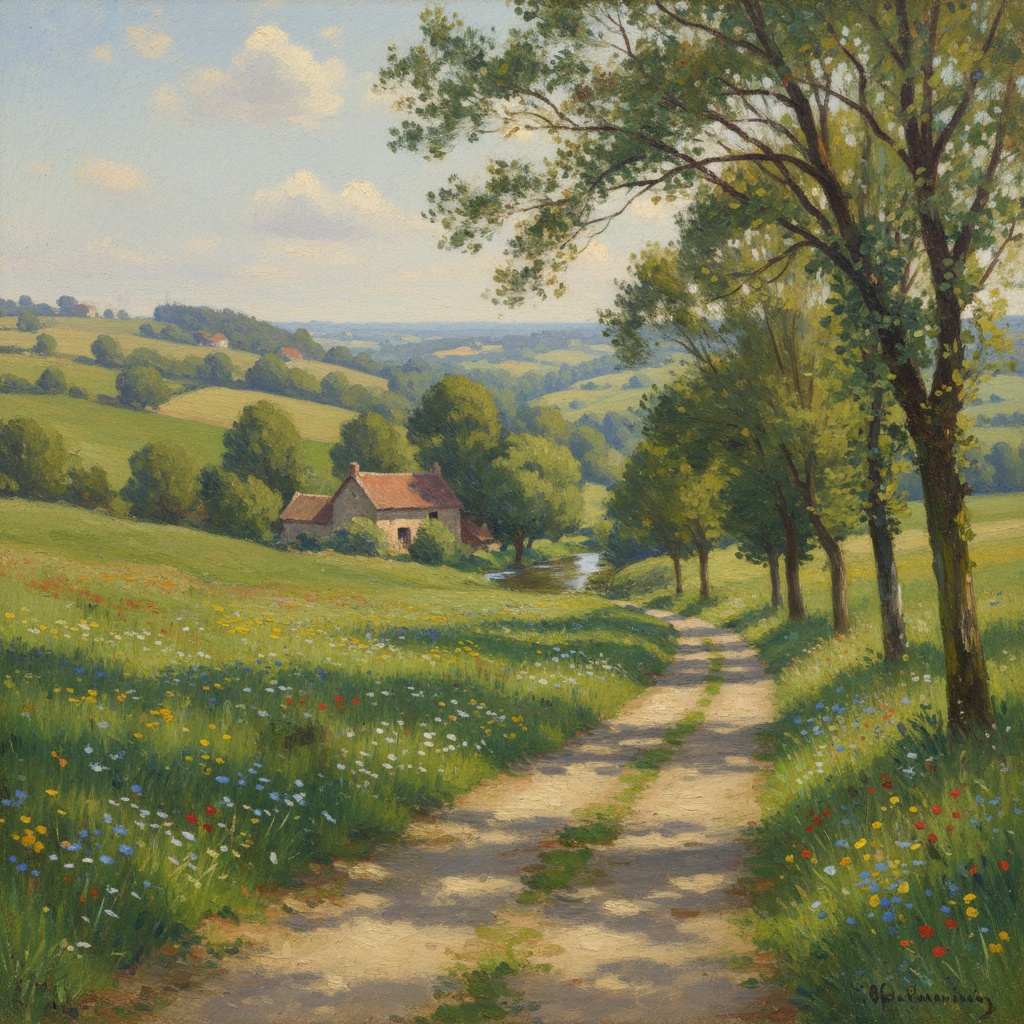
 La Creuse Landscape 1
Explore 'La Creuse Landscape 1' by Guillaumin – a vibrant Post-Impressionist masterpiece! Discover bold colors & dynamic brushstrokes capturing nature’s beauty. #Impressionism #Guillaumin #LandscapeArt
While Guillaumin’s early paintings often depicted scenes around Paris, it was his discovery of the Creuse region in central France that truly unlocked his artistic potential. He first visited La Creuse in 1879, drawn by its rugged landscapes, picturesque villages, and – most importantly – the extraordinary quality of light. Unlike the flat plains surrounding Paris, La Creuse offered a dramatic topography of rolling hills, dense forests, and winding rivers, providing an ideal setting for exploring the nuances of color and atmosphere. He returned to La Creuse repeatedly throughout his life, establishing a summer residence there and creating some of his most iconic works. The paintings from this period are characterized by a bolder use of color than his earlier Impressionist pieces, reflecting a growing interest in symbolism and emotional expression. He wasn’t simply documenting the landscape; he was attempting to capture its *essence* – the feeling of warmth, tranquility, or melancholy evoked by the natural world. La Creuse Landscape 1, for example, exemplifies this approach, with its dynamic brushstrokes and vibrant hues conveying a sense of movement and vitality.
A Symbolic Style: Beyond Representation – Emotion and Atmosphere in Guillaumin's Work
 A tranquil river landscape
Discover 'A Tranquil River Landscape' by Jean-Baptiste Armand Guillaumin – an Impressionist masterpiece! Explore soft light, vibrant colors & textured brushstrokes in this serene river scene.
As his career progressed, Guillaumin’s style evolved beyond the purely observational principles of Impressionism. While he never abandoned his commitment to capturing light and color, he began to imbue his landscapes with a deeper symbolic meaning. He explored themes of solitude, spirituality, and the passage of time, often using subtle compositional elements and evocative color palettes to convey these ideas. His paintings are not simply depictions of nature; they are reflections on the human condition – meditations on mortality, loss, and the search for beauty in an ever-changing world. The use of warm reds and oranges often suggests a sense of nostalgia or longing, while cooler blues and greens evoke feelings of tranquility and peace. A tranquil river landscape, with its soft light and muted tones, exemplifies this shift towards emotional expression. He moved away from strict realism, prioritizing the overall atmosphere and subjective experience over precise detail. This symbolic dimension sets him apart from some of his Impressionist contemporaries, revealing a more introspective and philosophical approach to painting.
Guillaumin’s Legacy: Influence, Recognition, and Lasting Appeal
Despite facing initial rejection from the art establishment, Ferdinand Guillaumin eventually gained recognition for his unique contribution to Impressionism. He exhibited regularly with the group and gradually built a loyal following of collectors who appreciated his vibrant color palettes and evocative landscapes. His influence on subsequent generations of artists is undeniable, particularly those interested in exploring the expressive potential of color and atmosphere. While often overshadowed by Monet’s fame, Guillaumin’s work stands as a testament to the power of individual vision and the enduring allure of the French countryside. Today, his paintings are celebrated for their beauty, sensitivity, and emotional depth, offering viewers a glimpse into a world where light, color, and symbolism converge to create a truly unforgettable artistic experience. His dedication to capturing the fleeting moments of nature continues to resonate with art lovers worldwide, solidifying his place as a key figure in the history of Impressionism. Discover more about Guillaumin’s masterpieces and bring the beauty of his landscapes into your home with OriginalUniqueArt.