Introduction
There’s a peculiar ache that accompanies looking back – a bittersweet longing for moments passed, for people loved and lost, for versions of ourselves we no longer are. This feeling, this gentle melancholy we call nostalgia, is deeply woven into the human experience. It's more than just sentimentality; it’s a fundamental way we process memory, construct identity, and find meaning in the flow of time. Art, perhaps more powerfully than any other medium, has the ability to capture and convey that elusive emotion, transporting us back to bygone eras or evoking feelings for times we ourselves may never have known.
Throughout history, artists have sought to preserve not just *what* things looked like, but *how they felt*. From the Romantic landscapes yearning for a pre-industrial past to the Impressionist glimpses of fleeting moments in modern life, and later the Symbolists’ exploration of dreams and inner worlds, there's been a constant thread of artists attempting to bottle that ephemeral quality of remembrance. The cultural context is crucial: the rise of nostalgia often coincides with periods of rapid change – industrialization, war, social upheaval – when people yearn for stability and connection to simpler times. The Victorian era saw a surge in sentimental art reflecting domestic bliss as society grappled with urbanization; the post-war period witnessed a similar trend as communities rebuilt and sought solace in idealized representations of the past.
These ten artworks, spanning centuries and styles, resonate so deeply because they tap into this universal human longing. They aren’t simply beautiful paintings or sculptures; they are portals to other worlds, echoes of forgotten emotions, and reflections of our own shared experiences. They remind us that beauty can be found in transience, that loss is an inevitable part of life, and that the past – whether real or imagined – continues to shape who we are today.
Prepare to embark on a journey through time and emotion as we explore these ten masterpieces. Each piece offers a unique perspective on nostalgia, inviting us to pause, reflect, and connect with the enduring power of memory and feeling.
American Gothic - Grant Wood
 American Gothic - Grant Wood
Imagine a late afternoon sun casting long shadows across an Iowa field, the air still and heavy with the scent of hay. This is the world Grant Wood invites us into with American Gothic (1930), a painting that has become inextricably linked to the American spirit.
More than just a portrait, this work is a poignant meditation on resilience, tradition, and the quiet dignity of rural life during the Great Depression. Wood’s meticulous technique – smooth brushwork reminiscent of Flemish masters like Jan van Eyck – lends an almost photographic clarity to the scene. The farmer and his daughter (often misidentified as his wife) stand rigidly before their Carpenter Gothic farmhouse, their expressions unreadable yet deeply compelling.
The painting’s power lies in its subtle symbolism: the pitchfork representing hard labor, the gothic window alluding to faith and moral uprightness. The flattened space and geometric forms create a unique visual impact, setting it apart from traditional portraiture. It's a scene that feels both familiar and distant, evoking a sense of nostalgia for a simpler time – or perhaps an idealized version of one.
In a modern home, American Gothic can serve as a grounding presence, a reminder of enduring values in a rapidly changing world. Its somber tones and precise detail inspire contemplation, inviting us to reflect on our own connection to the land, family, and heritage. It’s a timeless piece that speaks to the universal human longing for roots and belonging – a quintessential artwork capturing a nostalgic vibe.
I and the Village - Marc Chagall
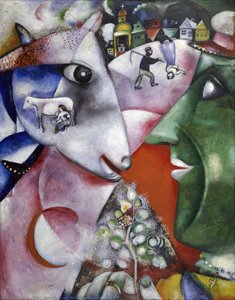 I and the Village - Marc Chagall
Close your eyes and recall a childhood memory – not as a precise event, but as a feeling, a wash of colors and sensations. This is the essence of Marc Chagall’s I and the Village (1911), a painting that doesn't simply depict a place, but embodies the very act of remembering.
This captivating work, a cornerstone of Chagall’s early style, transports us to Vitebsk, Belarus, not as it *was*, but as it lived within his heart. Fragmented figures and scenes – a man with a horse, buildings topped with church spires – intertwine in a dreamlike tapestry woven from personal experience and universal symbolism. The bold, expressive colors and Cubist-influenced forms create a sense of both chaos and harmony.
What sets I and the Village apart is its emotional honesty. It’s a deeply personal narrative rendered with remarkable artistic skill, blending influences from Fauvism and Symbolism into something entirely new. The luminous effect achieved through Chagall's layered brushwork gives the painting an ethereal glow, evoking a sense of nostalgia for a time and place that exists more in the realm of memory than reality.
At , we believe art should be accessible to all. Our faithful reproductions of I and the Village capture not just the visual beauty of Chagall’s masterpiece, but also its profound emotional resonance – allowing you to bring a piece of this timeless dreamscape into your own home, a gentle reminder of the power of memory and belonging.
Nighthawks, The Art Institute of Chicago, Chica - Edward Hopper
 Nighthawks, The Art Institute of Chicago, Chica - Edward Hopper
To encounter Edward Hopper’s Nighthawks (1942) is to stand before a quiet revelation – a beacon of light illuminating the complexities of modern life. This iconic painting, housed at The Art Institute of Chicago, transcends its subject matter; it's a profound meditation on loneliness and connection in an increasingly urbanized world.
Hopper’s meticulous realism, combined with his masterful use of light and shadow, creates a scene that feels both familiar and deeply unsettling. The diner’s large glass window acts as a visual barrier, isolating the figures within from the darkness outside – a poignant metaphor for the alienation many experienced during wartime America. The carefully layered oil paints and smooth brushstrokes enhance the realism, while the stark contrast between warm interior tones and cool exterior hues amplifies the emotional impact.
What elevates Nighthawks to its place among the world’s most beloved artworks is its enduring relevance. It doesn't offer easy answers; instead, it presents a hauntingly beautiful observation of the human condition – a quiet acknowledgment of our shared solitude. In a modern home, this painting becomes more than just décor; it’s a conversation starter, a source of contemplation, and a testament to timeless artistic vision.
At , we are dedicated to preserving the emotional depth and technical brilliance of masterpieces like Nighthawks . Our faithful reproductions allow you to experience this iconic artwork in your own space, bringing a touch of Hopper’s quiet elegance and enduring legacy into your life.
Man at the Window - Gustave Caillebotte
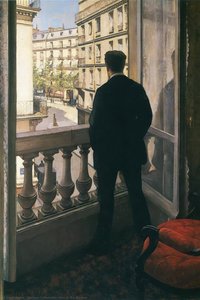 Man at the Window - Gustave Caillebotte
There’s a quiet intimacy to Gustave Caillebotte’s Man at the Window (1875) that draws you into a private moment of contemplation. More than just a depiction of Parisian life, this painting is a poignant study of urban isolation and the subtle beauty found in everyday existence.
Caillebotte masterfully blends Realist precision with an emerging Impressionistic sensitivity to light and atmosphere. The composition – structured around strong vertical lines and punctuated by a striking red chair – emphasizes both enclosure and separation. The man’s back is turned, inviting us to project our own emotions onto his silent gaze as he overlooks the bustling city below.
What sets this artwork apart is its enduring relevance. It captures the duality of modern life – the beauty and anonymity inherent in a rapidly changing urban landscape. The muted tones and nuanced brushwork create a sense of quiet melancholy, while the vibrant red chair offers a fleeting spark of warmth and hope.
In today’s interiors, Man at the Window resonates with a sophisticated sensibility – its palette complements minimalist aesthetics, while its contemplative mood inspires calm and reflection. It's a timeless piece that speaks to our shared longing for connection and belonging, bringing a touch of Parisian elegance and emotional depth into any space.
A boy with pipe - Pablo Picasso
 A boy with pipe - Pablo Picasso
Imagine a Parisian afternoon bathed in warm sunlight, the air filled with the scent of roses and the quiet murmur of city life. This is the world Pablo Picasso invites us into with A Boy with Pipe (1905), a painting that embodies the serene yet melancholic spirit of his celebrated Rose Period.
Departing from the somber blues of his earlier years, Picasso presents a young man adorned with flowers, radiating a quiet introspection. The loose brushwork and vibrant colors create an atmosphere of intimacy and immediacy, while the floral wreath subtly emphasizes the subject’s thoughtful expression. This isn't merely a portrait; it’s a poignant exploration of youth, beauty, and perhaps, fleeting innocence.
The painting’s power lies in its emotional resonance – a delicate balance between optimism and underlying sadness. The warm tones and textured surface evoke a sense of nostalgia for a simpler time, while the subject's contemplative gaze invites us to reflect on our own experiences of youth and loss. In a modern home, A Boy with Pipe can serve as a grounding presence, bringing a touch of Parisian elegance and emotional depth into your space.
At , we are dedicated to preserving the beauty and nuance of Picasso’s masterpieces. Our faithful reproductions allow you to experience this iconic artwork in your own home, capturing not just its visual splendor but also its profound emotional impact.
The Cafe Terrace on the Place du Forum (Cafe Terrace at night) - Vincent Willem van Gogh
 The Cafe Terrace on the Place du Forum (Cafe Terrace at night) - Vincent Willem van Gogh
Close your eyes and imagine a warm summer night in Arles, France – the gentle hum of conversation, the scent of absinthe, and the soft glow of gas lamps illuminating the Place du Forum. This is the world Vincent van Gogh invites us into with The Cafe Terrace on the Place du Forum (1888), a masterpiece that transcends mere depiction to become an evocative exploration of light, color, and human connection.
Painted during his intensely productive period in Arles, this artwork exemplifies the hallmarks of Post-Impressionism. Van Gogh employed bold brushstrokes and an emotionally charged color palette to convey his subjective experience of the scene – a feeling of warmth, tranquility, and subtle melancholy. The thick layers of paint, applied with visible impasto, create a tactile surface that seems to shimmer with light.
What sets this painting apart is its enduring power to evoke emotion. It’s not simply *of* a café; it embodies the feeling of being there – a beacon of warmth and human connection amidst the surrounding darkness. In a modern home, The Cafe Terrace on the Place du Forum can serve as a grounding presence, bringing a touch of Parisian elegance and emotional depth into your space.
At , we believe art should be accessible to all. Our faithful reproductions allow you to experience this iconic artwork in your own home, capturing not just its visual splendor but also the profound sense of nostalgia and connection that Van Gogh so beautifully conveyed.
The Hunters in the Snow (Winter) - Pieter Bruegel the Elder
 The Hunters in the Snow (Winter) - Pieter Bruegel the Elder
Imagine a crisp winter air biting at your cheeks, the crunch of snow underfoot, and the distant murmur of village life. This is the world Pieter Bruegel the Elder invites us into with The Hunters in the Snow (1565), a masterpiece that transcends mere depiction to become a vibrant snapshot of daily existence during a period of significant historical change.
Part of a series representing the seasons, this painting offers a compelling glimpse into 16th-century life – a world grappling with environmental hardship and enduring resilience. Bruegel’s meticulous attention to detail is breathtaking; from the textures of fur and bark to the distant figures skating on frozen ponds, every element feels tangible and alive.
What sets this artwork apart is its remarkable sense of depth and vastness, achieved through masterful use of atmospheric perspective. The eye wanders across the canvas, discovering new details with each viewing – a hallmark of Bruegel’s style that invites prolonged engagement. In a modern home, The Hunters in the Snow can serve as a grounding presence, bringing a touch of Old World charm and quiet contemplation into your space.
At , we are dedicated to preserving the beauty and nuance of Bruegel’s masterpieces. Our faithful reproductions allow you to experience this iconic artwork in your own home, capturing not just its visual splendor but also the profound sense of nostalgia and connection it evokes.
Portrait of Patience Escalier - Vincent Willem van Gogh
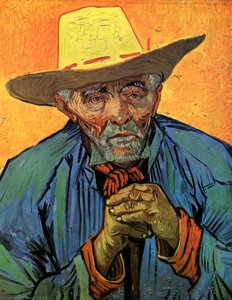 Portrait of Patience Escalier - Vincent Willem van Gogh
There’s a quiet dignity radiating from Vincent van Gogh’s Portrait of Patience Escalier (1888), a painting that transcends mere likeness to become a powerful study of character and the resilience of rural life. Painted during his prolific Arles period, this striking portrait embodies the spirit of Provence – a world Van Gogh sought to capture with expressive brushwork and bold color choices.
The thick application of paint—Van Gogh’s signature impasto—isn't merely a technique; it *is* the painting. The visible strokes convey Escalier’s weathered face, full white beard, and the very essence of a life lived outdoors. This tactile quality invites an intimate connection with both the subject and the artist’s process.
What sets this artwork apart is its emotional resonance – a sense of quiet contemplation born from hardship and strength. The warm, abstract background amplifies this feeling, hinting at nostalgia or perhaps the fading light of life. In a modern home, Portrait of Patience Escalier can serve as a grounding presence, bringing a touch of Old World charm and profound humanity into your space.
At , we are dedicated to preserving the beauty and nuance of Van Gogh’s masterpieces. Our faithful reproductions allow you to experience this iconic artwork in your own home, capturing not just its visual splendor but also the enduring power of human connection it evokes.
Daughters of Revolution - Grant Wood
 Daughters of Revolution - Grant Wood
Grant Wood’s 1932 painting, Daughters of Revolution , is a striking example of Regionalism – yet it transcends simple representation to become a subtly provocative statement about history, memory, and the evolving role of women within American society. The composition presents three figures—two flanking portraits of women positioned before a depiction of Washington Crossing the Delaware—a scene steeped in national myth.
Wood employs a deliberate flatness and simplified forms reminiscent of folk art, creating an intriguing contrast with the detailed rendering of the female subjects. This isn’t merely observation; it's carefully constructed dialogue. The symmetry lends balance but also a sense of formality, emphasizing the connection between these women and the historical event unfolding behind them.
The muted color palette—earthy tones dominating with touches of red within the flags—contributes significantly to the artwork’s introspective atmosphere. Painted during a contentious moment in American history, it subtly critiques traditional notions of patriotism and feminine roles. In a modern home, Daughters of Revolution can serve as a grounding presence, inviting reflection on our own relationship with the past.
At , we are dedicated to preserving the beauty and nuance of Wood’s masterpieces. Our faithful reproductions allow you to experience this iconic artwork in your own home, capturing not just its visual splendor but also the enduring power of its quiet commentary on American identity.
The Battle between Lent and Carnival - pieter bruegel the younger
 The Battle between Lent and Carnival - pieter bruegel the younger
Immerse yourself in the vibrant chaos and subtle moral commentary of The Battle between Lent and Carnival by Pieter Bruegel the Younger. A masterful reproduction of a scene deeply rooted in Northern Renaissance tradition, this painting offers a fascinating glimpse into the everyday life – and underlying anxieties – of 16th-century Flanders.
The artwork presents a bustling panorama of village activity, seemingly depicting a lively festival. However, closer inspection reveals a complex interplay of behaviors: revelry alongside gambling, feasting bordering on gluttony, and music interwoven with potential conflict. This isn’t simply a celebration; it's a microcosm of human existence, showcasing both its joys and follies.
Bruegel the Younger expertly carries on the legacy of his father, employing meticulous detail and realistic representation. Executed in oil on wood panel, the work showcases remarkable texture and depth. The composition is deliberately complex, lacking a single focal point to mirror the chaotic energy of life itself. In a modern home, this painting can serve as a grounding presence, inviting reflection on our own relationship with indulgence and restraint.
At , we are dedicated to preserving the beauty and nuance of Bruegel’s masterpieces. Our faithful reproductions allow you to experience this iconic artwork in your own home, capturing not just its visual splendor but also the enduring power of its quiet commentary on human nature.
Conclusion
As the light fades, and these visions of the past begin to recede, we are left with something more than just a collection of beautiful images. These ten artworks—each a window into another time, another heart, another world—remind us that nostalgia isn’t simply about longing for what *was*, but about recognizing the enduring threads of human experience that connect us across centuries.
They are not frozen relics, preserved behind glass. They breathe with life, whispering stories of love and loss, joy and sorrow, hope and regret. And in their brushstrokes, in their colors, in their very essence, they offer a profound reflection of ourselves—our dreams, our fears, our shared humanity.
To bring such beauty into your own space is to invite a conversation with the past, to create an atmosphere of contemplation and wonder. At , we believe that art has the power to transform not just walls, but lives—to inspire creativity, evoke emotion, and connect us to something larger than ourselves.
If these glimpses into the world of nostalgia have stirred your soul, we invite you to explore our full collection . Discover a masterpiece that speaks to *your* heart, and allow its timeless beauty to illuminate your own journey.