Introduction: The Enduring Human Experience of Grief
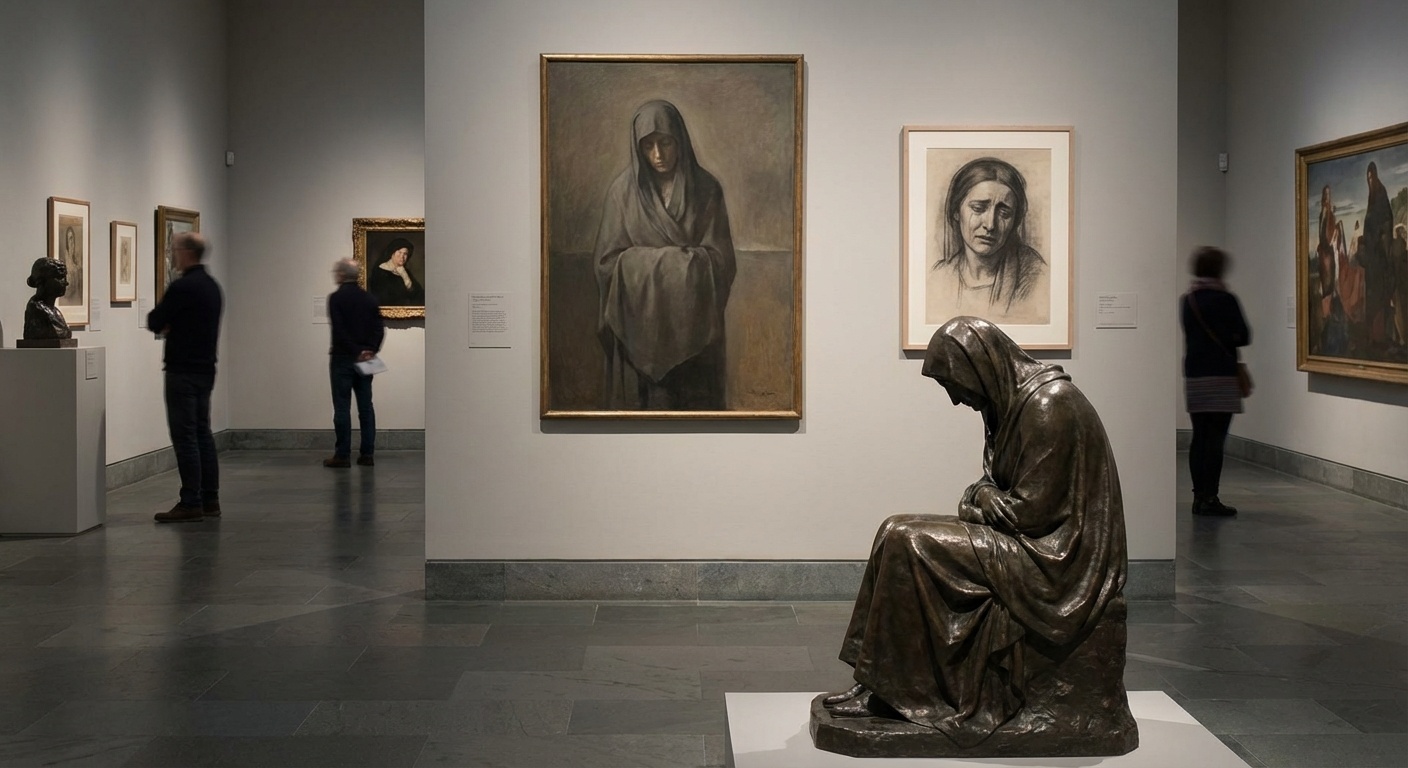
Grief, a universal yet deeply personal response to loss, has resonated throughout human history, finding potent expression in the visual arts. From ancient funerary practices to contemporary explorations of absence, artists have long served as conduits for processing sorrow, remembrance, and the complex emotions that accompany profound change. This exploration delves into how grief has been depicted across art historical periods, examining not only *what* was represented but also *how* artistic techniques and cultural contexts shaped these powerful visual narratives. The impulse to memorialize, lament, and understand loss is fundamental to our species, and its reflection in art offers a unique window into the evolving human condition.
Renaissance Lamentations: Early Depictions of Sorrow and Faith
 Mourning over the Dead Christ
Discover Francesco Francia’s ‘Mourning over the Dead Christ,’ a Renaissance masterpiece of sorrow & faith. Explore its chiaroscuro, symbolism & emotional depth in this Pinacoteca Nazionale treasure.
The Renaissance witnessed a renewed focus on human emotion, particularly within religious contexts. Representations of Christ’s deposition from the cross or the mourning of Mary Magdalene weren't merely depictions of biblical events; they were opportunities to explore profound sorrow and empathy. Artists like Francesco Francia, in his ‘Mourning over the Dead Christ,’ masterfully employed chiaroscuro – the dramatic interplay of light and shadow – to heighten the emotional intensity of the scene. The somber palette, coupled with carefully rendered anatomical detail, draws the viewer into a space of quiet contemplation. The figures aren’t simply grieving; they are experiencing a deeply personal and relatable anguish. This period also saw an emphasis on idealized beauty even within scenes of suffering, reflecting a belief in the inherent dignity of humanity and the promise of salvation. The composition often served as a meditation on faith, inviting viewers to share in the sorrow but ultimately find solace in religious doctrine.
Baroque Drama & Emotional Intensity: Carracci, Guercino, and Francia's Visions of Loss
 The Dead Christ Mourned
Experience Annibale Carracci’s poignant "The Dead Christ Mourned." A masterpiece of Baroque art, explore grief & faith through this iconic painting. Hand-painted reproductions available.
The Baroque era amplified the emotional power of Renaissance predecessors. Artists embraced dynamism, theatricality, and a heightened sense of realism to convey grief with visceral impact. Annibale Carracci’s ‘The Dead Christ Mourned’ exemplifies this shift. The composition is less about serene contemplation and more about raw, immediate emotion. Figures are actively engaged in displays of sorrow – weeping, embracing the body of Christ, their faces contorted in anguish. Guercino, another master of the Baroque, further intensified this approach in ‘The Dead Christ mourned by Two Angels.’ His use of dramatic chiaroscuro, even more pronounced than Francia’s earlier work, creates a sense of profound darkness and spiritual weight. The angels aren't simply witnesses; they are participants in the grief, their expressions mirroring human sorrow. These paintings weren’t intended to be passively observed but rather experienced – to evoke empathy and a deeper connection with the suffering depicted.
Beyond the Religious Canvas: Secular Representations of Mourning and Melancholy
Melancholia or melancholy (Ancient Greek: μελαγχολία, romanized: melancholía; from μέλαινα χολή, mélaina cholḗ, 'black bile') is a concept found throughout ancient, medieval, and premodern medicine in Europe that describes a condition characterized b...
While religious themes dominated early depictions of grief, the Renaissance and Baroque periods also saw emerging secular representations of loss. The concept of melancholia, rooted in ancient humoral theory (an excess of 'black bile'), became a subject of artistic exploration. Though often associated with genius and introspection, melancholia frequently manifested as profound sadness, isolation, and a sense of existential despair. Portraits began to subtly incorporate symbols of mourning – wilting flowers, skulls, or hourglasses – hinting at the transience of life and the inevitability of death. These works weren’t necessarily about specific losses but rather explored the broader human condition and the inherent fragility of existence. The rise of portraiture itself contributed to this trend, as artists sought to capture not only likeness but also the inner emotional state of their subjects.
The Psychological Landscape of Grief: Exploring Themes of Absence and Remembrance
As art evolved, so too did its exploration of grief’s psychological complexities. Artists began to focus less on outward displays of emotion and more on the internal experience of loss – the lingering sense of absence, the fragmented nature of memory, and the struggle to reconcile with a changed reality. The depiction of empty spaces, abandoned objects, or ghostly figures became increasingly common, symbolizing the void left by those who were gone. This shift reflects a growing understanding of grief as a multifaceted process, encompassing not only sorrow but also anger, denial, acceptance, and ultimately, adaptation. The exploration of memory – how it shapes our perception of loss and influences our present experience – became central to these artistic narratives. The act of remembering itself was often depicted as a form of resistance against the finality of death.
Conclusion: Art as a Mirror to Our Collective Experience of Loss
Throughout art history, grief has served as a powerful catalyst for creativity and a profound reflection of our shared human experience. From the religious lamentations of the Renaissance to the psychological explorations of later periods, artists have consistently sought to capture the complexities of loss, remembrance, and the enduring power of emotion. These works are not simply historical artifacts; they are timeless expressions of sorrow that continue to resonate with audiences today. At OriginalUniqueArt, we believe in making these masterpieces accessible, allowing you to connect with the profound emotional depth of art history and find solace – or perhaps a deeper understanding – within its enduring narratives. Explore our collection of reproductions and discover how artists have captured the echoes of loss across the ages.