Introduction: The Enduring Depiction of Suffering
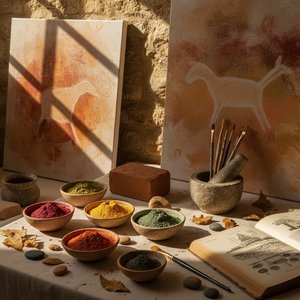
From the earliest cave paintings to contemporary installations, humanity has grappled with representing its most profound experiences – among them, suffering. This impulse isn’t merely a reflection of hardship; it's a fundamental act of processing trauma, seeking meaning in chaos, and forging connection through shared vulnerability. Art becomes a vessel for emotions too immense for words, a space where grief, loss, and pain can be explored, confronted, and ultimately, understood. Throughout history, the visual language of suffering has evolved, shaped by cultural norms, religious beliefs, and individual artistic expression. This exploration delves into that evolution, tracing how artists across eras have attempted to capture the soul of anguish.
Ancient Roots: Grief, Loss, and Mythological Representations
Melancholia or melancholy (Ancient Greek: μελαγχολία, romanized: melancholía; from μέλαινα χολή, mélaina cholḗ, 'black bile') is a concept found throughout ancient, medieval, and premodern medicine in Europe that describes a condition characterized b...
The roots of depicting suffering extend deep into antiquity. While direct representations are often scarce – early art prioritized survival and ritual over introspective emotion – we find poignant echoes in funerary practices and mythological narratives. Egyptian tomb paintings, for example, while focused on ensuring a prosperous afterlife, frequently depict scenes of mourning and lamentation, acknowledging the pain of separation. Greek vase painting offers glimpses into heroic tragedies—the fall of Icarus, the grief of Niobe – though often stylized, these images convey universal themes of loss and fate. The power of myth lay in its ability to externalize human anxieties; figures like Prometheus, eternally punished for defying the gods, became potent symbols of enduring pain and resilience. These early expressions weren’t about realistic portrayal but rather about acknowledging the inevitability of suffering within a larger cosmic order.
The Renaissance & Baroque Eras: Emotional Intensity and Religious Piety
 The assassin, art history museum, vienna
Tiziano Vecellio’s ‘The Assassin’ (1520) – a captivating Renaissance portrait! Explore this intimate scene of youthful beauty, rich colors & masterful oil technique. Discover its symbolism and historical significance.
The Renaissance witnessed a renewed focus on humanism, leading to a more nuanced exploration of emotion in art. Artists like Titian, with his haunting “The Assassin” (1520), moved beyond symbolic representation towards capturing psychological states. The painting’s intimacy—the youthful beauty juxtaposed with the weight of violence—is profoundly unsettling. However, it was during the Baroque period that the depiction of suffering reached a fever pitch, largely driven by religious fervor. Artists sought to evoke empathy and piety through dramatic scenes of martyrdom and crucifixion. Caravaggio's visceral depictions of Saint Sebastian or the Entombment of Christ are not merely historical accounts; they are intensely emotional experiences designed to draw viewers into the pain of the subject. The use of chiaroscuro—the stark contrast between light and shadow—heightened the drama, emphasizing the physical and spiritual torment of these figures. This era wasn’t simply about showing suffering; it was about *feeling* it alongside the saints.
19th-Century Realism & Expressionism: Confronting Modern Anguish
Suffering, or pain in a broad sense, may be an experience of unpleasantness or aversion, possibly associated with the perception of harm or threat of harm in an individual. Suffering is the basic element that makes up the negative valence of affectiv...
The 19th century brought a shift towards realism, with artists increasingly focused on depicting the harsh realities of life—poverty, social injustice, and psychological distress. Gustave Courbet’s unflinching portrayals of working-class life exposed the suffering often ignored by more idealized forms of art. However, it was the Expressionist movement that truly broke new ground in representing inner turmoil. Artists like Edvard Munch, deeply affected by personal tragedy, sought to convey not just *what* they saw but *how* they felt. His iconic “The Scream” (c. 1893) isn’t a depiction of a specific event but rather an embodiment of existential anxiety and alienation. Similarly, artists like Käthe Kollwitz used woodcuts and etchings to depict the suffering caused by war and social inequality with raw emotional power. This period marked a move away from external narratives towards exploring the subjective experience of pain.
Beyond Representation: Symbolism, Abstraction, and the Psychology of Pain
The 20th and 21st centuries have seen an explosion of approaches to representing suffering, moving beyond traditional realism. Artists like Pablo Picasso, during his Blue Period, utilized color and form to convey a sense of melancholy and despair in works such as “The Old Guitarist.” Symbolism became increasingly important—objects and figures taking on deeper psychological meanings. Chen Yifei’s ‘Thinking of History at My Space’ poignantly captures loss & displacement through realism and impressionism, evoking raw emotion. William Blake's 'The Course of Human History Personified' offers a more allegorical approach, embodying historical trauma in symbolic forms. Abstraction also provided new avenues for expressing emotional states—the fragmented forms and chaotic compositions reflecting the fractured nature of trauma. Artists began to explore the psychology of pain, delving into subconscious anxieties and repressed emotions. Albrecht Dürer’s “Melencolia I,” with its complex symbolism and introspective mood, exemplifies this exploration.
Conclusion: Art as a Mirror to Humanity's Shared Experience
The history of representing suffering in art is not simply a chronicle of hardship; it’s a testament to the enduring human need to understand and connect. From ancient myths to modern abstractions, artists have consistently sought ways to capture the soul of anguish—to give form to emotions too immense for words. These works serve as mirrors reflecting our shared vulnerability, reminding us that pain is an inherent part of the human condition. By confronting these difficult themes, art offers not only solace but also a profound sense of empathy and connection. At OriginalUniqueArt.com, we believe in making these powerful masterpieces accessible to all, allowing you to explore the depths of human emotion from the comfort of your own home. Discover museum-quality reproductions and custom paintings that resonate with your soul—and join the ongoing conversation about what it means to be human.