The Dawn of Disquiet: Europe on the Eve of War
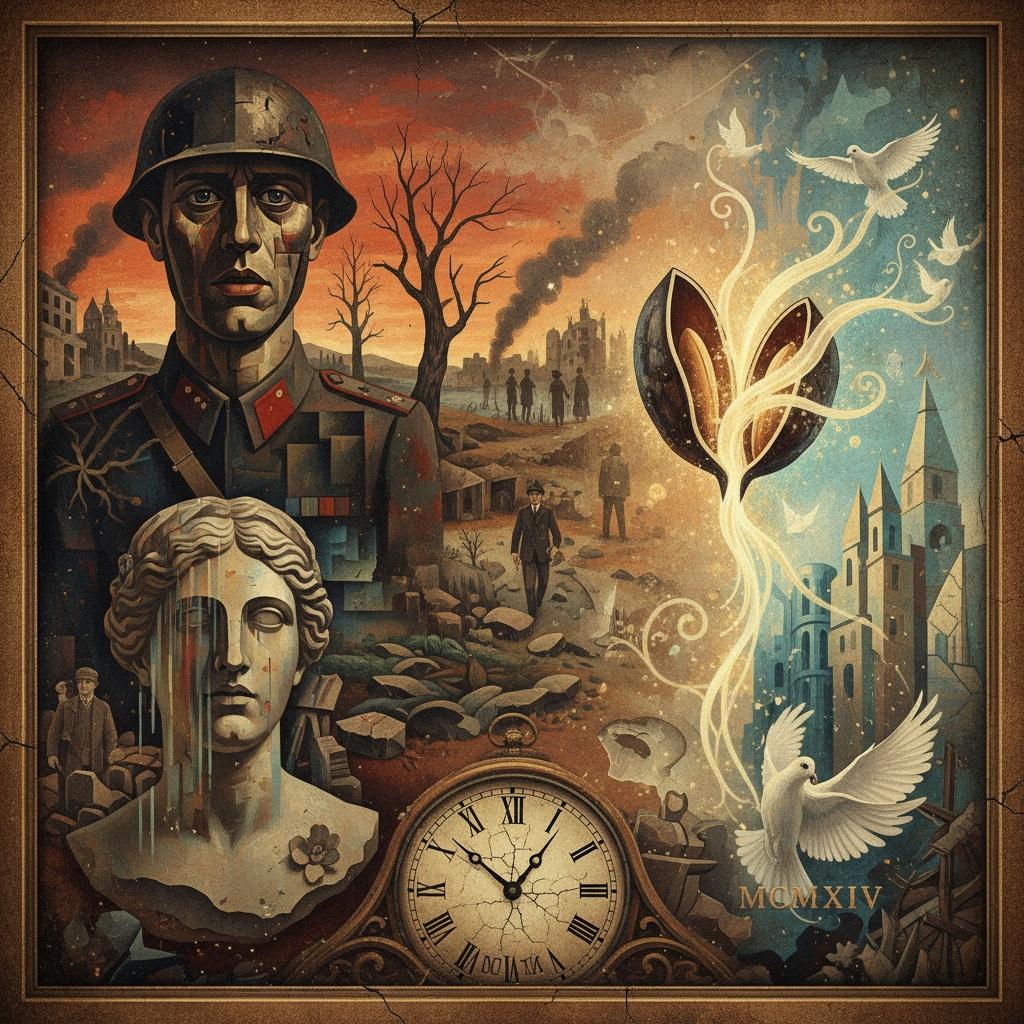
The year 1914 stands as a precipice in history, a moment poised between the gilded elegance of the Belle Époque and the brutal realities that were about to shatter it. It was an era steeped in contradictions – rapid technological advancement coexisting with deeply entrenched social hierarchies, burgeoning artistic experimentation shadowed by looming political tensions. Europe, seemingly at the zenith of its power and cultural flourishing, harbored a network of simmering anxieties: imperial rivalries, nationalist fervor, and a pervasive sense of unease that would soon erupt into global conflict. This atmosphere of impending doom wasn’t lost on artists; though few could have predicted the scale of devastation to come, a subtle shift in artistic sensibilities began to emerge – a questioning of established norms, a fascination with fragmentation, and an undercurrent of melancholy that foreshadowed the coming storm.
Art as Witness: Initial Responses to Conflict and Propaganda
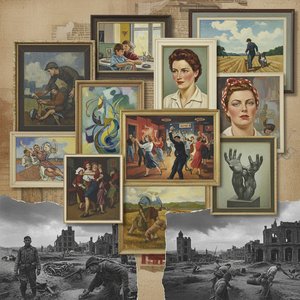
The outbreak of hostilities in August 1914 unleashed a wave of patriotic fervor across Europe. Initially, art served largely as a tool for bolstering national morale – posters depicting heroic soldiers, idealized battle scenes, and appeals to civic duty flooded public spaces. Artists were commissioned by governments to document the war effort, often producing works that romanticized combat or demonized the enemy. However, even within these officially sanctioned representations, cracks began to appear. The sheer scale of industrial warfare defied traditional artistic conventions; attempts to capture its horrors through conventional means often felt inadequate. The early drawings and paintings focused on scenes of recruitment, training, and idealized landscapes quickly gave way to more unsettling imagery as the conflict dragged on. Léon Spilliaert’s haunting watercolors, for example, transformed flares into ethereal constellations against a dark sky, hinting at an underlying sense of dread rather than celebrating victory. The initial fervor was soon tempered by the grim realities of trench warfare.
Modernism's Fracture: Experimentation Amidst Destruction
Modernism was an early 20th-century movement in literature, visual arts, performing arts, and music that emphasized experimentation, abstraction, and subjective experience. Philosophy, politics, architecture, and social issues were all aspects of thi...
The First World War acted as a catalyst for artistic innovation, accelerating the development of modernist movements already underway. The trauma of war challenged fundamental assumptions about beauty, order, and representation. Artists sought new ways to express the chaos, alienation, and psychological fragmentation they were experiencing. Cubism, Futurism, and Expressionism – with their emphasis on abstraction, distortion, and subjective experience – offered a vocabulary for conveying the disorienting nature of modern conflict. Artists like Gino Severini explored the dynamism of war through fragmented forms and jarring color palettes, while Wyndham Lewis’s Blast magazine championed a radical aesthetic that rejected traditional artistic conventions. But it wasn't merely about stylistic innovation; these movements reflected a deeper philosophical shift – a rejection of Enlightenment rationalism and a growing sense of disillusionment with established societal structures. Max Ernst’s collages, created in the aftermath of the war, exemplify this fractured sensibility, presenting unsettling dreamscapes that mirrored the psychological trauma of the era.
Symbolic Landscapes of Loss: Representing the Unseen Wounds of War
Symbolism or symbolist may refer to: Symbol, any object or sign that represents an idea == Arts == Artistic symbol, an element of a literary, visual, or other work of art that represents an idea Color symbolism, the use of colors within various cu...
Beyond direct depictions of battlefields and propaganda, artists turned to symbolism as a means of grappling with the profound emotional and spiritual consequences of war. The landscape itself became imbued with new meaning – no longer a source of solace or beauty but a scarred and desolate terrain reflecting the devastation wrought by conflict. Marsden Hartley’s charcoal drawings dedicated to his friend Karl von Freyburg, a German officer killed in action, are particularly poignant examples. Through abstraction and the symbolic use of military insignia, Hartley created deeply personal memorials that transcended national boundaries. Similarly, artists explored themes of death, mourning, and loss through allegorical figures and evocative imagery. The war’s impact extended beyond physical wounds; it left an indelible mark on the collective psyche, prompting artists to confront questions of faith, morality, and the human condition. Color symbolism played a crucial role in conveying these complex emotions – muted tones evoking grief and despair, while stark contrasts reflecting the brutality of conflict.
Beyond Realism: Artists Confronting Collective Trauma
The limitations of realism became increasingly apparent as artists attempted to capture the full horror of the war. Traditional representational techniques often felt inadequate in conveying the psychological trauma experienced by soldiers and civilians alike. This led to a surge in expressionistic approaches, characterized by distorted forms, jarring colors, and emotionally charged brushwork. Otto Dix’s unflinching depictions of trench warfare, for example, offered a brutal counterpoint to idealized patriotic imagery. Käthe Kollwitz, through her powerful prints and sculptures, captured the suffering of ordinary people – mothers mourning their sons, families torn apart by conflict. These artists weren't simply documenting events; they were bearing witness to the collective trauma of an entire generation. The commissions related to official war artists programmes undermined confidence in progressive styles as commissioned artists conformed to official requirements. The inhumanity of destruction across Europe also led artists to question whether their own campaigns of destruction against tradition had not, in fact, also been inhuman. This questioning encouraged many artists to “return to order” stylistically.
The Enduring Legacy: How 1914 Shaped Artistic Expression
The artistic responses to the First World War were not merely a product of their time; they continue to resonate today. The innovations in form, technique, and subject matter that emerged during this period profoundly shaped the course of modern art. The exploration of psychological trauma, alienation, and the fragility of human existence remains relevant in our own era of conflict and uncertainty. Artists like Zao Wou-Ki, though emerging from a different cultural context, continued to explore themes of loss and displacement through abstract landscapes that echo the emotional intensity of earlier modernist works. The legacy of 1914 lies not only in the specific artworks created but also in the enduring questions they raise about the relationship between art, war, and the human condition. At OriginalUniqueArt.com, we strive to make these powerful masterpieces accessible, allowing you to connect with the artistic heritage of a world forever changed by the events of 1914 – and beyond. Explore our collection of works from this pivotal era and discover the enduring power of art to bear witness, provoke reflection, and inspire hope in the face of adversity.