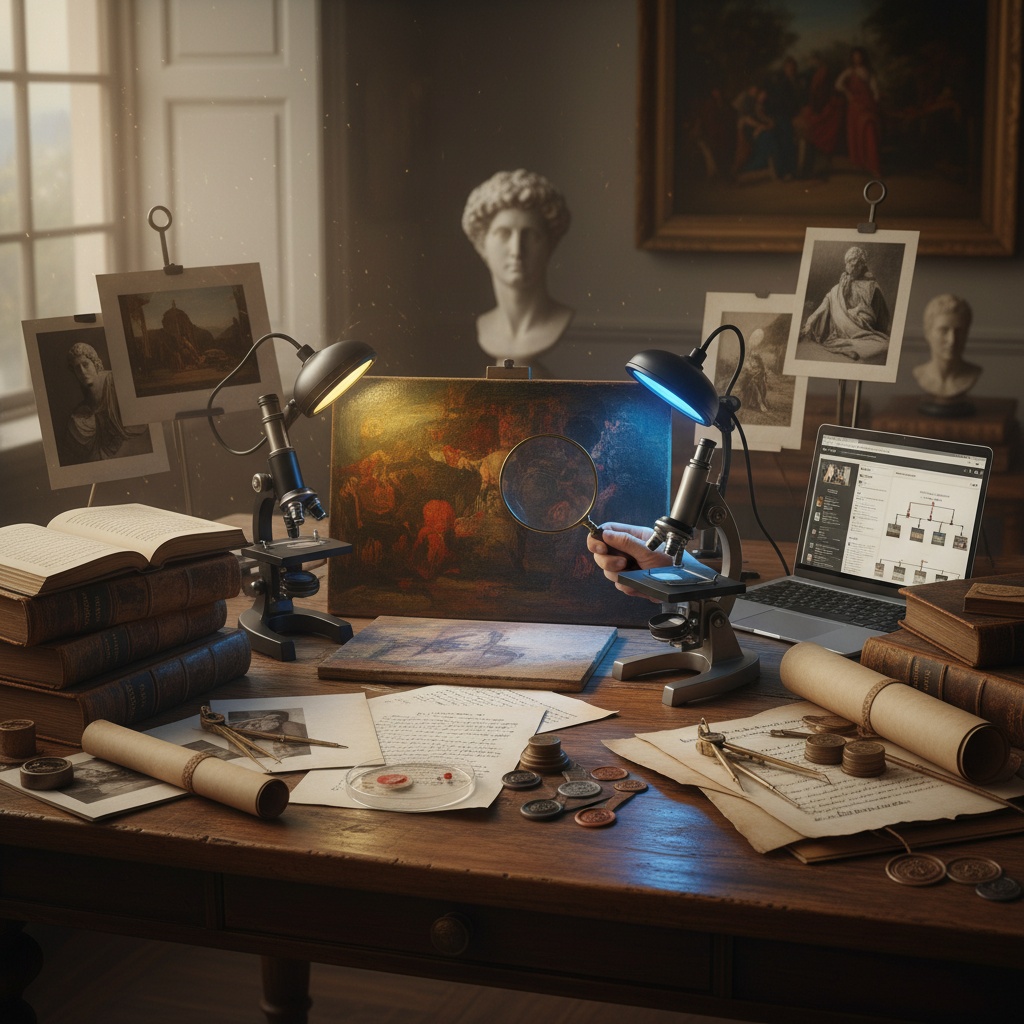
The Evolving Landscape of Art Authentication: Historical Context & Modern Challenges
For centuries, the question of authenticity has haunted the art world. It’s a narrative woven into the very fabric of artistic creation—from Renaissance workshops meticulously copying masterworks to the audacious forgeries that have periodically shaken the foundations of trust in the market. The earliest forms of authentication relied heavily on connoisseurship: the discerning eye of an expert, intimately familiar with an artist's style, technique, and materials. This subjective approach, while often remarkably accurate, was inherently vulnerable to imitation and deception. Consider the case of Michelangelo’s early *Sleeping Eros*, deliberately aged to appear as a classical sculpture – a testament not just to his skill but also to the nascent understanding that art itself could be fabricated for prestige and profit. As artistic movements flourished and global trade expanded, so too did the sophistication of forgery. The 19th century witnessed an explosion in imitations, prompting a greater emphasis on documentation—provenance records, exhibition histories, and letters attesting to ownership.
Today, we stand at a fascinating intersection of tradition and technology. While connoisseurship remains vital, it is increasingly augmented by scientific analysis. However, even the most advanced techniques are not foolproof. Forgers continually adapt, employing materials and methods that mimic historical practices with alarming accuracy. The challenge lies not simply in identifying what *is* authentic but also in understanding how a work of art has been altered or restored over time—changes that can obscure its original character. Furthermore, the very definition of authenticity is being questioned. Is a meticulously executed copy, created by a skilled artist in the style of a master, inherently less valuable than an original? The debate underscores the complex interplay between artistic skill, historical context, and market forces.
Provenance Research: Unveiling an Artwork’s History – Methods, Documentation & Red Flags
The story an artwork tells—its provenance—is often as compelling as the work itself. A robust provenance provides a chronological record of ownership, custody, and location, offering crucial evidence for establishing authenticity and value. Tracing this history is rarely straightforward. It requires painstaking research in archives, auction records, gallery catalogues, and private collections. Early documentation might include bills of sale, estate inventories, or even mentions in contemporary letters and diaries. The ideal provenance demonstrates an unbroken chain of ownership, linking the artwork directly to the artist or their immediate circle.
However, gaps in the record are common, particularly for older works. This is where expert analysis becomes critical. Identifying stylistic inconsistencies, analyzing pigments and canvas supports, and comparing the work to known examples can help bridge these gaps. Red flags include undocumented periods of ownership, suspiciously low prices at auction, or a lack of supporting documentation from reputable sources. The rise of looted art—particularly during times of conflict—has further complicated provenance research. Establishing clear ownership histories is now not only essential for verifying authenticity but also for ensuring ethical collecting practices. Institutions like the Art Loss Register play a vital role in identifying and recovering stolen artworks, emphasizing the importance of due diligence.
Scientific Analysis in Art Verification: Techniques, Limitations & Emerging Technologies
The application of scientific techniques to art authentication has revolutionized the field, offering insights previously unavailable to connoisseurs. Radiocarbon dating can determine the age of organic materials—canvas, wood panels, and pigments—providing a crucial baseline for verifying authenticity. X-ray fluorescence (XRF) analysis identifies the elemental composition of pigments, revealing whether they align with those used during the artist’s lifetime. Infrared reflectography penetrates surface layers to reveal underdrawings and preliminary sketches, offering clues about the artist's working process. Microscopic examination can identify brushstrokes, craquelure patterns, and other subtle details that distinguish genuine works from imitations.
Despite these advancements, scientific analysis is not a panacea. Forgers are increasingly adept at using historically accurate materials and techniques, making detection more challenging. Furthermore, the interpretation of scientific data requires expertise—a nuanced understanding of art history, chemistry, and conservation science. Emerging technologies, such as artificial intelligence (AI) and blockchain, offer promising new avenues for authentication. AI algorithms can analyze vast databases of artworks to identify stylistic anomalies and potential forgeries. Blockchain technology provides a secure and transparent ledger for tracking provenance, reducing the risk of fraud. However, these technologies are still in their early stages of development and require careful validation.
Expert Opinions & Certificates of Authenticity: Navigating Connoisseurship and Due Diligence
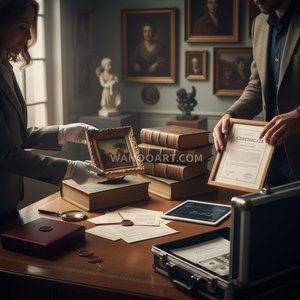
Ultimately, art authentication often relies on the judgment of experts—scholars, curators, and specialists with intimate knowledge of a particular artist or movement. Their opinions are based on years of study, observation, and experience. However, expert opinions can be subjective and even contested. It’s crucial to seek out reputable experts with established credentials and a proven track record. Certificates of authenticity (COAs) provide formal documentation of an artwork's provenance and attribution. However, not all COAs are created equal.
A reliable COA should include detailed information about the artwork—its dimensions, materials, technique, and stylistic characteristics—as well as a thorough explanation of the expert’s reasoning. It should also be accompanied by supporting documentation, such as provenance records and scientific analysis reports. Beware of COAs issued by individuals with questionable credentials or those lacking transparency in their methodology. Due diligence is paramount: research the expert's reputation, verify their affiliations, and consult multiple sources before making a final decision. Independent appraisal services can provide an unbiased assessment of an artwork’s value and authenticity.
Protecting Your Investment: Best Practices for Collectors & Mitigating Risk
Collecting art is a passion—but it also requires careful planning and risk management. Thorough research is the cornerstone of responsible collecting. Before acquiring any artwork, investigate its provenance, consult with experts, and obtain a reliable certificate of authenticity. Maintain detailed records of your acquisitions, including bills of sale, exhibition histories, and insurance appraisals. Consider insuring your collection against theft, damage, or loss.
In an increasingly complex art market, it’s essential to be vigilant. Be wary of unsolicited offers or artworks with suspiciously low prices. Always purchase from reputable galleries or auction houses with established due diligence procedures. Furthermore, stay informed about emerging trends in forgery and authentication techniques. By adopting a proactive approach—combining connoisseurship, scientific analysis, and expert advice—you can protect your investment and ensure that your collection reflects not only your aesthetic sensibilities but also the integrity of the art world itself. The pursuit of beauty should always be coupled with a commitment to truth and authenticity.