The Rise of Biedermeier: Political Context & Social Shifts
The Biedermeier period was an era in the art and culture of the German Confederation between 1815 and 1848 during which the middle classes grew in number and artists began producing works appealing to their sensibilities. The period began with the en...
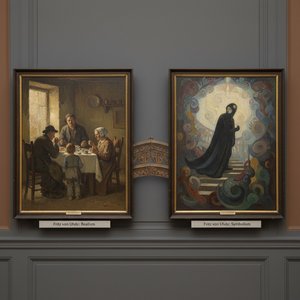
The years following the Napoleonic Wars—roughly from 1815 to 1848—witnessed a peculiar flowering of artistic sensibility in Central Europe, an era now known as the Biedermeier period. It wasn’t a consciously defined movement at its inception; rather, it emerged organically from a specific confluence of political and social forces. The Congress of Vienna had redrawn the map of Europe, restoring monarchical power and ushering in an age of conservative reaction. This stifling political climate, characterized by censorship and surveillance, paradoxically fostered a retreat into the private sphere. Artists, disillusioned with grand narratives and public life, turned inward, focusing on the intimacies of domesticity and the quiet beauty of everyday existence. The burgeoning middle class, gaining economic stability but excluded from political influence, became the primary audience for this new aesthetic—a sensibility that valued comfort, order, and emotional warmth above all else.
The term “Biedermeier” itself is somewhat ironic in origin. It derives from Gottlieb Biedermaier, a fictional character – a mediocre poet created by Adolf Kussmaul and Ludwig Eichrodt for the Munich satirical magazine Fliegende Blätter. Initially intended as a caricature of bourgeois complacency, the name became shorthand for the unpretentious artistic styles that flourished during this period. This wasn’t art meant to challenge or provoke; it was art designed to soothe, to reflect the aspirations and values of a newly empowered class seeking refuge from the turbulent world outside their homes. The growth of cities and industrialization played a crucial role, creating a demand for furnishings and decorative objects that catered to this burgeoning middle-class sensibility.
Aesthetic Principles of Biedermeier Art: Simplicity, Comfort, and Gemütlichkeit
At the heart of the Biedermeier aesthetic lies a deliberate rejection of the dramatic flourishes of Romanticism and Neoclassicism. While echoes of both styles can be detected, Biedermeier art is distinguished by its remarkable simplicity, clarity, and focus on functionality. Ornamentation is restrained, employed not for ostentation but to enhance the inherent beauty of form and material. The emphasis shifts from grand historical or mythological subjects to scenes of domestic life—family portraits, landscapes imbued with a sense of peaceful contemplation, still lifes celebrating the bounty of nature. A key concept underpinning this aesthetic is Gemütlichkeit – a German term that encompasses coziness, warmth, friendliness, and a general feeling of well-being.
This pursuit of Gemütlichkeit manifests in the careful selection of materials—light-colored woods like cherry, walnut, and maple; soft pastel hues in textiles and decorative objects. Artists prioritized craftsmanship and quality, favoring durable, well-made pieces that would endure for generations. The palette is typically muted, reflecting a desire for harmony and tranquility. Biedermeier paintings often feature intimate interiors bathed in warm light, creating an atmosphere of domestic bliss. This wasn’t merely about depicting reality; it was about constructing an idealized vision of home as a sanctuary—a space free from the anxieties and uncertainties of the outside world.
Biedermeier Interiors: Cultivating Domesticity and Family Life
Domestic realism normally refers to the genre of 19th-century fictional works about the daily lives of ordinary Victorian women. This body of writing is also known as "sentimental fiction" or "woman's fiction". The genre is mainly reflected in the no...
The Biedermeier aesthetic found its most complete expression in the interiors of middle-class homes. These spaces were meticulously curated to reflect the values of order, comfort, and family cohesion. Furniture was arranged to facilitate conversation and social interaction, rather than to impress or intimidate. The parlor, or Salon, became the focal point of domestic life—a space for receiving guests, reading, playing music, and engaging in intellectual pursuits. Women played a central role in shaping these interiors, responsible for selecting furnishings, arranging decorative objects, and maintaining the overall aesthetic harmony.
The emphasis on family values is palpable in Biedermeier interiors. Portraits of loved ones adorned the walls, serving as constant reminders of familial bonds. Children were prominently featured in paintings and drawings, reflecting a growing sentimentality towards childhood. The home was seen as a moral center—a space where traditional virtues were instilled and nurtured. This focus on domesticity wasn’t simply about creating a comfortable living environment; it was about constructing a bulwark against the perceived chaos of the outside world. The careful arrangement of objects, the selection of colors and materials, all contributed to this sense of order and stability.
Literature as a Reflection of the Biedermeier Spirit
Biedermeier sensibilities weren’t confined to the visual arts; they permeated literature as well. Writers of the period often focused on non-political subjects—historical fiction, country life, and intimate portraits of everyday existence. Political discussion was largely relegated to private circles, due to strict censorship laws. Authors like Annette von Droste-Hülshoff, Friedrich Halm, and Adalbert Stifter explored themes of nature, morality, and the complexities of human relationships. Their works often feature idealized landscapes and virtuous characters—reflecting a desire for order and harmony in a turbulent world.
The poetry of Wilhelm Müller, famously set to music by Franz Schubert, exemplifies the Biedermeier spirit. His lyrical verses capture the beauty of nature and the melancholic longing for lost love. Adalbert Stifter’s novel Der Nachsommer (Indian Summer) is a quintessential example of Biedermeier literature—a nuanced exploration of rural life and the importance of education in shaping moral character. Jeremias Gotthelf's allegorical work, The Black Spider, while employing Gothic themes, also reflects the period’s concern with morality and the consequences of human actions. These writers weren’t necessarily advocating for political change; they were seeking to create a sense of beauty and meaning in a world that often felt chaotic and uncertain.
Furniture Design in the Biedermeier Era: Craftsmanship & Materials
Biedermeier furniture is perhaps the most enduring legacy of this period. Distinguished by its elegant simplicity, functional design, and high-quality craftsmanship, it remains highly sought after by collectors today. Early 19th-century Biedermeier furniture was often manufactured to be publicly displayed, but quickly evolved towards a more private aesthetic—prioritizing comfort and convenience over ostentation. Rectilinear shapes, smooth surfaces, and tapered legs are hallmarks of the style. Inlays of contrasting woods were used sparingly, adding subtle decorative accents without overwhelming the overall design.
The choice of materials was crucial. Light-colored woods like cherry, walnut, and maple were favored for their warmth and beauty. Upholstery often featured coil springs, providing exceptional comfort. Biedermeier furniture makers paid meticulous attention to detail, employing traditional techniques passed down through generations. Key pieces included writing desks, cabinets, sideboards, chairs, and sofas—all designed to enhance the functionality and aesthetic harmony of the home. The emphasis on quality craftsmanship ensured that these pieces would endure for generations, becoming cherished heirlooms.
At OriginalUniqueArt, we celebrate the enduring beauty and artistry of the Biedermeier period. Explore our collection of handmade oil paintings and museum-quality prints, bringing the elegance and intimacy of Restoration Europe into your home. From iconic furniture designs to captivating landscapes and portraits, discover a world of artistic refinement that continues to inspire today.