The Dawn of a New Vision: Transcendng Impressionist Light and Atmosphere
While the Impressionists masterfully captured the ephemeral dance of light upon water and the fleeting atmosphere of a Parisian afternoon, a new generation of artists felt a profound yearning for something more permanent. They sought to move beyond the mere optical sensation of sight toward a deeper, more substantive truth. This transition marked the birth of Post-Impressionism, a movement that did not reject the vibrant palette of its predecessor but rather repurposed it to explore the psychological and structural depths of the subject matter.The era was defined by a shift from the perceptual—what the eye sees in a passing moment—to the conceptual—what the mind understands and feels about the world. Where Monet might focus on the way sunlight dissolves the edges of a cathedral, the Post-Impressionists sought to reinforce those edges with meaning, emotion, and form. This was not merely an evolution of technique, but a revolution of intent, setting the stage for a century of artistic exploration that would eventually dismantle the very foundations of representation.
Architects of Form and Color: The Structural Innovations of Cézanne and Gauguin
If Impressionism was a study in fluidity, then Post-Impressionism introduced a rigorous architectural intent to the canvas. Paul Cézanne, often regarded as the spiritual father of modern art, approached the landscape with a geometric discipline that sought to find the underlying stability of nature. He famously aimed to treat nature via the cylinder, the sphere, and the cone, applying paint in deliberate, constructive patches that built a sense of monumental weight. His work provided the structural blueprint that would later allow Cubism to flourish, proving that art could be both deeply organic and mathematically profound.In stark contrast to Cézanne’s structural gravity, Paul Gauguin utilized color not for its descriptive accuracy, but for its symbolic potency. Moving away from the naturalistic light of his predecessors, Gauguin embraced flat planes of saturated, often non-naturalistic color to evoke a sense of the primordial and the sacred. His use of Cloisonnism—bold areas of color separated by dark outlines—created a dreamlike, decorative quality that prioritized the emotional narrative over literal reality. Together, these architects of form demonstrated that the canvas could serve as both a structural monument and a symbolic window into the human psyche.
The Soul in the Stroke: Emotional Resonance through Van Gogh’s Impasto Technique
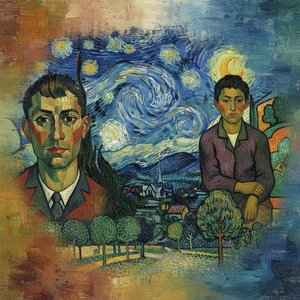
Perhaps no artist embodies the emotional turbulence of this era more than Vincent van Gogh. For him, the act of painting was an intensely visceral experience, where every layer of pigment served as a vessel for his inner landscape. The impasto technique—the thick, sculptural application of oil paint—allowed his brushstrokes to rise from the canvas in rhythmic, swirling patterns that seemed to vibrate with life.To observe a Van Gogh masterpiece is to witness the physical trace of an artist’s struggle and passion. The heavy textures do not merely depict a starry night or a sun-drenched wheat field; they embody the energy of those subjects. Each ridge of paint catches the light, creating a three-dimensional topography that mirrors the intensity of his spirit. In his hands, the medium of oil became more than just pigment on cloth; it became a living, breathing extension of the human soul, proving that the texture of the paint could be just as communicative as the subject itself.
Breaking Representation: Post-Impressionism as the Catalyst for Modern Abstraction
The ripples caused by these innovators extended far beyond their own lifetimes, fundamentally altering the trajectory of Western art. By prioritizing personal expression and structural essence over literal representation, they dismantled the centuries-old requirement that art must serve as a mirror to reality. This movement acted as the essential catalyst for the birth of modern abstraction.As artists began to experiment with the autonomy of color and the independence of form, the boundaries of what could be considered "art" expanded infinitely. The lessons learned from Cézanne’s geometry, Gauguin’s symbolism, and Van Gogh’s emotive texture paved the way for Fauvism, Cubism, and eventually, the complete abstraction of the mid-twentieth century. They taught the world that an artist could manipulate reality to reveal a deeper, more profound truth that exists beyond the visible spectrum.
A Timeless Legacy: The Enduring Allure of Post-Impressionist Aesthetics
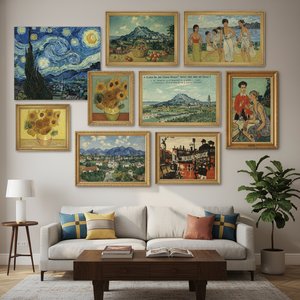
Today, the vibrant energy of Post-Impressionism continues to resonate within our modern spaces, offering a profound connection to the human spirit. The bold textures and emotive colors of these masters provide an unparalleled depth to contemporary interiors, bringing a sense of history, intellect, and passion into the home. Whether it is the structural elegance of a Cézanne-inspired print or the visceral warmth of a Van Gogh-style reproduction, these works remain timeless.At OriginalUniqueArt.com, we celebrate this enduring legacy by bringing these historical masterpieces into the present through meticulous, handcrafted oil reproductions and museum-quality prints. Our artists, trained in the finest academic traditions, utilize the same heavy-duty canvases and premium pigments to ensure that every brushstroke retains the tactile, living quality of the original masters. We invite you to explore our collection and find a piece of this revolutionary history to call your own.