Preview
 Send
Send Share
Share
 Details
 Guide
Guide

 Download
 Similars
 X-Ray
X-Ray Diaporama
 Stats
StatsSweet Life, No.1
 Oil On Canvas
- WallArt
- Contemporary Realism
 Contemporary
 256.0 x 193.0 cm
 Today Art Museum
 Read More
Giclée / Art Print
Museum-quality giclée or canvas print with fast production and flexible finish options. ( Buy Hand Made Painting Switch to Digital Image)




P118B $10

P118H $10

P118W $10

P438Z $10

P508JH $12

P508YH $12

P805H $10

P805Z $10

P919BZ $10

P919G $10

P919XJ $10

P959ZH $10

P968JZ $12

W106C $8

W218G $10

W218JH $8

W218Y $10

W307PJ $10

W316G $10

W316PJ $8

W316Y $10

W398PJ $8

W4111J $10

W500HY $15

W500JH $15

W692G $12

W849H $8

W940BG $15

W953PJ $8




Pick from our preset sizes that match the artwork's original proportions.

You may enter your own dimensions to fit a specific frame or space. If your selected size does not match the original image's proportions, we will either crop the artwork or extend the image with a mirrored or solid-fill edge. A digital mockup will be sent for your approval before production begins.
Please note that the on-screen preview does not reflect the actual cropping or extension. Only the mockup will accurately show the final composition.
While custom sizes are available, we recommend selecting a dimension from the predefined list to preserve the original proportions.
Worldwide Delivery () in 2 weeks instead of standard 4/5 weeks. (26 September)

Free Worldwide Express Shipping

High-Quality Linen Canvas

Full Shipping Insurance

Customs Tax Refund Guarantee

True Color Matching Guarantee

100-Day Return Policy (Defects Only)

100% Money-Back Guarantee

Bulk Discount Offer
 Glass option is only available in size under 110 CM

Sweet Life, No.1
Giclée / Art Print
Reproduction Size
-


Total Price
$ 81
A Study in Modern Composure: Exploring Zhu Wei's "Sweet Life, No.1"
To stand before Zhu Wei’s Sweet Life, No.1 is to encounter a moment suspended between the mundane and the deeply considered. This large-scale portrait immediately draws the viewer into an intimate tableau featuring two gentlemen whose presence feels both carefully composed and subtly charged with unspoken narrative. The composition itself—the pairing of two distinct figures against a stark, dramatic red backdrop—creates an immediate visual tension. One man, distinguished by his beard and mustache, stands beside his counterpart who presents a smoother countenance. Their shared attire, marked by visible ties, suggests a world of structured formality, perhaps the professional sphere, yet their accessories introduce an element of unexpected preparedness.
The Symbolism of Shelter: Umbrellas in Contemporary Life
What elevates this piece beyond mere portraiture is the inclusion of the open umbrellas. These objects are potent symbols; they speak simultaneously of protection from the elements—be it a sudden downpour or the harsh glare of the sun—and perhaps, more metaphorically, of emotional shielding. The fact that both men carry them suggests a shared awareness of external pressures, an understanding that life, even in its most seemingly 'sweet' moments, requires preparation for unpredictable weather. Zhu Wei masterfully uses these props not just as decoration, but as anchors to deeper themes of resilience and mutual reliance within the modern urban experience.
Technique and Context: The Dialogue Between Tradition and Modernity
While the subject matter feels distinctly contemporary—the tailored suits, the city setting implied by their bearing—the execution channels a profound dialogue with Chinese artistic heritage. Zhu Wei, known for his mastery of ink painting traditions, applies this sophisticated sensibility to modern portraiture. The contrast between the detailed rendering of the men and the bold, almost theatrical flatness of the red wall is striking. This juxtaposition suggests that while the artist respects the deep roots of classical art forms, his commentary remains firmly planted in the complex realities of 21st-century Chinese society. It is a visual conversation across centuries.
Emotional Resonance for the Collector's Space
For the discerning collector or interior designer, Sweet Life, No.1 offers more than just decoration; it offers contemplation. The painting exudes an air of sophisticated melancholy—a quiet acknowledgment that life’s pleasures are always conditional. Reproducing this work allows one to infuse a space with intellectual depth and visual drama. Imagine this piece anchoring a formal reception room or a gallery-like study; the vibrant red wall serves as a powerful, energetic backdrop against which the nuanced humanity of the two figures can breathe, inviting guests to pause, observe, and ponder the quiet complexities of companionship and survival.
Artist Biography
Zhu Wei: A Contemporary Voice in Chinese Ink Painting
Born in Beijing, China, in 1966, Zhu Wei is a prominent contemporary Chinese artist recognized for his subtly critical engagement with politics and society within the rapidly evolving landscape of modern China. He stands as one of the most visible practitioners of post-Tiananmen era art, demonstrating a remarkable fidelity to traditional Chinese painting while simultaneously offering a nuanced commentary on its historical context.
Early Life and Artistic Formation
- Military Service & Art Academy: Zhu Wei's journey began with military service as a teenager. This period concluded with his admission to the People’s Liberation Army Art Academy in 1989, where he received formal artistic training.
- Propaganda Art and Demobilization: Following graduation, he spent several years creating propaganda art before his unit was demobilized in 1992. This experience provided him with a foundational understanding of state-sanctioned art while simultaneously fostering a critical perspective.
- Film Studies & Return to Tradition: He subsequently studied at the Beijing Academy of Film, demonstrating an interest beyond purely visual arts. Despite this broader education, Zhu Wei maintains a deep and profound knowledge of Chinese artistic tradition, dedicating significant effort to mastering the intricate techniques of ink wash painting (shuimohua), a style deeply rooted in Taoist practices dating back centuries.
Artistic Style and Key Themes
- Mastery of Ink Wash: Zhu Wei's work is characterized by his exceptional skill in traditional Chinese ink wash techniques, demonstrating a profound understanding of brushwork, composition, and the expressive potential of monochrome tones.
- Subtle Critique & Alienation: His artistic vision often conveys a sense of anguish and alienation, blending personal introspection with political commentary. He doesn't engage in overt protest but rather employs subtle visual cues to question societal norms and power structures.
- Diverse Media: While primarily a painter, Zhu Wei also explores printmaking and figurative sculpture, expanding the scope of his artistic expression.
- The "China China" Series: His most iconic work is arguably the “China China” series (begun in 2000), featuring monumental depictions of Chinese cadres clad in Mao-era jackets. These works are instantly recognizable and have become symbols of contemporary Chinese art, prompting reflection on history, ideology, and national identity.
Major Works and Exhibitions
- Notable Paintings: Key works include "Zhu Wei: Utopia, No.46," which exemplifies his mastery of ink wash techniques, and the aforementioned “China China” series. Other notable pieces explore themes of urban life, consumerism, and cultural transformation in contemporary China.
- International Recognition: Zhu Wei’s work is widely collected by museums and private collectors across Europe, the United States, and Asia. His paintings frequently appear in international auctions, attesting to their market value and artistic significance.
- Exhibition History: He has exhibited extensively both domestically and internationally, including prestigious venues such as the Hubei Museum of Art, Tel Aviv Museum of Art, Beijing Today Art Museum, National Contemporary Art Center of Greece, and numerous others across continents.
Historical Significance and Legacy
Zhu Wei occupies a crucial position within contemporary Chinese art. As an artist emerging in the aftermath of Tiananmen Square, his work reflects a complex negotiation between tradition and modernity, state control and individual expression. His subtle critique of political and social structures, delivered through the lens of classical Chinese painting, offers a unique perspective on China's rapid transformation. He demonstrates that traditional artistic forms can be powerfully adapted to address contemporary concerns, solidifying his legacy as a vital voice in global art discourse.

Zhu Wei
1966 - , China
Quick Facts
- Artistic Movement Or Style: Chinese painting, Contemporary art
- Artists Who Influenced This Artist: ['Taoist artists']
- Date Of Birth: 1966
- Full Name: Zhu Wei
- Nationality: Chinese
- Notable Artworks:
- China Diary, No.54
- Curtain, No.8
- Zhu Wei: Utopia, No.46
- China China series
- Place Of Birth (City And Country): Beijing, China
Related Articles

The Enduring Appeal of Decorative Art: A Historical Survey of Ornamentation, Functionality & Cultural Significance
Explore the rich history of decorative arts with OriginalUniqueArt.com. Discover key movements, influential artists, and expert guidance for building a discerning collection. Learn about ornamentation, functionality & cultural significance.
Tactile Maximalism: The Expert Guide to Styling Bold Pop Art for Dopamine Decor Interiors
Master the art of Dopamine Decor with our expert guide to Tactile Maximalism. Learn how to professionally style bold Pop Art through texture, color theory, and curated layers to create a joyful, high-end interior that inspires.
Marianne North's Masterpieces: 25 Botanical Paintings That Bloom With Adventure | OriginalUniqueArt
Journey through the vibrant world of Marianne North’s botanical paintings! Explore 25 iconic artworks from this Victorian artist, celebrating exotic flora & travel. Find museum-quality reproductions and curated decor ideas at OriginalUniqueArt.com.
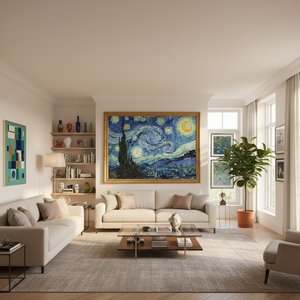
Top 10 Masterpieces for Your Living Room: Iconic Paintings & Art Decor Ideas |
Transform your living room with iconic art! Explore our guide to the Top 10 most famous paintings – from Van Gogh's Starry Night to Mona Lisa. Discover artist stories, techniques & find museum-quality reproductions for timeless decor. Explore the full collection on

25 Klimt Masterpieces: A Journey Through Iconic Art & Decor
Delve into the world of Gustav Klimt with our top 25 masterpieces! Explore his iconic paintings – 'The Kiss,' 'Portrait of Adele,' and more. Discover museum-quality reproductions & curated decor ideas. Explore the full collection online at OriginalUniqueArt.com.