Preview
 Send
Send Share
Share
 Details

 Download
 Similars
 X-Ray
X-Ray Diaporama
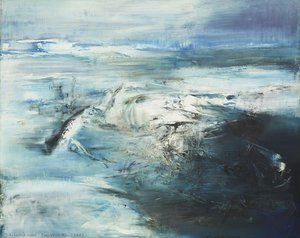
01.04.97
 1997
1997 114.0 x 146.0 cm
 Read More
Giclée / Art Print
Museum-quality giclée or canvas print with fast production and flexible finish options. ( Buy Hand Made Painting Buy Image)




































Pick from our preset sizes that match the artwork's original proportions.

You may enter your own dimensions to fit a specific frame or space. If your selected size does not match the original image's proportions, we will either crop the artwork or extend the image with a mirrored or solid-fill edge. A digital mockup will be sent for your approval before production begins.
Please note that the on-screen preview does not reflect the actual cropping or extension. Only the mockup will accurately show the final composition.
While custom sizes are available, we recommend selecting a dimension from the predefined list to preserve the original proportions.
Worldwide Delivery () in 2 weeks instead of standard 4/5 weeks. (14 August)

Free Worldwide Express Shipping

High-Quality Linen Canvas

Full Shipping Insurance

Customs Tax Refund Guarantee

True Color Matching Guarantee

60-Day Return Policy (Defects Only)

100% Money-Back Guarantee

Bulk Discount Offer
 Glass option is only available in size under 110 CM

01.04.97
Giclée / Art Print
Reproduction Size
-


Total Price
$ 81
Artist Biography
The Dawn of a New Aesthetic: Exploring the World of a 1920s Artist
The decade of the 1920s wasn’t merely a period; it was an explosion – an eruption of creativity, rebellion, and a profound shift in how art reflected and engaged with the world. Emerging from the shadows of the First World War, artists sought to dismantle established traditions and forge entirely new paths, driven by a desire to capture the dynamism and anxieties of a rapidly changing society. This era witnessed the birth of movements like Dadaism, Surrealism, and Art Deco, each offering a distinct lens through which to view reality – and often, to challenge it. While specific biographical details remain sparse for this artist, their work undeniably embodies the spirit of this transformative decade, reflecting its fascination with modernity, sexuality, and the unsettling beauty of the subconscious.Early Influences and Artistic Beginnings
The genesis of an artist’s style is rarely a singular event but rather a confluence of experiences, influences, and evolving perspectives. While precise details regarding this artist's early life are limited, it’s reasonable to assume that the tumultuous years following World War I profoundly shaped their artistic trajectory. The disillusionment with traditional values, coupled with the technological advancements – particularly in photography and mass media – created a fertile ground for experimentation. The rise of jazz music, with its improvisational spirit and rhythmic complexity, likely resonated deeply, mirroring the desire to break free from rigid structures. Furthermore, the burgeoning interest in psychology, spearheaded by figures like Sigmund Freud, fueled explorations into the hidden depths of the human psyche—a theme that would become increasingly prominent in their work. The influence of earlier movements such as Impressionism and Post-Impressionism is also likely present, providing a foundation upon which to build more radical departures.The Embrace of Modernity: Art Deco and Beyond
The 1920s witnessed the ascendance of Art Deco – a style characterized by its sleek geometric forms, luxurious ornamentation, and celebration of industrial progress. This artist’s work demonstrates a clear engagement with this movement, evident in their use of stylized patterns, bold colors, and an appreciation for machine-age aesthetics. However, it's crucial to recognize that the 1920s was a period of intense artistic pluralism, and many artists moved beyond simple adherence to any single style. There’s evidence suggesting an exploration of abstraction, influenced by movements like Cubism and Futurism, which sought to represent objects from multiple viewpoints simultaneously. This experimentation with form and perspective reflects the era's fascination with challenging conventional ways of seeing and understanding the world. The artist’s work also hints at a growing interest in representing interior spaces and psychological landscapes—a trend that would become increasingly significant in the subsequent decades.Key Themes and Symbolic Language
The art produced during this period frequently grappled with complex themes – often expressed through symbolic imagery and evocative color palettes. Sexuality, particularly female sexuality, emerged as a recurring motif, reflecting both societal shifts and the artist’s own personal explorations of identity. The depiction of nature—often rendered in highly stylized or abstracted forms—suggested a desire to connect with primal forces while simultaneously questioning the limitations of representation. The use of light and shadow played a crucial role in creating mood and atmosphere, adding layers of meaning to the compositions. Recurring motifs – perhaps related to personal experiences or cultural references – likely served as shorthand for deeper emotional and intellectual concepts. The artist’s ability to imbue their work with such layered symbolism speaks to a sophisticated understanding of both artistic technique and the complexities of human experience.Legacy and Historical Significance
While this artist may not be widely recognized by name, their contribution to the vibrant artistic landscape of the 1920s is undeniable. They were part of a generation that dared to challenge established norms and embrace new possibilities—a pivotal moment in art history. Their work stands as a testament to the era’s spirit of experimentation and its profound impact on subsequent movements. The influence of this artist can be seen in the development of Surrealism, Art Deco, and other styles that emerged in the wake of World War I. Ultimately, their legacy lies not only in the individual artworks they created but also in their role as a catalyst for change—a pioneer who helped to shape the course of modern art. Their exploration of themes like sexuality, modernity, and the subconscious continues to resonate with audiences today, reminding us of the enduring power of art to provoke thought and inspire emotion.
zao wou-ki
1920 - 2013 , China
Quick Facts
- Artistic Movement Or Style:
- 1920s Art Deco
- Expressionism
- Abstract art
- Artists Or Movements Influenced By This Artist:
- Dada
- Surrealism
- Artists Who Influenced This Artist: ['Marcel Duchamp']
- Date Of Birth: 1920
- Date Of Death: 2013
- Place Of Birth: WahooArt