Read More


 For artworks or reproductions larger than 105 cm (approximately 41 inches) on any side, the frame will be shipped as a kit, disassembled. This method ensures safe delivery and prevents damage during transport.


More about this painting
Text size

() ·
A painting made for you, by hand
Hand Made Oil Reproduction
Hand-painted oil on canvas in your size and frame, made to order by our artists. ( Switch to Print Switch to Digital Image)
Collectible Description
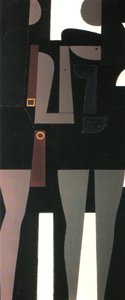
Experience Yiannis Moralis’ ‘Composition I’ (1958). A vibrant expressionist oil painting featuring two women in a striking red room. Hand-painted reproduction available.
Artist Biography
Discover Yiannis Moralis: a pivotal Greek artist known for his geometric stylization & evocative depictions of the human form. Explore his legacy!
from ·
Chapter 1
How large should it be?
Slide to change the size; the picture on the left shows the frame at its real width. The proportions of the original are kept.
Standard
custom
CM
INCH
Pick from our preset sizes that match the artwork's original proportions.
Loading sizes...

width
height
Type the width and the height you need, to fit your frame or your wall. This is hand-painted, so for a size with a different shape the artist can paint a bit more around the picture, or cut a bit — you choose. We send you a digital mockup to approve before the painting starts. The picture shown on this page does not show the real result — only the mockup does.
Chapter 2
How should it arrive?
Choose the edges of the stretched canvas
Choose your frame

White $1

Blurside $1

Extended $1

P118B $10

P118H $10

P118W $10

P438Z $10

P508JH $12

P508YH $12

P805H $10

P805Z $10

P919BZ $10

P919G $10

P919XJ $10

P959ZH $10

P968JZ $12

W106C $8

W218G $10

W218JH $8

W218Y $10

W307PJ $10

W316G $10

W316PJ $8

W316Y $10

W398PJ $8

W4111J $10

W500HY $15

W500JH $15

W692G $12

W849H $8

W940BG $15

W953PJ $8

H24-GOLD $30

H24-SILVER $30

H36-GOLD $45

H36-SILVER $45
Framed
Moulding: . Overall size with the frame: .
Chapter 3
Who paints it, and should anything change?
Examples of what can be changed: Replace face with customer photo; Add pet (e.g., replace cat with dog); Include hidden message in background; Change background landscape or elements.
After order, OriginalUniqueArt.com team will email client for instructions and provide a mockup preview
After order, OriginalUniqueArt.com team will email client for instructions and provide a mockup preview
Worldwide Delivery () in 3/4 weeks instead of standard 5 weeks. (1 November). No compromise on quality.
Chapter 4
The finishing touches
A nameplate, as in a museum?
Engraved Bronze Plaque Details
This elegant plaque features the artist's name and the title of the artwork, finely engraved for a timeless presentation.
It is made from bronze with a refined, elegant finish. The text is precisely laser-engraved for a sharp and permanent result. Measuring 9x2 cm, the plaque is compact yet easy to read. It's built to be durable and scratch-resistant, offering a professional, museum-quality look. Mounting is simple thanks to the included adhesive backing.
Transparent Acrylic Plaque Details
The plaque includes essential engraved details such as the artist's name, the title of the artwork, the date it was created, the type of media used-like oil on canvas or watercolor-a brief description of the piece, and a QR code that links to the complete artwork information.
It is crafted from clear acrylic, offering a sleek, modern appearance. The text is UV-engraved in black to ensure strong visual contrast. With a size of 10x15 cm, it ensures optimal readability. It comes equipped with two metal hooks for secure wall mounting. The plaque is designed to be weather-resistant, making it suitable for various environments, and it includes interactive features that work seamlessly with smartphone scanning.
Black Acrylic Plaque Details
This elegant plaque includes engraved information such as the artist's name, the title of the artwork, the date it was created, the type of media used (like oil on canvas or watercolor), a short description of the artwork, and a QR code for quick access to more information.
The plaque itself is made from refined black acrylic with a premium finish. The text is laser-engraved in white for high contrast and readability. Its size is 10x15 cm, designed to be easy to read. It comes with two metal hooks for professional mounting. The design is sleek and fits any interior style. It is also weather-resistant and durable, with built-in digital integration for mobile compatibility.
A protective varnish?
When do you need it?
Chapter 5
Your painting, as you ordered it
Composition I
Reproduction Medium
Reproduction Size
-
Elite Senior Artist
More detail, finesse, and extra production time
-
Reproduction Frame
-
-
For artworks or reproductions larger than 105 cm (approximately 41 inches) on any side, the frame will be shipped as a kit, disassembled. This method ensures safe delivery and prevents damage during transport.
Professional assembly required - this is not a DIY product.
The kit must be assembled and the canvas stretched by an experienced professional framer, using wood glue (not supplied), a canvas stretching plier and clamps to hold the bars square while the glue dries. Incorrect assembly or uneven canvas tension can permanently damage the artwork and is not covered by our warranty.
All solid wood bars are included, precisely cut to size.
Assembled with the screws provided, plus wood glue for the corner joints, which is not supplied and must be sourced by your framer.
Professional tools are required and not included: a canvas stretching plier (tensioner) and clamps to hold the bars square while the glue dries.
Important:
The corner joints require wood glue, the bars must be held with clamps until the glue is fully dry, and tightening the canvas on the assembled frame requires a canvas stretching plier. None of these are included in the kit. Please arrange an experienced professional framer before ordering this size.
Nameplate
-
-
Protective Varnish
Glossy Varnish (enhances colors, protects against light/moisture)
-
Customize My Artwork
Examples of what can be changed: Replace face with customer photo; Add pet (e.g., replace cat with dog); Include hidden message in background; Change background landscape or elements.
-
Urgent
Worldwide Delivery () in 3/4 weeks instead of standard 5 weeks. (1 November). No compromise on quality.
-
Express Shipping
Worldwide Delivery () in 5 weeks. (8 November).
Included
Total Price
$ 300
Glass option is only available in size under 110 CM
Included with every order
- Free Worldwide Express Shipping
- High-Quality Linen Canvas
- Full Shipping Insurance
- Customs Tax Refund Guarantee
- True Color Matching Guarantee
- 100-Day Return Policy (Defects Only)
- 100% Money-Back Guarantee
- Bulk Discount Offer
 Preview
 Send
Send Share
Share
 Details
 Guide
Guide

 Download
 Similars
 X-Ray
X-Ray Diaporama
 Q&A
Q&A Stats
StatsIn numbers
- 1958the year it was painted
- 29frames to choose from
- standard sizes, in its own proportions
- 5weeks to paint and deliver it
About the original

- 81.0 x 65.0 cm


This Artwork Is Under Copyright Protection
The artwork displayed on this page is protected by copyright law, which means we cannot legally create or sell an identical reproduction. This protection is enforced under international agreements such as the Berne Convention and by national laws, including those outlined by the U.S. Copyright Law - Title 17.
As a respectful and legal alternative, we offer custom, hand-painted artworks inspired by the original. Our skilled and professional artists carefully study the original's style, mood, and artistic essence to create a new, unique piece that evokes the same feeling - while remaining an original creation in its own right.
This method fully complies with copyright regulations because it does not involve copying or duplicating the protected artwork. Instead, it is a creative reinterpretation - a new painting that is influenced by the original but not identical to it.

Yiannis Moralis
1916 - 2009, Greece
Quick facts about Yiannis Moralis
- Full Name: Marc Chagall
- Nationality: French/Russian
- Date Of Birth: 1916
- Date Of Death: 2009
- Place Of Birth: Arta, Greece
- Notable Artworks:
- I and the Village
- The Fiddler
- Birthday
- White Crucifixion
- Artistic Movement Or Style: Symbolism, Cubism
- Artists Who Influenced This Artist:
- Léon Bakst
- Vera Mukhina
- Henri Matisse
- Artists Or Movements Influenced By This Artist:
- Surrealism
- Cubism
- Fauvism
Artist Biography
Odilon Redon: Weaver of Dreams and Shadows
Born Bertrand Redon in Bordeaux, France, in 1840, Odilon Redon’s life was a testament to the power of sustained vision and an unwavering pursuit of the inner world. His early years were marked by a conventional path – architecture studies interrupted by military service during the Franco-Prussian War – yet it was his nascent artistic talent that ultimately defined him. Redon's journey wasn’t one of grand, sweeping movements; instead, he quietly cultivated a singular style, becoming a pivotal figure in the Symbolist movement and a precursor to Surrealism, largely through his evocative explorations of dreams, memory, and the subconscious.
Redon’s artistic development began with charcoal drawings, a medium that allowed him to capture the stark beauty of shadows and the subtle nuances of texture. These early “noirs,” as they became known, were characterized by their monochromatic palette and hauntingly expressive forms – often depicting nocturnal landscapes, solitary figures, and fantastical creatures emerging from darkness. He honed his skills in printmaking, mastering techniques like etching and lithography, which provided a crucial outlet for his imaginative ideas. The influence of Japanese art during this period is undeniable; the flattened perspectives, simplified forms, and emphasis on suggestion found in Japanese woodblock prints resonated deeply with Redon’s aesthetic sensibilities.
The 1880s witnessed a significant shift in Redon's work. Inspired by the Symbolist movement, he began experimenting with color – primarily rich blues, purples, and greens – alongside his established monochrome style. This period saw him delve into themes of mythology, folklore, and religious symbolism, creating paintings that were both deeply personal and imbued with a sense of mystery. His subjects often included angels, demons, and biblical figures rendered in a dreamlike atmosphere, reflecting the anxieties and spiritual yearnings of the era.
Later in his career, Redon turned to pastel and oil painting, continuing to explore themes of isolation, mortality, and the ephemeral nature of reality. His late works are particularly striking for their vibrant colors and expressive brushwork, capturing a sense of urgency and emotional intensity. He developed a keen interest in Hindu and Buddhist iconography, incorporating elements of Eastern art into his compositions – a testament to his lifelong fascination with the exotic and the otherworldly. Redon’s final years were marked by increasing blindness, yet he continued to create, relying on memory and imagination to guide his hand. He died in Paris in 1916, leaving behind a remarkably consistent body of work that continues to captivate viewers with its haunting beauty and profound psychological depth.
Thomas Eakins: Capturing the American Moment
Born in Philadelphia in 1844, Thomas Eakins was an artist profoundly shaped by his environment. His early life, marked by a love of athletics and a keen observation of human behavior, would ultimately inform his distinctive artistic style – one that eschewed traditional academic conventions in favor of a brutally honest and psychologically astute portrayal of the American experience.
Eakins’ formal training at the Pennsylvania Academy of the Fine Arts provided him with a solid foundation in drawing and painting techniques. However, he quickly grew disillusioned with the rigid rules and idealized subjects favored by the academy. He supplemented his studies with anatomy lessons at Jefferson Medical College, an unusual pursuit that allowed him to develop an unparalleled understanding of the human form – a skill he would later exploit to create remarkably lifelike figures in his paintings. Eakins’ artistic journey was further influenced by his exposure to Parisian avant-garde movements, particularly Impressionism and Post-Impressionism, which broadened his stylistic horizons.
Eakins's most celebrated works depict scenes of everyday life – boxing matches, rowing competitions, shooting galleries, and social gatherings – rendered with a remarkable degree of realism and psychological insight. He was not interested in romanticizing or glorifying these activities; instead, he sought to capture the raw energy, competitive spirit, and underlying tensions that characterized them. His paintings are notable for their unconventional compositions, dynamic lighting, and unflinching portrayal of human emotion.
Despite his critical acclaim, Eakins faced considerable resistance during his lifetime due to his unorthodox teaching methods at the Pennsylvania Academy of the Fine Arts. His insistence on depicting nude figures in anatomy classes sparked outrage among parents and students, ultimately leading to his resignation in 1886. Eakins continued to paint prolifically until his death in 1916, leaving behind a legacy as one of America’s most important realist painters – an artist who dared to capture the complexities of the American spirit with unflinching honesty and profound empathy.
Odilon Redon: A World Within
Odilon Redon's artistic career spanned over seven decades, during which he developed a uniquely personal and profoundly evocative style. Born in Bordeaux in 1840, his early life was relatively conventional, marked by a brief stint in architecture before he discovered his passion for art. His initial training focused on charcoal drawing and printmaking – mediums that allowed him to explore the world of shadows and textures with remarkable precision.
Redon’s artistic development took a significant turn during the 1880s, when he was influenced by the Symbolist movement. He began experimenting with color—primarily rich blues, purples, and greens—alongside his established monochrome style. This period saw him delve into themes of mythology, folklore, and religious symbolism, creating paintings that were both deeply personal and imbued with a sense of mystery. His subjects often included angels, demons, and biblical figures rendered in a dreamlike atmosphere.
A defining characteristic of Redon’s work is his exploration of the subconscious—the realm of dreams, memories, and hidden emotions. His paintings are not simply representations of external reality; they are windows into the inner world of the artist himself. He frequently employed techniques such as blurring, distortion, and fragmentation to create a sense of unease and ambiguity, inviting viewers to interpret his works in their own way.
In his later years, Redon continued to experiment with color and texture, producing paintings that are both visually stunning and emotionally resonant. He developed a keen interest in Hindu and Buddhist iconography, incorporating elements of Eastern art into his compositions. Despite suffering from increasing blindness in his final years, Redon remained an active artist until his death in 1916, leaving behind a remarkable body of work that continues to fascinate and inspire.
Georgia O'Keeffe: Desert Visions
Born Constance Mary O’Keeffe in St. Louis, Missouri, in 1887, Georgia O’Keeffe quickly developed an independent spirit and a profound connection to the natural world. Her early life was marked by a nomadic existence—moving frequently with her family as her father pursued his career as a photographer—which instilled in her a sense of restlessness and a fascination with diverse landscapes.
O’Keeffe's artistic training began at the School of the Art Institute of Chicago, where she studied under Thomas Thayer. However, she soon found herself drawn to New York City, where she enrolled in classes at the National Academy of Design and became acquainted with other avant-garde artists. It was through her association with Alfred Stieglitz—a prominent photographer and art dealer—that O’Keeffe's career truly took off.
Stieglitz recognized O’Keeffe’s unique artistic vision and began exhibiting her work in his New York gallery, which quickly garnered critical acclaim. O’Keeffe’s paintings are characterized by their bold colors, simplified forms, and intimate scale—often depicting close-up views of flowers, landscapes, and architectural structures. Her subject matter—particularly the vast desertscapes of New Mexico—became synonymous with her artistic identity.
Throughout her career, O'Keeffe remained fiercely independent and uncompromising in her artistic vision. She shunned commercialism and resisted attempts to categorize her work, insisting that she painted “from life,” not from memory or imagination. Her paintings are a testament to her ability to capture the essence of the natural world—to reveal its beauty, mystery, and profound emotional resonance.
Related Articles

Crimson Threads of Narrative: Exploring Symbolism & Representation in Artworks Featuring the Red Dress
Explore the rich symbolism of the red dress in art history! From ancient power displays to iconic portraits like Cézanne’s 'Madame Cezanne', discover the cultural and artistic significance behind this captivating color. Expert analysis & insights.

The Enduring Legacy of Oil on Canvas: Technique, History & Aesthetic Impact
Explore the rich history & techniques of oil painting – from Renaissance masters to Impressionism. Discover pigments, layering methods, and why this timeless medium endures. Expert insights for artists & art enthusiasts.

The Enduring Power of Painting: A Historical & Contemporary Exploration of Form and Emotion
Explore the rich history & enduring techniques of oil painting with OriginalUniqueArt. Discover masterpieces, learn about art collecting, and find authentic handmade reproductions crafted by skilled artists.

The Timeless Charm of Oil on Board: Reimagining Texture and Light through the Impressionist Lens
Discover the profound intimacy of oil on panel. Explore how Impressionist masters used rigid supports to capture light, texture, and impasto depth through exquisite, handmade oil reproductions for discerning collectors.
Explore artworks organized by themes, styles, and characteristics.