Preview
 Send
Send Share
Share
 Details
 Guide
Guide

 Download
 Similars
 X-Ray
X-Ray Diaporama
 Stats
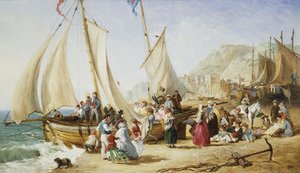
StatsCatering For The Convent

 Read More
Hand Made Oil Reproduction
Hand-painted oil on canvas in your size and frame, made to order by our artists. ( Switch to Print Switch to Digital Image)




































Pick from our preset sizes that match the artwork's original proportions.

Type the width and the height you need, to fit your frame or your wall. This is hand-painted, so for a size with a different shape the artist can paint a bit more around the picture, or cut a bit — you choose. We send you a digital mockup to approve before the painting starts. The picture shown on this page does not show the real result — only the mockup does.
After order, OriginalUniqueArt.com team will email client for instructions and provide a mockup preview
Worldwide Delivery () in 3/4 weeks instead of standard 5 weeks. (25 October). No compromise on quality.

Free Worldwide Express Shipping

High-Quality Linen Canvas

Full Shipping Insurance

Customs Tax Refund Guarantee

True Color Matching Guarantee

100-Day Return Policy (Defects Only)

100% Money-Back Guarantee

Bulk Discount Offer
 Glass option is only available in size under 110 CM

Catering For The Convent
Reproduction Medium
Reproduction Size
-


Total Price
$ 450
Artist Biography
The Luminous Legacy of William Samuel Parrott
William Samuel Parrott (1844-1915) stands as a pivotal figure in American landscape painting, particularly renowned for his breathtaking depictions of Oregon and the Pacific Northwest. Emerging during a period of significant artistic innovation known as the Luminist movement, Parrott mastered the art of capturing atmospheric effects and conveying profound mood through subtle tonal gradations rather than mere detailed realism. This stylistic approach profoundly shaped his entire oeuvre, establishing him as one of the foremost interpreters of the region's dramatic and untamed vistas.
His formative years were marked by a deep exposure to European art trends, notably the burgeoning influence of Impressionism. However, Parrott remained steadfast in his adherence to Luminist principles, seeking a spiritual connection with the landscape through light. Influenced heavily by masters such as Frederic Church and Asher Durand, Parrott sought to emulate their ability to evoke deep emotion through carefully observed light and color—a skill that would eventually become his artistic trademark. His process was uniquely rigorous; he meticulously studied geological formations and topographic maps, translating scientific data into evocative visual representations that possessed both accuracy and soul.
Mastery of Light and Technique
The breadth of Parrott’s prolific output is staggering, spanning several decades and encompassing over 300 paintings. His primary focus remained the majestic mountainous landscapes—most notably the iconic Mount Hood—and the expansive, winding river valleys that define the American West. To achieve the ethereal quality for which he is celebrated, Parrott skillfully employed complex glazing techniques. By layering translucent washes of pigment onto textured surfaces, he achieved a remarkable sense of luminosity and internal depth.
The resulting images are characterized by several distinct artistic elements:
- Soft Edges: A rejection of harsh outlines in favor of seamless transitions between land and sky.
- Atmospheric Perspective: The use of hazy, receding tones to create a palpable sense of vast distance.
- Harmonious Tonalism: A blending of hues that mirrors the shifting light of the Oregon wilderness.
His paintings are far more than mere representations of scenery; they serve as meditations on nature's grandeur and its capacity to inspire human contemplation. Through his brush, the rugged terrain of the Pacific Northwest is transformed into a realm of quiet majesty.
Artistic Significance and Lasting Impression
Beyond his regional focus, Parrott’s work reflects a broader historical movement in 19th-century American art, where the exploration of the frontier coincided with a desire to find a unique national aesthetic. While he is celebrated for his landscapes, his versatility occasionally touched upon other genres and styles, as seen in works like “Bal De La Ville De Paris,” which showcased a different, more vibrant side of his compositional ability.
Today, the historical significance of William Samuel Parrott lies in his ability to bridge the gap between scientific observation and romantic expression. He captured a specific moment in American history when the West was being documented with both wonder and precision. His dedication to the interplay of light and topography ensures that his canvases remain timeless windows into the luminous beauty of a vanishing era, leaving an indelible mark on the tradition of American landscape painting.

William Samuel Parrott
1844 - 1915
Quick Facts
- Full Name: William Samuel Parrott
- Nationality: American
- Date Of Birth: 1844
- Date Of Death: 1915
- Notable Artworks:
- Bal De La Ville De Paris
- Sierra Sunset
- Catering For The Convent
- Artistic Movement Or Style: Luminism
- Artists Who Influenced This Artist: ['George Caleb Bingham']
- Artists Or Movements Influenced By This Artist: ['Hudson River School']
Related Articles

Herman Herzog: Capturing American Landscapes & the Pursuit of Domestic Idealism
Explore the captivating landscapes of Herman Herzog, a pivotal American artist known for his realistic depictions of Yosemite & Florida scenes. Discover his legacy, artistic journey, and market value with OriginalUniqueArt.
Thomas George Webster: Navigating Genre Boundaries & American Identity in 19th-Century Landscape Painting
Explore the captivating genre scenes of Thomas George Webster, a Victorian painter bridging British traditions with American themes. Discover his style, influences & legacy in 19th-century art history.

Romantic Landscapes: 10 Masterpieces for Your Home | OriginalUniqueArt
Journey through 10 Romantic landscape masterpieces by Friedrich, Turner & Cole. Explore emotional art, sublime nature scenes & iconic 19th-century paintings. Find museum-quality reproductions for your home at OriginalUniqueArt.com – discover the full collection online!

Evoking Nature's Sublime: A Comprehensive Exploration of 19th-Century Landscape Painting
Explore the captivating world of 19th-century landscape painting! Discover renowned artists like Friedrich & Monet, key movements, and find the perfect artwork to bring nature's serenity into your home. Expert insights at OriginalUniqueArt.

Evocations of Place: A Historical Journey Through Landscape Art
Explore the rich history of landscape art with OriginalUniqueArt. Discover renowned artists, movements like Impressionism & Romanticism, and expert guidance for collecting timeless pieces. Find your perfect serene escape today!