Oil Edition
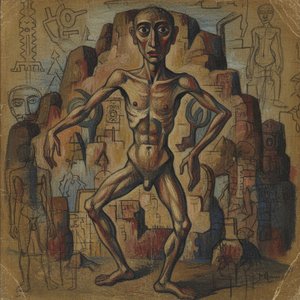
 Everything about Study for Kites







































 For artworks or reproductions larger than 105 cm (approximately 41 inches) on any side, the frame will be shipped as a kit, disassembled. This method ensures safe delivery and prevents damage during transport.


William Roberts is a British painter of figure compositions and portraits. He was a pioneer of abstract art before the First World War. Roberts worked outside the mainstream. Later in his career he would describe himself as an English Cubist. In 1914 Roberts joined the short-lived art movement the Vorticists, founded by the artist and writer Wyndam Lewis. The Vorticists believed that British art at this time was in a decayed state. Their aesthetic combined the geometrical fragmentation of Cubism with Futurist machine-like imagery. During the First World War, Roberts was a gunner on the Western Front. Later he became a war artist, a position he held in both world wars. He is best remembered for his large complex and colourful compositions.Roberts has marked this reference picture with a grid to help him to transfer it to canvas. The canvas is marked with a corresponding grid allowing the picture to be enlarged and transferred one square at a time.
Questions & Answers
Is this Study for Kites painted by hand or printed?
Painted by hand: a trained painter copies Study for Kites in oil on linen canvas.
What size should I choose for Study for Kites?
Sizes run from 30.4 x 32.9 cm ($200) to 230.3 x 249.3 cm ($2071); the table on this page lists the main steps and their prices.
How long does delivery take?
Delivery takes 4 to 5 weeks, with free worldwide express shipping; an urgent production option is offered on this page. You can return it within 100 days for a full refund, with no condition.
Where is the original Study for Kites?
The original is in the collection of the Royal Albert Memorial Museum - Art Gallery, Exeter.
What medium did William Roberts use for Study for Kites?
Watercolor.
More about this painting
 Preview

 Send
 Share
 Details
 Fact sheet


 Download
 Similars
 X-Ray
 Diaporama
 Q&A

 Stats