Menu
FREE ART CONSULTATION
Buy print Buy printBuy Image Buy Image SendSend
DetailsDetails Add to favorites Add to favorites DownloadDownload SimilarsSimilars X-RayX-Ray DiaporamaDiaporama

Untitled (D2WVSV)

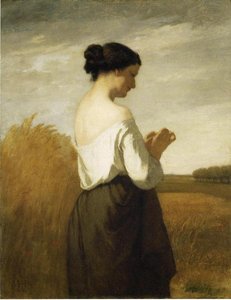
William Morris Hunt's "Untitled" (1852) captures a contemplative woman amidst a serene outdoor scene, showcasing the Barbizon School’s luminous style and hinting at Victorian era elegance. A captivating portrait with subtle details.

William Morris Hunt (1824-1879): American Barbizon painter known for luminous landscapes & portraits. Inspired by Millet, he shaped 19th-century Boston art and championed European styles.

Hand Made Oil Reproduction

Hand-painted oil on canvas in your size and frame, made to order by our artists.

P118B $10
P118H $10
P118W $10
P438Z $10
P508JH $12
P508YH $12
P805H $10
P805Z $10
P919BZ $10
P919G $10
P919XJ $10
P959ZH $10
P968JZ $12
W106C $8
W218G $10
W218JH $8
W218Y $10
W307PJ $10
W316G $10
W316PJ $8
W316Y $10
W398PJ $8
W4111J $10
W500HY $15
W500JH $15
W692G $12
W849H $8
W940BG $15
W953PJ $8

Standard
custom
CM
INCH

Pick from our preset sizes that match the artwork's original proportions.

width
height

You may enter your own dimensions to fit a specific frame or space. If your selected size does not match the original image's proportions, we will either crop the artwork or extend the painting with additional hand-painted elements. A digital mockup will be sent for your approval before production begins.

Please note that the on-screen preview does not reflect the actual cropping or extension. Only the mockup will accurately show the final composition.
While custom sizes are available, we recommend selecting a dimension from the predefined list to preserve the original proportions.

Examples of what can be changed: Replace face with customer photo; Add pet (e.g., replace cat with dog); Include hidden message in background; Change background landscape or elements.
After order, OriginalUniqueArt.com team will email client for instructions and provide a mockup preview

Worldwide Delivery () in 3/4 weeks instead of standard 5 weeks. (22 July). No compromise on quality.

why_choose_icon
Free Worldwide Express Shipping
why_choose_icon
High-Quality Linen Canvas
why_choose_icon
Full Shipping Insurance
why_choose_icon
Customs Tax Refund Guarantee
why_choose_icon
True Color Matching Guarantee
why_choose_icon
60-Day Return Policy (Defects Only)
why_choose_icon
100% Money-Back Guarantee
why_choose_icon
Bulk Discount Offer

Total Price

-

reproduction

Untitled (D2WVSV)

Reproduction Medium

Reproduction Size

-

Total Price

-

Quick Facts

  • Artistic style: Portraiture, Realism
  • Year: 1852
  • Dimensions: 117 x 90 cm
  • Title: Untitled (D2WVSV)
  • Influences:
    • Millet
    • European masters
  • Movement: Barbizon School
  • Artist: William Morris Hunt

Artwork Description

A Moment Frozen in Time: Unveiling William Morris Hunt's "Untitled (D2WVSV)"

William Morris Hunt’s 1852 painting, “Untitled (D2WVSV),” is more than a simple portrait; it’s a carefully constructed tableau of observation and subtle emotion. Measuring a modest 117 x 90 cm, the work immediately draws the viewer in with its restrained palette – primarily grays and muted earth tones – that evokes the atmosphere of an early autumn afternoon. The subject, a woman positioned outdoors against a backdrop of trees and a delicate fountain, appears lost in thought, her hand resting lightly on a wall as if seeking support or simply pausing to consider something unseen. Her gaze is directed off-camera, inviting us into her private world, creating an immediate sense of intimacy and intrigue.

Hunt’s choice of subject matter—a woman engaged in quiet contemplation—reflects the burgeoning interest in psychological realism that was gaining traction within American art during the mid-19th century. He wasn't interested in grand narratives or dramatic displays; instead, he sought to capture the nuances of human experience – the fleeting expressions, the unspoken thoughts, and the subtle gestures that reveal a person’s inner life. This approach aligns closely with the Barbizon School, which emphasized direct observation of nature and the depiction of everyday subjects with an emphasis on tonal values and atmospheric effects.

The Barbizon Influence: Light, Shadow, and the Essence of Nature

Born in Brattleboro, Vermont, William Morris Hunt’s artistic journey was profoundly shaped by his exposure to European art, particularly the Barbizon School. Inspired by Jean-François Millet, Hunt embraced the Barbizon's philosophy of painting *en plein air* – directly from nature – and its focus on capturing the effects of light and atmosphere. This is evident in “Untitled (D2WVSV)” through the masterful use of chiaroscuro; the interplay of light and shadow creates a sense of depth and volume, while subtly highlighting the woman’s face and hand. The loose brushwork and textured surfaces further contribute to the painting's naturalistic quality, mirroring Millet’s own approach.

The inclusion of the fountain and trees in the background isn’t merely decorative; they serve as anchors for the composition, grounding the figure within a believable landscape. Hunt skillfully renders the foliage with a delicate touch, suggesting movement and texture through subtle variations in tone and brushstroke. The clock visible in the scene adds an intriguing layer of symbolism – perhaps representing the passage of time or inviting contemplation on mortality, themes frequently explored by artists of the era.

Symbolism and Emotional Resonance

While the painting’s title is “Untitled,” it's clear that Hunt intended to convey a specific mood. The woman’s averted gaze suggests a moment of introspection or perhaps a longing for something beyond her immediate surroundings. Her posture—relaxed yet poised—evokes a sense of quiet dignity and resilience. The wall she touches could symbolize support, reflection, or even a barrier between herself and the unseen subject of her thoughts.

Considering Hunt’s own life – his struggles with artistic recognition, his travels across Europe, and his eventual return to America – it's possible that this painting represents a personal meditation on themes of identity, belonging, and the search for meaning. The subdued colors and contemplative atmosphere invite viewers to project their own emotions and experiences onto the scene, transforming “Untitled (D2WVSV)” into a deeply resonant portrait of human experience.

A Reproduction Worth Cherishing

OriginalUniqueArt offers meticulously hand-painted reproductions of William Morris Hunt’s “Untitled (D2WVSV),” capturing the essence of this remarkable work with unparalleled detail and fidelity. Each reproduction is created by skilled artists who understand the nuances of Hunt's technique, ensuring that you receive a piece that truly honors the original painting. Whether displayed in your home or office, this reproduction will serve as a beautiful reminder of the power of observation, contemplation, and the enduring legacy of American art.


Artist Biography

A Pioneer of American Barbizon Painting

William Morris Hunt, born in Brattleboro, Vermont, in 1824, stands as a pivotal figure in the development of American art during the 19th century. He wasn’t merely a painter; he was an advocate, an educator, and a catalyst who championed the principles of the Barbizon School on American soil. Hunt's lineage reflected both established societal roots – his father descended from Vermont founders, while his mother hailed from Connecticut wealth – and a burgeoning artistic sensibility that would ultimately redefine the landscape of American painting. His early life was marked by privilege but also by an initial suppression of creative inclinations, a situation rectified when his determined mother, Jane Leavitt Hunt, defied convention and relocated the family to Europe in pursuit of proper artistic training for her children. This bold move set the stage for Hunt’s profound engagement with European masters and ultimately shaped his distinctive style.

Formative Years in France: Millet and the Barbizon Circle

Hunt's formal education began under Thomas Couture in Paris, where he received a grounding in classical techniques. However, it was an encounter at the 1851 Paris Salon that irrevocably altered his artistic trajectory. Jean-François Millet’s *The Sower* resonated deeply with Hunt, sparking a profound shift in his aesthetic sensibilities. He abandoned the rigid constraints of academic painting and embarked on a two-year period of direct study with Millet at Barbizon. This immersion into the heart of the Barbizon School proved transformative. The emphasis on plein air painting – working directly from nature – and a commitment to depicting rural life with honesty and realism became cornerstones of Hunt’s artistic philosophy. He absorbed not only Millet's technical approach but also his profound respect for the dignity of labor and the beauty inherent in everyday existence. Historian David McCullough noted that this French training significantly advanced Hunt’s development, while S.G.W. Benjamin recognized his role in directing younger American artists towards Paris and Munich, fostering a new boldness in technique and style.

Returning to America: Portraiture and Landscape

Upon returning to the United States in 1855, following his marriage to Louise Dumaresq Perkins, Hunt established himself as a prominent artist in Boston. While he achieved considerable success as a portrait painter – capturing the likenesses of notable figures like William M. Evarts, Charles Francis Adams, and Senator Charles Sumner – landscape painting remained central to his artistic identity. His landscapes reflected the Barbizon influence: loose brushwork, realistic depictions of rural scenes, and an acute sensitivity to atmospheric effects. He didn’t simply reproduce nature; he sought to capture its essence, its mood, and its fleeting moments of beauty. Notable works from this period include *The Belated Kid*, *Girl at the Fountain*, *Hurdy-Gurdy Boy*, *View of the St. Johns River* (1874), *Woman with Cow* (1874) and *Niagara Falls* (1878). However, tragedy struck in 1872 when the Great Boston Fire consumed many of his paintings, along with a valuable collection of French art, including his cherished copy of Millet’s *The Sower*.

Later Years, Legacy, and Artistic Philosophy

Despite this devastating loss, Hunt continued to paint, accepting commissions for murals at the State Capitol in Albany, New York. These allegorical scenes, unfortunately, deteriorated rapidly due to faulty installation, contributing to a period of profound disappointment and depression. This experience underscored his commitment to artistic integrity and the importance of proper materials and execution. In 1878, he published *Talks About Art*, a collection of essays that articulated his artistic philosophy and received widespread acclaim. Hunt’s legacy extends beyond his own paintings. He was a dedicated teacher who encouraged younger artists to embrace realism and plein air painting, leaving an indelible mark on the development of American art. He championed a shift away from academic conventions towards a more direct and honest engagement with nature, fostering a uniquely American artistic voice. His influence can be seen in the work of countless artists who followed, solidifying his position as a leading figure in the American Barbizon movement and a true pioneer of modern painting. He remains an important link between European traditions and the burgeoning artistic identity of 19th-century America.
William Morris Hunt

William Morris Hunt

1824 - 1879 , United States of America

Quick Facts

  • Artistic Movement Or Style: Barbizon School
  • Artists Or Movements Influenced By This Artist: ['American Barbizon painters']
  • Artists Who Influenced This Artist:
    • Jean-François Millet
    • Thomas Couture
  • Date Of Birth: 1824
  • Date Of Death: 1879
  • Full Name: William Morris Hunt
  • Nationality: American
  • Notable Artworks:
    • The Belated Kid
    • Girl at the Fountain
    • Hurdy-Gurdy Boy
    • View of St. Johns River
    • Woman with Cow
    • Niagara Falls
  • Place Of Birth: Brattleboro, USA
Explore artworks organized by themes, styles, and characteristics.