Preview
 Send
Send Share
Share
 Details
 Guide
Guide

 Download
 Similars
 X-Ray
X-Ray Diaporama
 Q&A
Q&A Stats
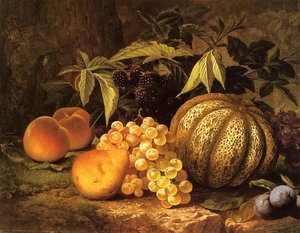
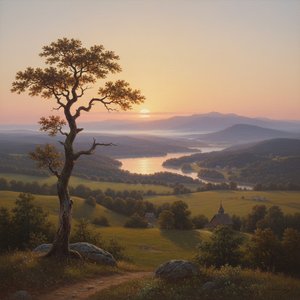
StatsRiver Landscape in Summer


 Read More
Giclée / Art Print
Museum-quality giclée or canvas print with fast production and flexible finish options. ( Buy Hand Made Painting Switch to Digital Image)




































Pick from our preset sizes that match the artwork's original proportions.

Type the width and the height you need, to fit your frame or your wall. A print can only be cut, never made bigger than the picture, so a size with a different shape loses a part of the image. We send you a digital mockup to approve before we print anything. The picture shown on this page does not show the real cut — only the mockup does.
Worldwide Delivery () in 2 weeks instead of standard 4/5 weeks. (8 November)

Free Worldwide Express Shipping

High-Quality Linen Canvas

Full Shipping Insurance

Customs Tax Refund Guarantee

True Color Matching Guarantee

100-Day Return Policy (Defects Only)

100% Money-Back Guarantee

Bulk Discount Offer
 Glass option is only available in size under 110 CM

River Landscape in Summer
Giclée / Art Print
Reproduction Size
-


Total Price
$ 81
Composition and Elements
In the background, mountains are visible, adding depth and dimension to the image. A river flows through the landscape, creating a peaceful atmosphere. A horse is seen standing near the right side of the painting, possibly grazing or enjoying the scenery. Two people are also present in the scene, one closer to the left side and another further back on the right side, observing the beautiful view or engaging in some outdoor activity. Key elements of the painting include the use of color, light, and composition to create a sense of harmony and balance. The artist's attention to detail is evident in the way the trees, mountains, and river are depicted. For more information on William Mason Brown's work, visit /art/list/?Filter=8YDRRK-William-Mason-Brown-River-Landscape-in-Summer.Similar Works and Artists
Other notable works by William Mason Brown include Summer Pastures, also located at the Chrysler Museum of Art. For more information on this painting, visit /art/list/?Filter=8YE3XW-William-Mason-Brown-Summer-Pastures. Similar artists and styles can be found on https://OriginalUniqueArt.com, including works by Paul Delvaux and Thomas Cole.- River Landscape in Summer is a prime example of American landscape painting from the 19th century.
- The use of oil on canvas allows for rich, vibrant colors and textures.
- The painting's composition and elements work together to create a sense of serenity and tranquility.
For handmade oil paintings reproductions of River Landscape in Summer and other notable works, visit https://OriginalUniqueArt.com.
Questions & Answers
How strong are the colors of "River Landscape in Summer"?
The color of "River Landscape in Summer" is balanced soft in saturation and balanced in intensity.
Is "River Landscape in Summer" by William Mason Brown in the public domain, and why?
"River Landscape in Summer" by William Mason Brown is in the public domain - its copyright has expired. Copyright duration runs from the artist's death, which occurred in 1898.
What aliases or alternate names does William Mason Brown have?
William Mason Brown is also known as Wm M Brown.
Artist Biography
The Meticulous Vision of William Mason Brown
Born in Troy, New York, William Mason Brown emerged as a distinctive voice within the American art landscape, carving out a legacy defined by an extraordinary devotion to detail. His artistic journey began under the tutelage of Abel Buell Moore, the preeminent portraitist of Troy, which laid the foundation for a career that would traverse several captivating genres. While his early training was rooted in the intimate realm of portraiture, Brown’s creative spirit eventually expanded into the sweeping vistas of the landscape and the hyper-realistic precision of still life painting.
As a prominent member of the second generation of the Hudson River School, Brown’s early work reflected the romantic traditions established by masters such as Thomas Cole. During his time in Newark, New Jersey, starting around 1850, he specialized in landscapes that captured the grandeur and serenity of the natural world. These works often featured a striking balance between vast, atmospheric backgrounds—such as distant mountains and flowing rivers—and an exacting, almost photographic precision in the foreground elements. This duality allowed him to evoke both the sublime scale of nature and a profound sense of tranquility.
A Transition to Hyper-Realistic Still Life
A pivotal shift occurred in 1858 when Brown moved to Brooklyn, New York, a transition that saw him move away from the expansive horizons of landscape painting toward the concentrated intensity of still life. This period marked his emergence as a master of trompe-l'œil, a technique designed to deceive the eye into perceiving three-dimensional reality on a flat canvas. Influenced by the Pre-Raphaelite movement and the teachings of John Ruskin, Brown developed a style characterized by an almost obsessive attention to texture and light.
His still lifes became celebrated for their ability to replicate the tactile essence of the subjects they depicted. He possessed a rare talent for textural duplication, capturing the delicate fuzz on a peach or the intricate rind of a cantaloupe with such clarity that his work was often compared to the precision of French academician Jean-Léon Gérôme. In these compositions, Brown avoided visible brushwork, preferring a smooth, seamless finish that allowed the viewer to lose themselves in the luminous highlights and organic weights of fruit, berries, and flowers.
Legacy and Artistic Significance
Throughout his long career, Brown was a consistent and respected presence in the American art community, exhibiting annually at the National Academy of Design for over three decades. His ability to reach a wide audience through chromolithographic reproductions ensured that his meticulous renderings of nature were admired far beyond the gallery walls. His work remains preserved in prestigious institutions, including:
- Brooklyn Museum of Art
- Cleveland Museum of Art
- Chrysler Museum of Art
- Corcoran Gallery of Art
- Pennsylvania Academy of the Fine Arts
The historical significance of William Mason Brown lies in his unique ability to bridge the gap between the romanticism of the Hudson River School and the rigorous, scientific observation of the Pre-Raphaelite influence. By mastering both the sweeping emotion of the landscape and the quiet, intense reality of the still life, he left behind a body of work that celebrates the profound beauty found in both the vastness of the earth and the smallest details of its bounty.

William Mason Brown
1828 - 1898 , United States of America
Quick Facts
- Artistic Movement Or Style: Hudson River School, Pre-Raphaelite
- Artists Who Influenced This Artist:
- Abel Buell Moore
- Thomas Cole
- Full Name: William Mason Brown
- Nationality: American
- Notable Artworks:
- River Landscape in Summer
- Still Life Pansies
- Summer Pastures
- Strawberries Strewn on a Forest Floor
- Place Of Birth: New York City, United States of America
- Date Of Birth: 1828
- Date Of Death: 1898
Related Articles

Hudson River School: 10 Masterpieces That Capture America's Wild Beauty | OriginalUniqueArt
Journey through America's breathtaking landscapes with our guide to the Top 10 Hudson River School masterpieces. Explore Thomas Cole, Frederic Church & more! Find museum-quality art reproductions and elevate your home decor at OriginalUniqueArt.com.
The Sublime Landscape: Exploring the Hudson River School Movement
Explore the captivating world of the Hudson River School! Discover the history, artists, and defining characteristics of this iconic American art movement. Learn about Romanticism's influence & find inspiration for your collection.
Robert Spencer: Luminism, Narrative & the American Landscape Tradition
Explore the captivating world of Luminism & the Hudson River School with our expert analysis. Discover the history, artists, and enduring beauty of 19th-century American landscape painting. Find museum-quality reproductions at OriginalUniqueArt.
Capturing the American Spirit: A Journey Through Iconic Landscapes and the Legacy of the Hudson River School
Explore the profound beauty of American art history. From the Hudson River School to iconic landscapes, discover a curated journey through the masterpieces that defined a nation's spirit and the enduring legacy of American Romanticism.
Asher Brown Durand: Luminism, Landscape & the American Ideal – A Comprehensive Exploration
Explore the life & art of Asher Brown Durand, a founding member of the Hudson River School. Discover his masterful landscapes, Luminist techniques, and lasting impact on American painting. Learn about key works like 'Kindred Spirits' & collecting Durand today.