Preview
 Send
Send Share
Share
 Details
 Guide
Guide

 Download
 Similars
 X-Ray
X-Ray Diaporama
 Stats
StatsMusic Hall Turn (study)


 Read More
Giclée / Art Print
Museum-quality giclée or canvas print with fast production and flexible finish options. ( Buy Hand Made Painting Switch to Digital Image)




P118B $10

P118H $10

P118W $10

P438Z $10

P508JH $12

P508YH $12

P805H $10

P805Z $10

P919BZ $10

P919G $10

P919XJ $10

P959ZH $10

P968JZ $12

W106C $8

W218G $10

W218JH $8

W218Y $10

W307PJ $10

W316G $10

W316PJ $8

W316Y $10

W398PJ $8

W4111J $10

W500HY $15

W500JH $15

W692G $12

W849H $8

W940BG $15

W953PJ $8




Pick from our preset sizes that match the artwork's original proportions.

You may enter your own dimensions to fit a specific frame or space. If your selected size does not match the original image's proportions, we will either crop the artwork or extend the image with a mirrored or solid-fill edge. A digital mockup will be sent for your approval before production begins.
Please note that the on-screen preview does not reflect the actual cropping or extension. Only the mockup will accurately show the final composition.
While custom sizes are available, we recommend selecting a dimension from the predefined list to preserve the original proportions.
Worldwide Delivery () in 2 weeks instead of standard 4/5 weeks. (5 October)

Free Worldwide Express Shipping

High-Quality Linen Canvas

Full Shipping Insurance

Customs Tax Refund Guarantee

True Color Matching Guarantee

100-Day Return Policy (Defects Only)

100% Money-Back Guarantee

Bulk Discount Offer
 Glass option is only available in size under 110 CM

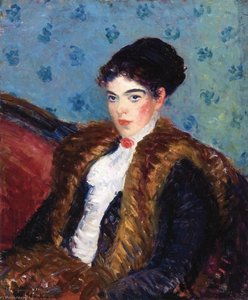
Music Hall Turn (study)
Giclée / Art Print
Reproduction Size
-


Total Price
$ 81
William James Glackens’ “Music Hall Turn (study)” – A Window into Early 20th Century Energy
William James Glackens' "Music Hall Turn (study)," painted in 1918, is more than just a depiction of a stage performance; it’s a vibrant snapshot of an era. Created during the height of the Ashcan School movement, this oil painting captures the raw energy and bustling atmosphere of entertainment venues in pre-war America. Glackens, a pioneer of realism, masterfully translates the sensory experience – the bright colors, the lively chatter, the palpable excitement – onto the canvas with remarkable skill. The work’s current location within the Museum of Art in Fort Lauderdale speaks to its enduring appeal and significance within American art history.
- Subject Matter: A captivating scene unfolds on stage, dominated by a confident woman center stage, surrounded by a group of performers and onlookers.
- Color Palette: The dominant red curtain creates a dramatic backdrop, intensifying the overall vibrancy of the composition. Subtle variations in tone contribute to the sense of depth and movement.
- Historical Context: Painted during a period of rapid social change and urbanization, "Music Hall Turn (study)" reflects the growing importance of entertainment as a central part of urban life.
Technique and Style – The Essence of Ashcan Realism
Glackens’ technique is characterized by loose brushstrokes and a focus on capturing fleeting moments rather than meticulous detail. This approach, quintessential to the Ashcan School, lends the painting an immediacy and dynamism that draws the viewer directly into the scene. Notice how he uses broken color – small dabs of pigment applied side-by-side – to build up tonal values and create a sense of shimmering light reflecting off the stage surfaces. The composition itself is deliberately asymmetrical, further enhancing the feeling of movement and spontaneity. This style was heavily influenced by artists like Renoir, particularly in its treatment of light and atmosphere.
- Brushwork: Loose, expressive brushstrokes create a sense of energy and movement.
- Color Theory: Glackens employs color to heighten the emotional impact of the scene, using red strategically for emphasis.
- Composition: An asymmetrical composition contributes to the painting’s dynamic feel.
Symbolism and Emotional Impact – A Reflection of Urban Life
"Music Hall Turn (study)" isn't simply a record of a performance; it’s a commentary on urban life itself. The confident woman on stage represents ambition, aspiration, and perhaps even the allure of escape within the crowded city. The surrounding figures suggest a diverse audience, reflecting the social mix of early 20th-century New York. The painting evokes a feeling of excitement, anticipation, and a glimpse into a world that was both exhilarating and challenging. It’s a powerful reminder of how art can capture not just what we see, but also the emotions and experiences associated with it.
Connections and Similar Works
Art enthusiasts interested in exploring similar works might appreciate Gustave Klimt's "Lady with Cape," known for its rich symbolism and decorative style, or George Benjamin Luks’ “Blue Devils on Fifth Avenue,” which similarly captures the energy of urban life. The OriginalUniqueArt offers high-quality reproductions of all three pieces, allowing collectors to expand their appreciation of these iconic works.
Questions & Answers
What stage of William James Glackens's career does "Music Hall Turn (study)" (1918) belong to?
Given its 1918 date, "Music Hall Turn (study)" falls in William James Glackens's Ashcan School.
What was William James Glackens's age when "Music Hall Turn (study)" was created?
William James Glackens made "Music Hall Turn (study)" at the age of 48. The artist was born in 1870 and the work is dated 1918.
Is "Music Hall Turn (study)" by William James Glackens a portrait, landscape or square composition?
"Music Hall Turn (study)" by William James Glackens has a landscape format. The format describes the proportions of the composition.
Who is the artist behind "Music Hall Turn (study)"?
"Music Hall Turn (study)" is attributed to William James Glackens.
When was "Music Hall Turn (study)" made?
The creation of "Music Hall Turn (study)" by William James Glackens is dated 1918.
What national origin stands behind the Contemporary Realism of "Music Hall Turn (study)"?
"Music Hall Turn (study)" was created by William James Glackens, born in United States of America, within the Contemporary Realism movement. The artist's origin links the work to Contemporary Realism as practiced by artists from United States of America.
What color saturation does "Music Hall Turn (study)" by William James Glackens have?
"Music Hall Turn (study)" by William James Glackens is recorded with a clear color presence saturation.
Artist Biography
a pioneer of the ashcan school
william james glackens, a prominent figure in american art, left an indelible mark on the canvas of history with his captivating realist paintings. born in philadelphia, pennsylvania, in 1870, glackens' artistic journey was a testament to his unwavering passion for capturing the essence of everyday life.early life and influences
glackens' early years were marked by an innate inclination towards art, which led him to enroll at the pennsylvania academy of the fine arts. under the tutelage of thomas anshutz, a renowned realist, glackens honed his skills, eventually becoming one of the founders of the ashcan school. this movement rejected the conventional boundaries of artistic beauty, instead focusing on the gritty realities of metropolitan life.artistic career
glackens' work is characterized by its dark-hued, vibrantly painted street scenes and depictions of daily life in pre-wwi new york and paris. his later pieces, influenced by renoir, showcased a brighter tone, reflecting his growth as an artist. notably, glackens also worked as an illustrator for newspapers and magazines in philadelphia and new york city.- view of haarlem with bleaching grounds, a painting by jacob isaakszoon van ruisdael (ruysdael), exemplifies the level of detail and craftsmanship that defines glackens' work. this piece is now part of the collection at the chrysler museum of art.
- glackens' own masterpiece, the shoppers, is a testament to his skill in capturing the essence of urban life. this painting can be found in the new realism collection at OriginalUniqueArt.com.
legacy and impact
glackens' contributions to american art are multifaceted, extending beyond his own work. he played a pivotal role in helping albert c. barnes acquire european paintings for the barnes foundation in philadelphia. this collection has become a cornerstone of american art history. key works and collections: * the shoppers (new realism, oil on canvas, chrysler museum of art) * view of haarlem with bleaching grounds (ruysdael, sforza castle, milan, italy) recommended reading: * [https://OriginalUniqueArt.com/@/william-james-glackens](https://OriginalUniqueArt.com/@/william-james-glackens) - explore the extensive collection of glackens' work on OriginalUniqueArt.com. * [https://en.wikipedia.org/wiki/william_glackens](https://en.wikipedia.org/wiki/william_glackens) - delve into the detailed biography of william james glackens on wikipedia.
William James Glackens
1870 - 1938 , United States of America
Quick Facts
- Artistic Movement Or Style: Ashcan School, American Realism
- Artists Who Influenced This Artist:
- Thomas Anshutz
- Renoir
- Full Name: William James Glackens
- Nationality: American
- Notable Artworks:
- The Shoppers
- Central Park in Winter
- La Villette
- Lenna with Rabbit Hound
- Home in New Hampshire
- Place Of Birth: Philadelphia, United States of America
- Date Of Birth: 1870
- Date Of Death: 1938
Related Articles

Crimson Threads of Narrative: Exploring Symbolism & Representation in Artworks Featuring the Red Dress
Explore the rich symbolism of the red dress in art history! From ancient power displays to iconic portraits like Cézanne’s 'Madame Cezanne', discover the cultural and artistic significance behind this captivating color. Expert analysis & insights.

Giclée Prints: Archival Quality & Aesthetic Nuances for the Discerning Collector
Explore the world of giclée prints with OriginalUniqueArt. Learn about archival quality, aesthetic nuances & investment potential. Expert guidance for discerning art collectors seeking museum-quality reproductions and lasting value.

The Enduring Legacy of Fine Art Prints: Technique, History & Aesthetic Impact
Explore the rich history & techniques of fine art prints. Discover investment potential, assess authenticity, and learn how to preserve your collection with expert guidance. Trusted insights for discerning collectors.
William Glackens: Capturing Modern American Life with Ashcan Realism
Explore the life & art of William Glackens, a pioneer of American Realism and founding member of the Ashcan School. Discover his vibrant depictions of early 20th-century New York & Paris. Learn about his influences & lasting legacy.
Harmonies on Canvas: Exploring the Visual Representation of Music in Art History
Explore the fascinating history of music's visual representation in art! From ancient symbolism to modern abstraction, discover how artists have captured sound and emotion on canvas. Expert insights & stunning examples.